I'll research the SERP landscape first.
Landscaping gravel in Woodville, FL has to do three things at once: look right, stay put in loose sand, and keep draining when a summer storm dumps three inches in an hour. This guide covers the stone actually stocked in North Florida, what each type costs per ton in 2026, and how much you need. Everything starts with one choice: angular or rounded.
Angular vs Rounded: the Choice That Decides Everything Else
Angular (crushed) stone has sharp broken faces that wedge together. It holds a slope, packs under traffic, and stays where you put it.
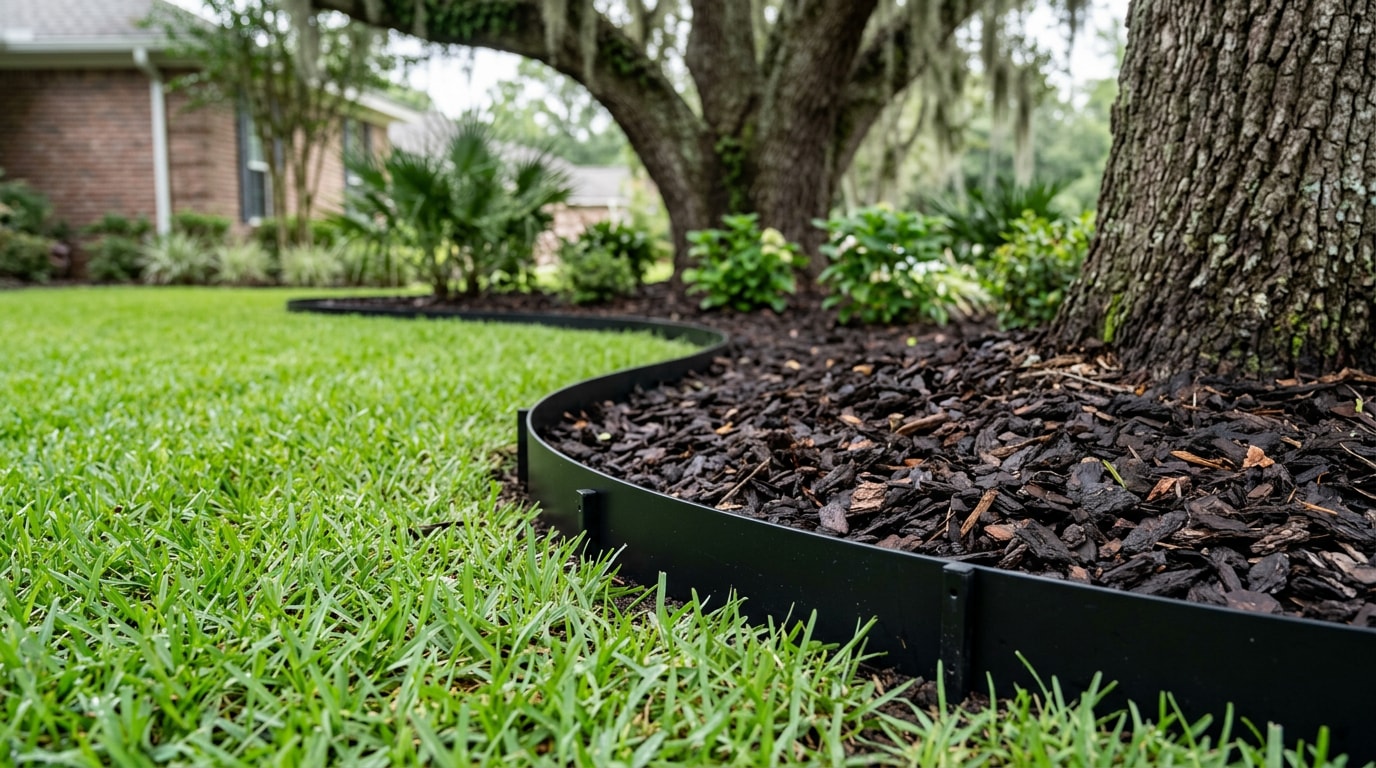
Rounded stone (pea gravel, river rock) rolls. It drains fast and feels good underfoot, but it migrates out of any bed without a hard edge.
Color is the last decision, not the first. Get shape and size right and the material will still be performing in ten years.
Landscaping Gravel Types and What Each One Is For
These are the materials regularly stocked and installed around Leon County.
Pea Gravel (3/8 inch)
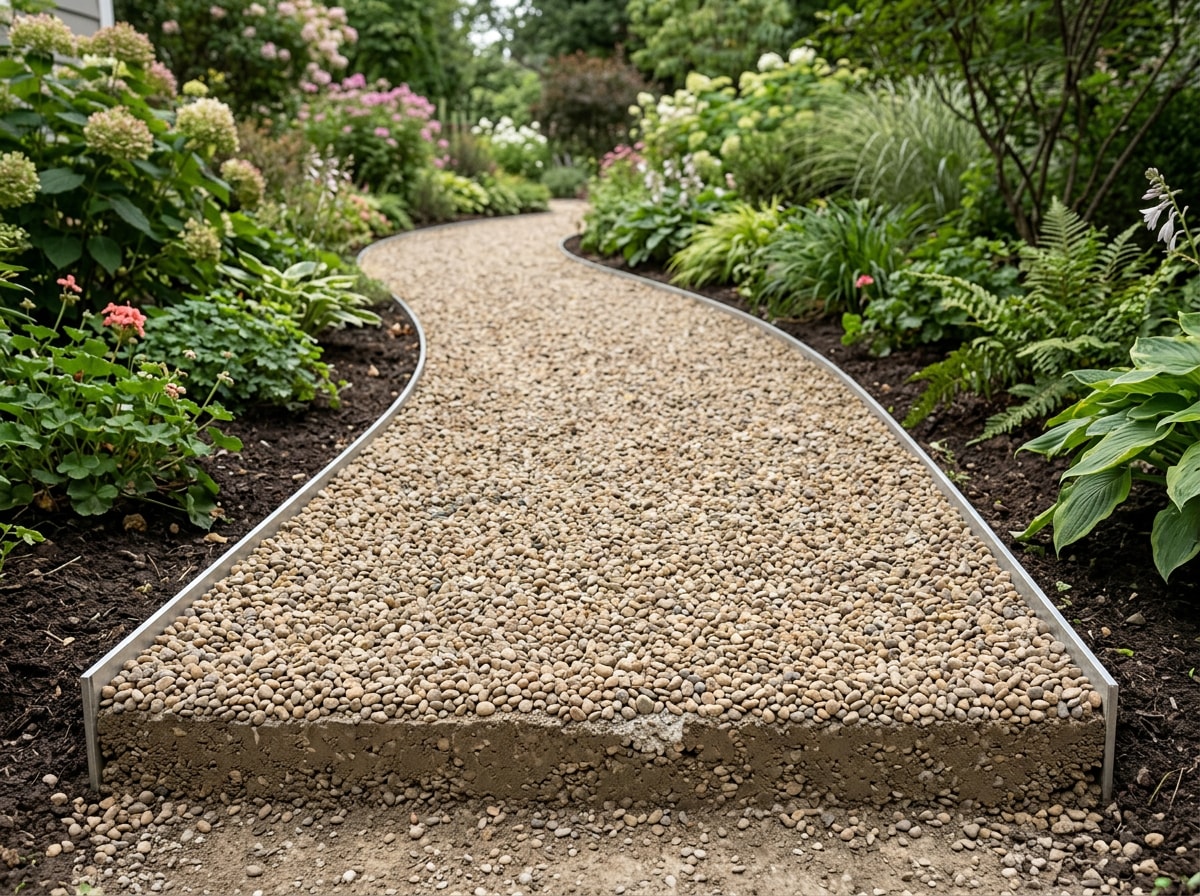
Rounded, water smoothed stone about 3/8 inch across. Used for garden paths, patio and fire pit surrounds, play areas and dog runs.
It is comfortable to walk on and drains freely, but it never compacts. Skip it on driveways and on anything steeper than a gentle grade.
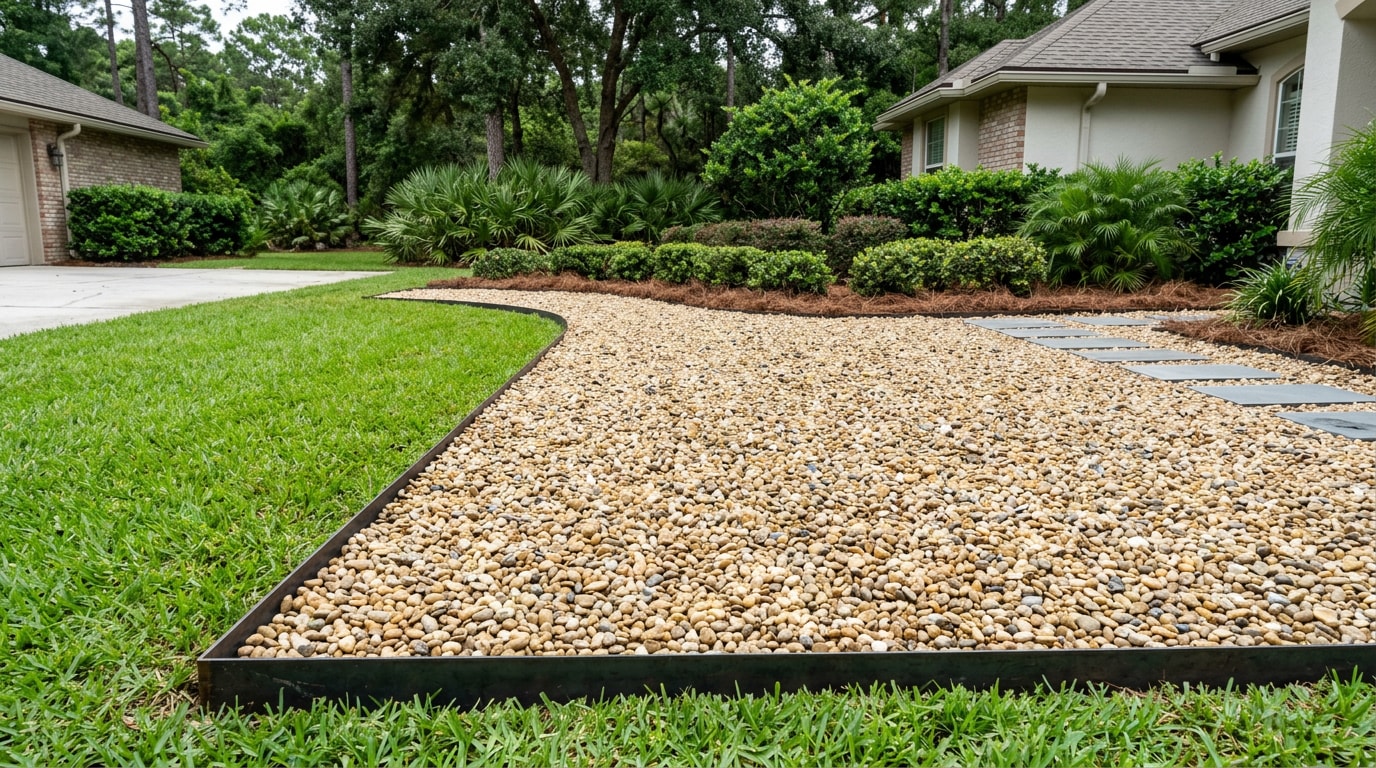
Plan on 2 to 3 inches over woven fabric, with steel, aluminum or paver edging on every exposed side.
#57 Washed Stone (3/4 to 1 inch)
The #57 designation is a graded sieve size with the fines screened out, which is why #57 from one pit behaves like #57 from another.
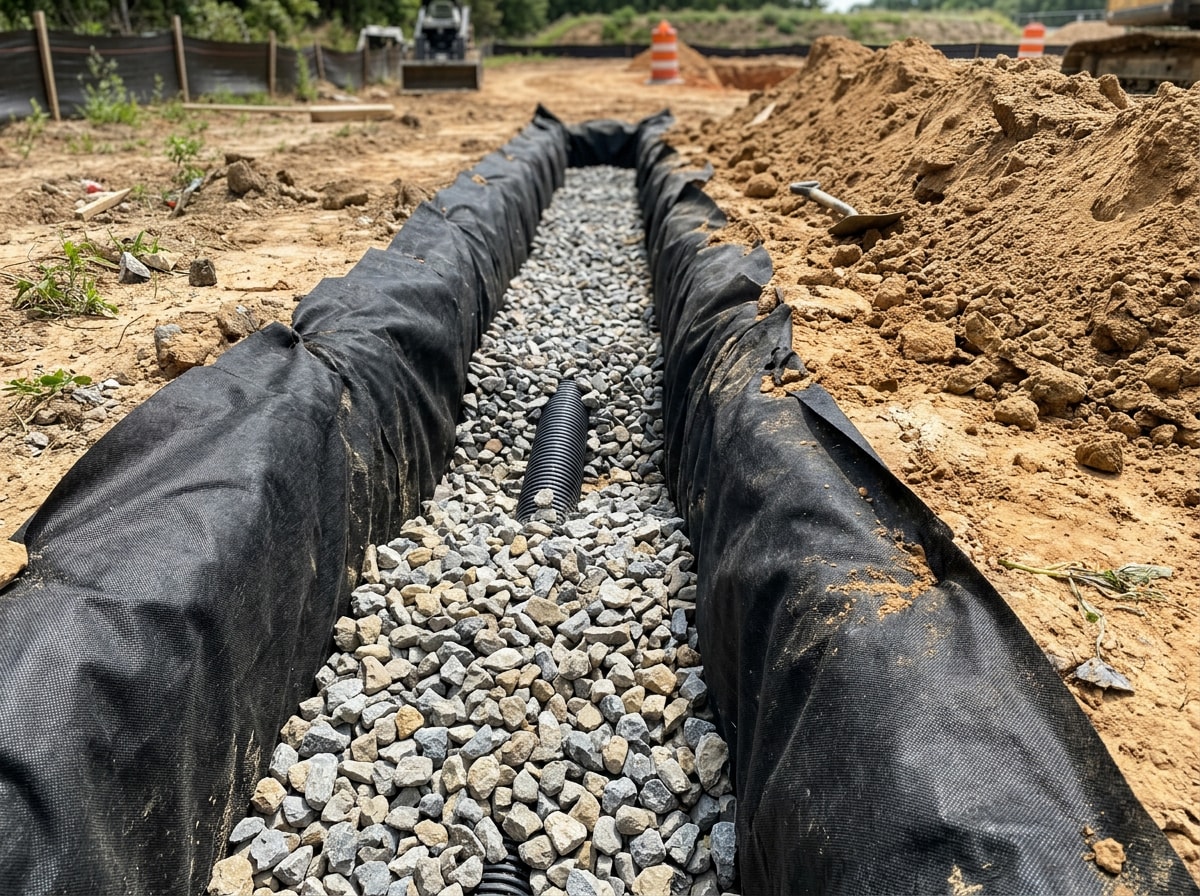
Washed means the dust is rinsed off, so water moves straight through it. That makes it the local workhorse for drainage: french drain trenches, dry wells, downspout runouts, AC pads and shed perimeters.
If a contractor puts anything other than clean washed stone in a drain trench, the fines will silt the trench in.
Crushed Limestone (crusher run, 304 / 411)
Crushed limestone comes two ways. Clean crushed stone has the fines removed and stays loose. Crusher run and dense grade blends keep the fines, so they bind and compact into a firm surface.
Only the blends with fines will pack. That makes this the default driveway material, the base under pea gravel paths, and the surface for trailer and equipment pads.
The trade offs are real: dust in dry weather, glare in full sun, and it is one of the heaviest common aggregates per cubic yard, which raises your delivered tonnage.
River Rock (1 to 3 inch)
Smooth, mottled, water worn stone used for dry creek beds, bed borders, downspout splash zones and slope erosion control.
On a flat sandy Woodville lot a dry creek bed is not decoration. Sized and graded properly it becomes a working channel that carries roof and yard runoff away from the foundation.
River rock never compacts, so treat it as surface and accent material, not something you drive on.
Black Lava Rock
Porous, dark and very light. A ton of lava rock covers roughly two and a half times the area of a ton of limestone at the same depth, which changes the cost math more than most buyers expect (see the pricing section below).
It works as a mulch alternative in shrub beds, in low water plantings, and for weed suppression over fabric.
One local caution: dark porous rock absorbs and radiates heat. Keep it off south facing foundations, slabs and heat sensitive plants during a North Florida summer.
Marble, Buff and Slate Chips
The decorative chip family. All angular, all chosen for color contrast rather than performance, and best in modern bed accents, entryways and narrow borders.
Expect maintenance on the light colors. White marble and buff chips show leaf litter, pollen and tannin stains, so plan on raking or a hose rinse a couple of times a year.
Which Gravel for Which Job
| Project | Material | Depth | Compaction / edging |
|---|---|---|---|
| Garden path | Pea gravel over limestone base | 2 to 3 in | Base compacted, edging required |
| Patio or fire pit | Pea gravel or 3/8 in chips | 2 to 3 in | Edging required |
| Driveway | Crusher run / 411 limestone | 4 to 6 in | Compaction required |
| Drainage trench | #57 washed stone | Fill to grade | Fabric wrap, no compaction |
| Dry creek bed | River rock | 3 to 4 in | Fabric, no compaction |
| Planting beds | Lava rock or marble chips | 2 to 3 in | Edging recommended |
| Play area | Pea gravel | 3 in | Edging required |
| Dog run | Pea gravel over compacted base | 3 in | Both |
More material and install detail is on our landscaping and hardscaping pages.
2026 Landscaping Gravel Prices Around Woodville
Figures below are typical bulk material ranges for North Florida, reviewed January 2026. They move with fuel and haul distance, so use them for planning, not as a quote.
| Material | Price per ton (bulk) | Coverage per ton at 3 in | Installed per sq ft |
|---|---|---|---|
| Crusher run / 411 limestone | $30 to $50 | about 80 sq ft | $2.00 to $3.50 |
| #57 washed limestone | $40 to $65 | about 80 sq ft | $2.50 to $4.00 |
| Pea gravel | $55 to $85 | about 80 sq ft | $3.00 to $4.75 |
| River rock (1 to 3 in) | $90 to $160 | about 75 sq ft | $4.25 to $6.50 |
| Marble or slate chips | $130 to $220 | about 85 sq ft | $5.00 to $8.00 |
| Black lava rock | $160 to $260 | about 200 sq ft | $4.50 to $7.00 |
Two things to understand before you compare quotes.
Small loads cost more per ton. Online suppliers quoting single ton delivered prices into the 32362 ZIP routinely land in the $80 to $125 per ton range, because the trucking is spread across one ton instead of ten. That is a delivery effect, not a material price.
Price per ton is the wrong number to shop. Run it per square foot instead. At $200 per ton, lava rock covering 200 square feet works out to about $1.00 per square foot of material. At $55 per ton, pea gravel covering 80 square feet works out to about $0.69. The gap between the cheapest and the most expensive decorative stone is far narrower than the per ton sticker suggests.
Limestone is comparatively cheap here because it is quarried regionally. River rock, marble and lava rock all ship in from much further, and freight is most of their premium. Crushed stone is a high weight, low value commodity, which is exactly why hauling dominates the delivered price. USGS data in the Mineral Commodity Summaries shows crushed stone as the leading nonfuel mineral commodity in the country by production value, and the national quarry gate average sits a long way below what any of us pay at the driveway.
An installed price should include fabric, edging, grading and debris haul away. Confirm that line by line.
How Much Gravel Do You Need
The math is short.
- Length x width x depth, all in feet, divided by 27 = cubic yards.
- Multiply cubic yards by 1.35 to get tons (most stone runs about 1.35 tons per yard).
- Add 5 to 10 percent for waste and settling.
Standard depths: 2 to 3 inches for decorative beds and paths, 4 inches for general ground cover, 4 to 6 inches of surface stone over a compacted base for drives.
Worked example. A 40 ft x 4 ft path at 3 inches is 160 sq ft x 0.25 ft = 40 cu ft. Divided by 27 that is 1.48 cubic yards, or about 2 tons. Order 2.2 tons.
Lava rock is the exception. It weighs roughly half what limestone does, so run coverage by volume rather than reusing the 1.35 figure.
Bulk Delivery and Site Access
Bagged stone makes sense for a planter or a repair patch. Past roughly half a ton, about 20 to 25 bags, bulk delivery is cheaper per ton and far less work.
Loads typically run 1 to 6 tons on a small truck and 10 to 16 tons on a tandem. Before delivery day:
- Measure driveway width and check the turnaround.
- Look up for low limbs and service drops.
- Pick a dump spot as close to the work as the truck can safely reach.
- Decide whether the pile gets tarped, spread the same day, or left.
- On soft sandy shoulders, plan where a loaded truck will not sink.
Installation, Drainage and the Woodville Soil Problem
Sandy soil and a shallow water table are why stone beats mulch on a lot of properties south of Tallahassee. Mulch floats away in a hard rain. Stone stays.
The same conditions are also why thin gravel installs fail here. On Woodville jobs we get called back to fix, the single most common problem is 1 inch of decorative rock over light duty fabric: the sand swallows the stone within two wet seasons and the bed looks bare again.
What a proper install includes:
- Grading first, so water sheds before stone goes down.
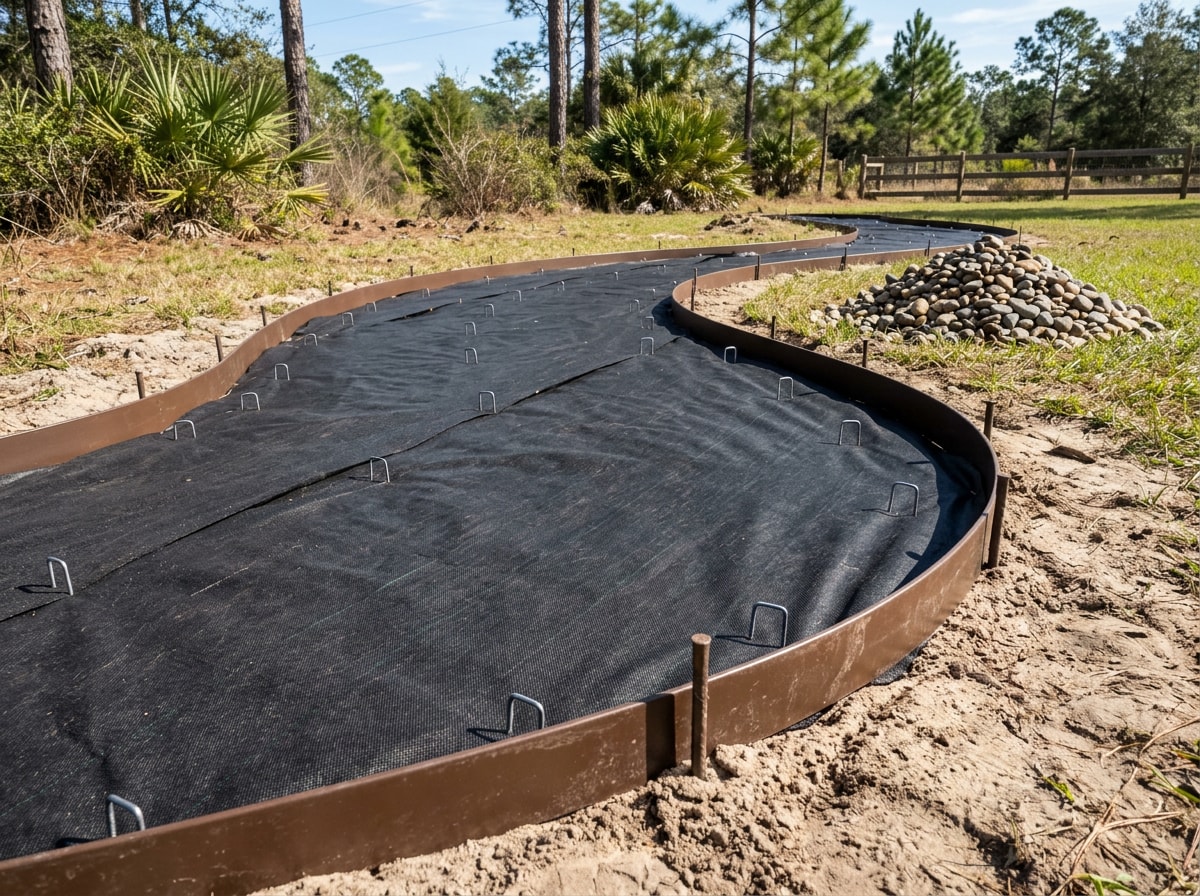
- Woven geotextile, overlapped at the seams, not the thin spun fabric sold in big box rolls.
- Hard edging or containment on every exposed side.
- Compaction anywhere the surface will carry weight.
- Consistent depth, verified with a rake and a measurement, not by eye.
Drainage work is its own discipline. If the goal is moving water rather than covering ground, see our french drains and drainage solutions pages, and read our breakdown of river rock depths and where it actually works.
One local item the national gravel guides never mention: in unincorporated Leon County, grade changes, paving and stormwater alterations fall under the county's environmental management permit process. A bed of decorative rock is not going to trigger it. A new gravel drive, a regraded swale or a redirected discharge might. Ask before you order 20 tons.
For planting beds, the UF/IFAS Florida-Friendly Landscaping principles are a useful cross check on keeping rainfall on site rather than pushing it to the street.
Residential and Commercial Work
The same stone covers a backyard path and a 40 space parking area. What changes is everything underneath.
Residential beds and walkways usually need 2 to 3 inches of stone over light duty fabric with simple edging.
Commercial work (parking areas, retention pond edges, storage yards, bed islands) calls for deeper lifts, a compacted limestone base, heavier woven geotextile, and hard containment like curbing or timbers to keep stone out of drive lanes. Heavier builds usually start with site preparation and, for drives, driveway landscaping.
Should You DIY It?
Honest dividing line: a small bed refresh or a short path is a reasonable weekend project.
Driveways, sloped ground, drainage corrections, and anything needing compaction or a permit are worth handing off. The material is cheap. Moving it twice is not.
Talquin Landscaping handles gravel supply and installation across Woodville and the rest of Leon County, and our crews have been setting stone in this soil long enough to know which depths hold.
FAQ
How expensive is landscaping gravel?
Most landscaping gravel runs $30 to $220 per ton in bulk, with installed costs between about $2 and $8 per square foot. Crushed limestone sits at the low end, marble and lava rock at the top. Small single ton deliveries cost noticeably more per ton than full loads.
What is the best gravel to use for landscaping?
It depends on the job. Pea gravel is the best all around pick for paths, patios and beds you walk on. #57 washed stone is the standard for french drains and downspout runouts. Crusher run limestone is the right call for driveways and equipment pads.
Which is better, pea gravel or river rock?
Pea gravel wins for anything you walk on. It is smaller, cheaper and comfortable underfoot. River rock is larger, costs more per ton, and reads better from a distance, which makes it the better pick for dry creek beds, downspout outfalls and bed accents. Both migrate without edging.
What is the cheapest type of gravel?
Crusher run and plain crushed limestone road base are the lowest cost per ton locally. Cheapest per ton is not always cheapest installed, though. Driveway depths, fabric and edging add up, and a thin layer of budget stone that ruts out in a year costs more to fix than to do right.
How many square feet does a ton of gravel cover?
Roughly 80 square feet at 3 inches deep, or about 120 square feet at 2 inches, for standard stone at 1.35 tons per cubic yard. Lava rock covers two to three times that because it weighs about half as much.
How deep should landscaping gravel be?
2 to 3 inches for decorative beds and walking paths, 3 inches for play areas and dog runs, and 4 to 6 inches of surface stone over a compacted base for driveways. Shallower than 2 inches and the soil shows through within a season.
Do I need landscape fabric under gravel?
Yes on sandy North Florida soil. Without it the stone sinks and the bed thins out. Use woven geotextile rather than thin spun fabric, overlap the seams by at least 6 inches, and expect fabric to slow weeds rather than stop them, since most weeds in a gravel bed germinate in debris that collects on top.
Is gravel cheaper than mulch?
Not up front. Gravel costs more per square foot installed. It wins over time because it does not break down and need replacing every year or two, and it does not wash out of beds in heavy rain the way shredded mulch does.
Get a Quote on Your Gravel
Have your rough dimensions, target depth, material preference and any access notes ready. Send those over and we will price material and delivery together.