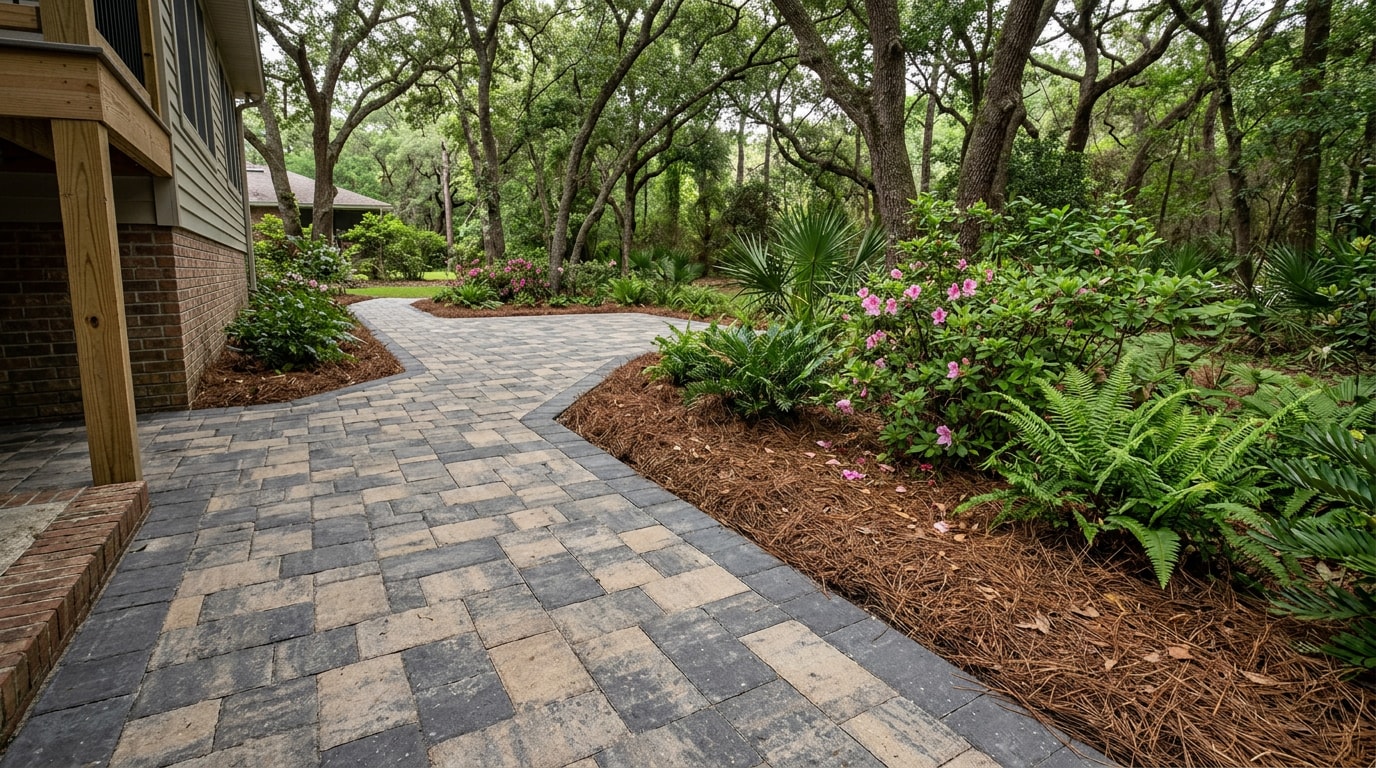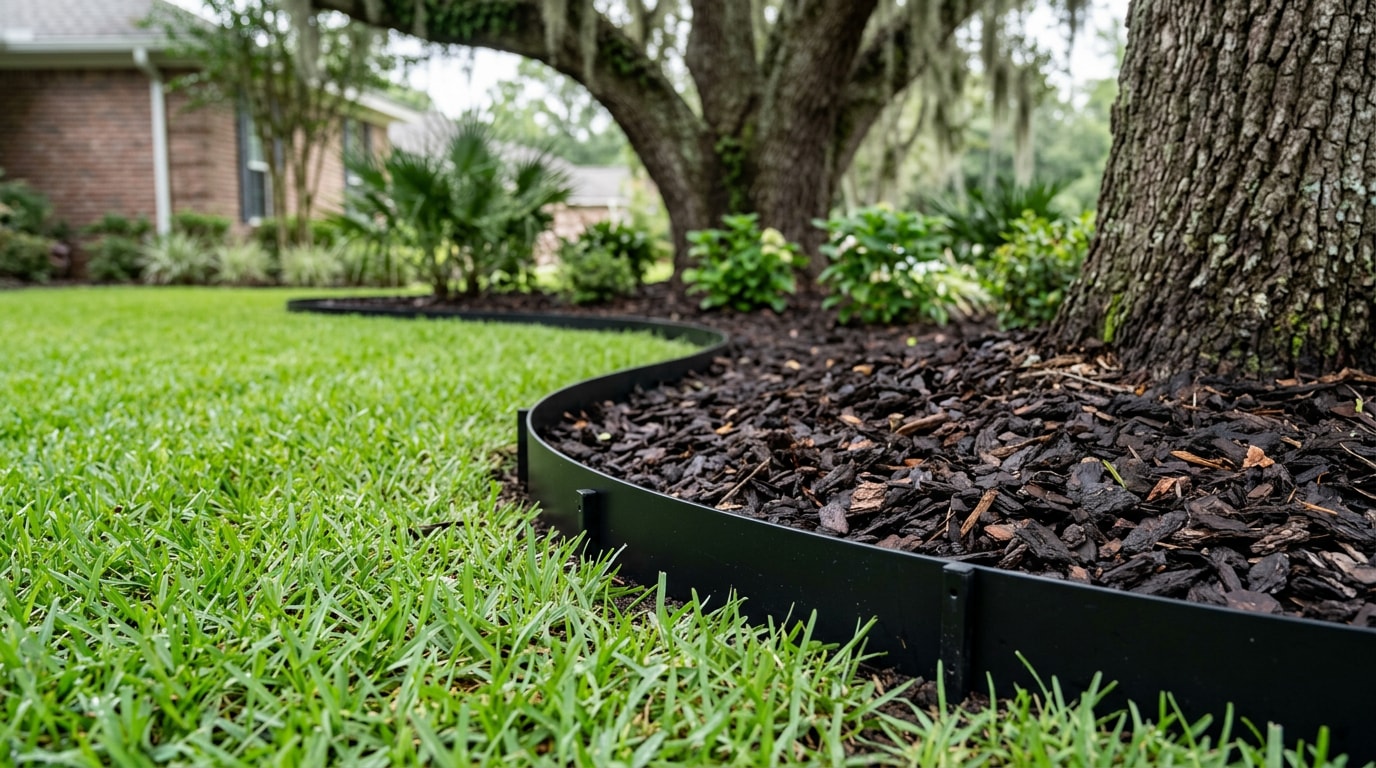
Metal edging for landscaping in Golden Eagle, FL solves two problems at once: pine bark washing out of the beds after an August downpour, and St. Augustine runners creeping into the mulch by Labor Day. Installed right, a 4 to 5 inch strip holds that line for 20 years and costs less over time than re-cutting beds three times a season. Here is what it costs in 2026, which metal survives our humidity and irrigation, and the stake spacing that keeps a bed line from bowing in sandy soil.
What Metal Edging Costs in Golden Eagle, FL (2026)
Material price is the easy part. Trenching conditions and curve count drive the installed number.
| Material | Material cost per linear ft | Installed cost per linear ft | Typical service life |
|---|---|---|---|
| Coated steel, 16 gauge | $2 to $4 | $7 to $12 | 20 to 30 yrs |
| Heavy steel, 14 gauge | $4 to $7 | $9 to $15 | 25 to 35 yrs |
| Extruded aluminum | $4 to $8 | $9 to $16 | 25 to 40 yrs |
| Corten steel plate | $8 to $15 | $14 to $24 | 30+ yrs |
Stakes and connector sleeves add roughly $0.50 to $1.00 per foot.
A typical Golden Eagle front bed perimeter runs 80 to 120 feet. In coated steel, materials land near $250 to $500 with hardware. A professionally installed run of that length generally falls between $800 and $1,500 depending on how many radii are in the design and whether irrigation laterals cross the line.
Plastic edging costs about a third as much and warps within three summers here. The metal premium gets paid back in service life plus the hand edging labor you stop buying. For a wider view of local pricing, our landscaping service page and our Golden Eagle service area page break down what drives estimates in this ZIP.
Steel vs Aluminum vs Corten: Which One Belongs in Your Beds
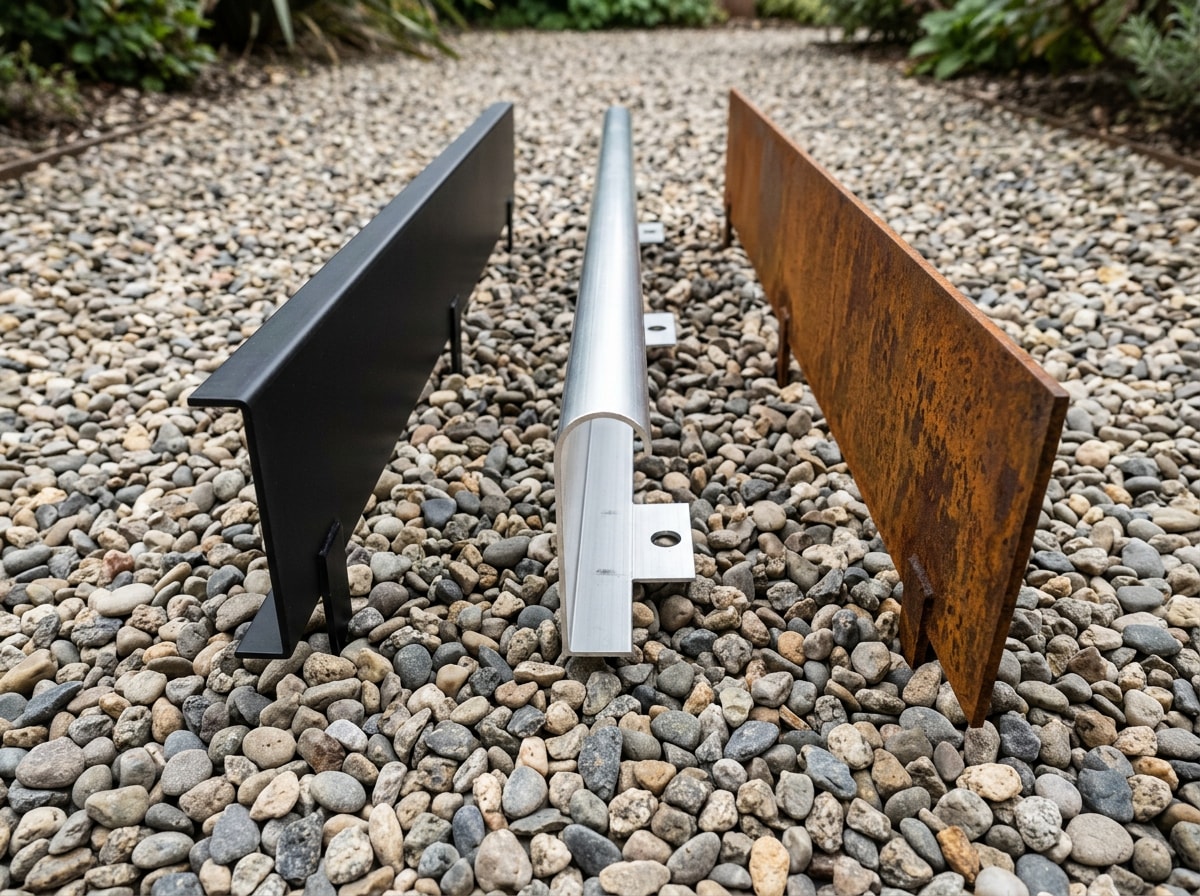
| Steel (coated) | Aluminum (extruded) | Corten steel | |
|---|---|---|---|
| Typical thickness | 14 to 16 gauge | 1/8" to 3/16" wall | 1/8" to 1/4" plate |
| Height range | 4" to 6" | 3" to 5.5" | 4" to 8" |
| Curve tolerance | Moderate, bends by hand | Excellent, tight radii | Low on thick plate |
| Stake spacing | 24" to 36" | 12" to 18" | 24" to 30" |
| Top edge | Cut, often sharp | Rounded from extrusion | Cut |
| Relative cost | $$ | $$$ | $$$$ |
| North Florida note | No freeze heave here, so rigidity matters less | Oxide layer suits humid, irrigated beds | Patina stabilizes fast in humid air |
Steel landscape edging
Strength per dollar is why steel still dominates commercial bed lines. A 14 gauge strip holds a straight run dead straight under soil pressure, mower wheels and string trimmer contact for decades.
Powder coated black or brown disappears against pine bark. The drawback is the cut top edge, which is sharp enough to open a shin before it is filed.
Aluminum landscape edging
Extruded aluminum is pulled through a die, so it arrives with a rounded, finished top edge instead of a cut one. It forms a rust proof oxide layer the moment it meets air, which matters more here than in a dry climate because of year round humidity and daily irrigation overspray.
It is light enough to install solo and flexible enough to take curves with no tools. It also dents where steel would shrug off a thrown rock. Check the manufacturer's published alloy, gauge and height specifications before you lock in a thickness, since 1/8 inch and 3/16 inch behave very differently at 5.5 inches tall.
Corten steel
Corten weathers to a stable rust toned patina that becomes the design feature instead of a flaw. It suits modern and naturalistic beds, costs the most, and bends the least. On thick plate, plan curves at the shop, not in the yard.
What Golden Eagle Conditions Actually Do to Metal Edging
This is where generic edging guides stop being useful. Three local conditions change the spec sheet.
- Deep sand, not loam. Leon County bed soil drains fast and grips stakes poorly. The 9 inch stakes bundled with box store kits creep in sand. We run 12 inch stakes as a minimum on residential beds here and 18 inch stakes on anything retaining gravel or sitting on a slope.
- Daily irrigation, not rainfall alone. Spray heads hit the same six inches of strip every cycle. Scratched powder coat shows surface color within weeks in that spray zone, so touch up paint is a same day job, not a next season job.
- Above ground runners. St. Augustine and centipede spread across the surface rather than deep underground, so they stop cold at a vertical face set a half inch proud of grade. That single detail does more for a clean bed line than extra strip height does.
On a recent Golden Eagle install, the only sections we had to reset after the first summer were two curves staked at the manufacturer's default spacing. Both were on the outside of a bend, where soil pressure concentrates. Everything staked at 12 inches through the radius held its arc.
No freeze heave happens here, which is the main reason steel's rigidity gets oversold in national buying guides written for northern yards. In Golden Eagle, corrosion resistance and stake bite matter more than gauge.
If your bed lines also hold runoff, pair the edging decision with a drainage plan. Our drainage services page covers where water needs a path instead of a dam.
How to Install Metal Landscape Edging
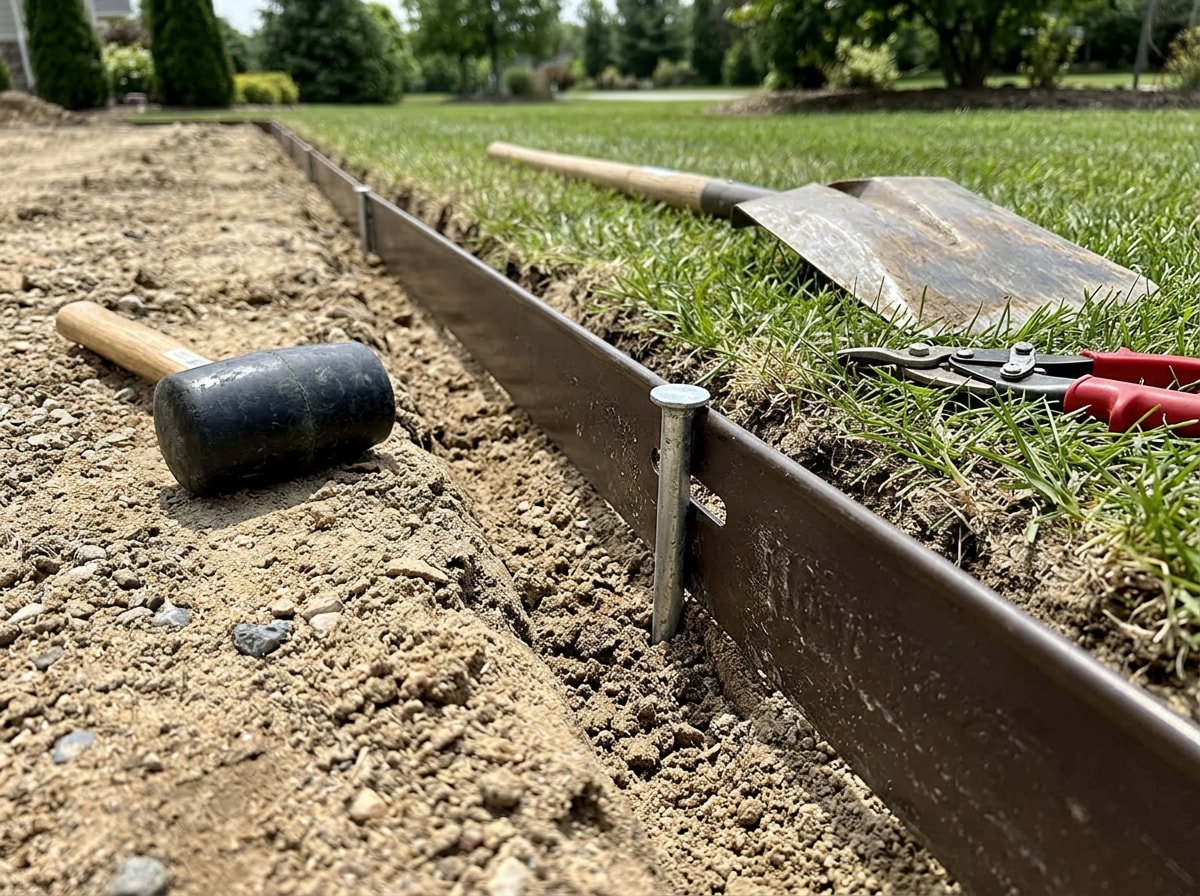
Metal needs a narrower slot than stone or timber because the stakes drive vertically through the strip instead of relying on a wide base. The only specialty tool is a rubber mallet.
1. Lay out and measure
- Measure the perimeter with a tape, then add about 5 percent for overlap joints.
- Lay a garden hose along the proposed line and live with it for a day before committing, or snap it in with marking paint.
- Gather a flat spade, rubber mallet, tin snips or an angle grinder, gloves, a tape and a wheelbarrow.
- Strip turf, roots and thatch from the line so the strip seats against soil.
2. Cut the trench
Cut the trench about a half inch shallower than the edging height, so roughly a half inch of metal sits proud of grade. For 4 to 5 inch edging, that is a 3 to 4 inch trench.
Too high is a trip and mower hazard. Too low lets mulch wash straight over the top.
Sandy soil cuts fast and crumbles, so soak the line the evening before. Damp sand holds a clean vertical wall. Contact Sunshine 811, Florida's one call center, at least two business days before you dig, and flag your own irrigation laterals.
3. Set and join the sections
Drop each section into the trench and connect it with the interlocking sleeve or a 2 to 3 inch overlap.
Bend curves by hand against a scrap wood block for an even radius instead of a kink. For tight corners, make a short relief cut with snips and fold. Backfill loosely for now.
4. Drive the stakes
Use a rubber mallet, never a steel hammer, which chips powder coat and mushrooms stake heads. Match the hardware to the metal: steel pins with steel, aluminum or galvanized pins with aluminum.
- Straight steel runs: 24 to 36 inches on center
- Aluminum and every curve: 12 to 18 inches on center
- Gravel beds and slopes: 18 inch stakes
Backfill both sides and tamp firmly.
5. Deburr every cut
Hit each cut end and any exposed top edge with a mill file or flap disc until it will not catch a gloved fingertip, then touch up bare metal with matching paint.
Steel with a folded or rolled top skips this step. Extruded aluminum arrives rounded, so there is nothing to deburr.
Scheduling the strip install with a mulch refresh saves a second mobilization. If you are pricing bulk material at the same time, our guide to landscape supplies in Golden Eagle covers delivery quantities and pricing. Ready for a number on your own beds? Get a free estimate and we will walk the line with you.
Maintaining Metal Edging in North Florida
Walk the line once a year, ideally in late winter before spring mulch goes down.
Look for three things: sections creeping outward, loose stakes, and trimmer scratches through to bare metal. Re seat stakes with the mallet and touch up coating the same day.
Humidity, daily irrigation and summer storms mean north Florida beds need this check annually, where a drier region could stretch it to three years.
Keep mulch below the top of the strip so water sheets off instead of pushing bark over it. UF/IFAS Gardening Solutions recommends mulching to a depth of about 3 inches and replenishing when it settles below two, which lines up neatly with a 4 inch strip set a half inch proud. Ongoing bed care is part of our landscape maintenance program.
Is Metal Edging Worth It, and Should You DIY?
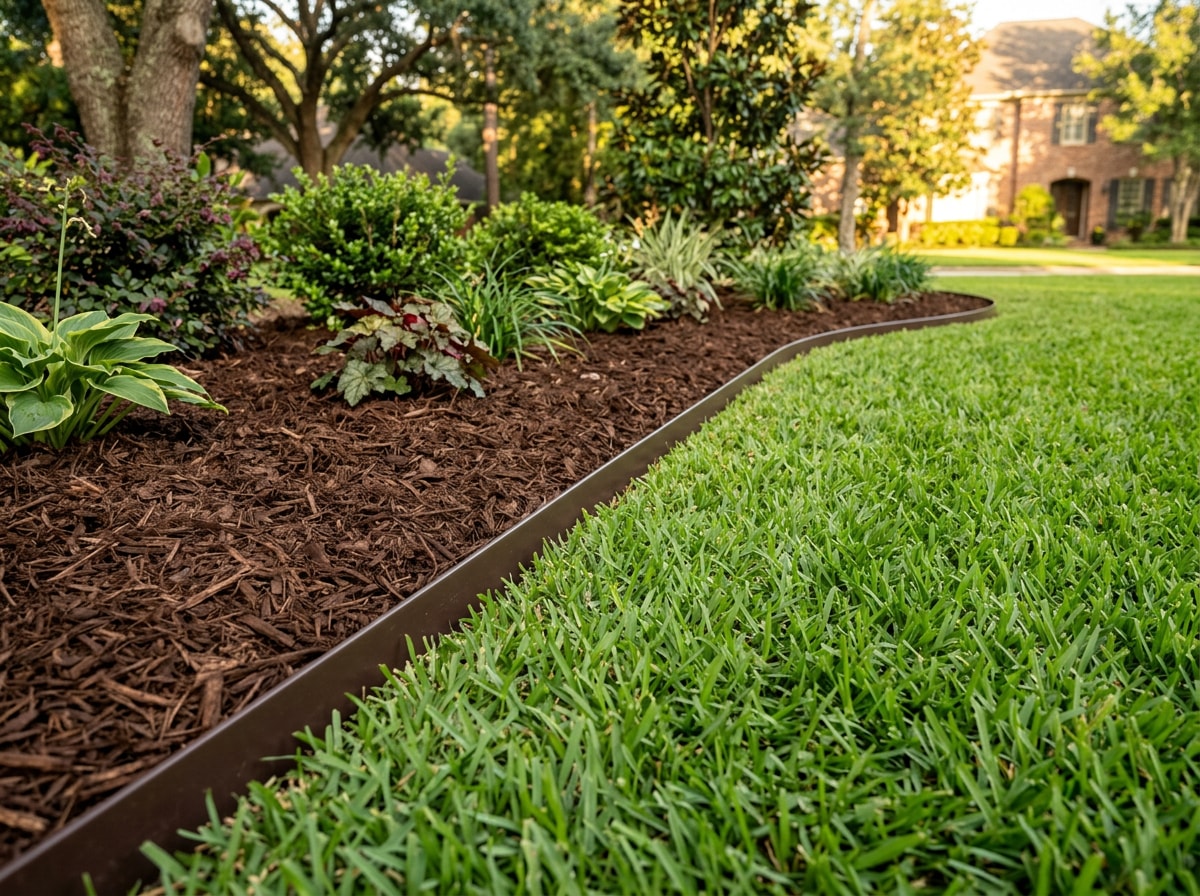
Buy steel if your beds are mostly long straight runs, you are holding back gravel, or you want a commercial grade look.
Buy aluminum if your beds are heavily curved, sit under constant irrigation, or you are installing alone.
Skip metal if you want a raised, seat height border or a rustic look. Brick, block or stone serves that better, and our hardscaping and retaining wall construction pages cover those options.
On DIY: under 60 feet with gentle curves is a satisfying weekend. Past 100 feet, with multiple radii or irrigation crossing the bed line, the trenching alone justifies a crew. New bed layouts are usually better handled through landscape design so the edging follows a line worth keeping.
FAQ
How much does metal landscape edging cost per foot?
Materials run about $2 to $4 per linear foot for basic coated steel, $4 to $8 for aluminum, and $8 to $15 for Corten. Professionally installed, expect $7 to $24 per foot depending on material, trenching conditions and curve count.
How deep should metal landscape edging be buried?
Bury all but about a half inch of the strip. For 4 to 5 inch edging, that means a trench 3 to 4 inches deep. Shallower than that and soil pressure will push the run out of line.
How long does metal landscape edging last?
Coated steel lasts 20 to 30 years, extruded aluminum 25 to 40 years, and Corten 30 plus years. Service life depends more on install depth, stake spacing and drainage than on the metal itself.
Will metal landscape edging rust in Florida?
Uncoated steel develops a surface patina that is cosmetic, not structural. Corten forms a self limiting oxide layer that slows further corrosion. Powder coated and galvanized steel resist rust until the coating is breached. Aluminum does not rust at all. In our humidity, aluminum or coated steel is the safer pick.
Is metal edging better than plastic?
For most yards, yes. Plastic costs about a third as much but warps, lifts and fades within a few summers in north Florida heat. Metal holds a straight line for decades and keeps a much thinner visual profile.
Can you mow over metal landscape edging?
Yes, when the strip sits about a half inch above grade and stakes are fully driven. A mower wheel can ride the edge without catching. Edging left an inch or more proud becomes a blade and trip hazard.
Does metal edging stop grass from spreading into beds?
It stops above ground runners like St. Augustine and centipede very effectively, since those spread across the surface. It will not stop deep rhizome grasses such as torpedograss, which need herbicide treatment in addition to a physical barrier.
What is the best metal landscape edging for curves?
Thin gauge aluminum, typically 1/8 inch wall at 4 inches tall, bends to the tightest radius with no tools. Spring tempered steel coils also handle flowing curves. Tighten stake spacing to 12 to 18 inches through every bend.
Is metal landscape edging safe around kids and pets?
Yes, with the right product and install height. Choose extruded aluminum with a rounded edge or steel with a folded top, and set the strip a half inch above grade so there is no exposed cut edge at ankle height.
Talk to a Local Crew
Talquin Landscaping installs bed edging, mulch, sod and drainage across Golden Eagle, Bradfordville and greater Leon County, and our crews have been setting edge restraint in this sandy soil long enough to know where the default stake spacing fails. See more of our work on the homepage or browse recent projects, then contact us for a free on site estimate on your bed lines.