Most people searching lawn seeding near me in Leon County, FL have thin turf, bare driveway edges, or a yard that goes brown by January. Before you buy a bag of seed, know this: the most widely planted lawn grass in North Florida produces no usable seed at all. Here is what seeding costs here in 2026, when it should go down, and when sod or plugs is the only honest answer.
2026 Lawn Seeding Costs in Leon County, FL
These are the ranges we quote on Tallahassee and Leon County properties. Final pricing depends on square footage, access, and how much soil prep the yard needs.
| Service | Typical 2026 range | Notes |
|---|---|---|
| Overseeding existing turf | $0.08 to $0.20 per sq ft | Seed, calibrated spread, starter fertilizer |
| Core aeration only | $120 to $250 | Typical city lot, single pass |
| Aeration plus overseed, 5,000 sq ft | $350 to $650 | Most common package we install |
| Hydroseeding, open areas and slopes | $0.15 to $0.40 per sq ft | Needs prepared bare soil |
| Sod installation | $1.00 to $2.50 per sq ft | Instant cover, only option for St. Augustine |
What pushes a quote toward the top of a range here is compacted clay sitting under a thin sand cap, common in older Tallahassee neighborhoods. Those lawns need a second aeration pass before seed has any chance.
A measured on site visit is the only way to price it accurately. Get a free estimate and we will walk the yard with you.
Can Your Grass Even Be Seeded? Start Here
This is the step most homeowners skip, and it wastes more money than any other mistake.
St. Augustinegrass is not available in seed and must be planted using sod, plugs, or sprigs. If that is your lawn, no seed blend on a shelf will match it or fill it in.
Here is how the common North Florida grasses break down, according to UF/IFAS establishment data :
| Grass | Can it be seeded? | Practical local use |
|---|---|---|
| Centipedegrass | Yes | Most common Panhandle home lawn, slow but cheap from seed |
| Bahiagrass | Yes | Tough, coarse, good for large open lots |
| Bermudagrass | Some seeded types | Sun only, high traffic tolerance |
| Zoysiagrass | Some seeded types | Usually sodded or plugged for reliability |
| St. Augustinegrass | No | Sod or plugs only |
Seeding rates matter as much as the grass choice. Rates vary from 0.25 pounds per 1,000 square feet for centipedegrass, which has a very small seed, to 10 pounds per 1,000 square feet for bahiagrass, which has a large seed.
That 40 to 1 spread is why uncalibrated spreading fails. Dump centipede seed at a bahia rate and you get a dense mat of seedlings that thin themselves out within a season.
If your lawn is St. Augustine, we quote sod installation or plugs instead. Our lawn seeding or sod page covers both paths side by side.
When to Seed a Lawn in Tallahassee
Timing is the difference between a thicker lawn and a bag of wasted seed.
For centipedegrass, the best time to seed is from April to July, since this permits a full growing season before winter weather, and fall seeding is undesirable because young seedlings may not become sufficiently established to withstand cold injury during the winter . The same logic applies statewide: in north Florida, planting young seedling grasses too late in the fall may result in winter-kill.
Two things quietly kill spring seeding jobs in Leon County:
- A pre emergent herbicide applied in late winter, which blocks grass seed germination for weeks along with the weeds
- Seeding in March because the air feels warm, while the soil is still cold and the seed just sits there
Patience also matters after the seed goes down. Centipedegrass may take up to 2 to 3 weeks to germinate and an additional 6 to 8 weeks to establish. Homeowners who call us at day ten thinking the job failed are usually right on schedule.
Winter color is a separate job. Ryegrass goes down in late fall, greens the yard through the cool months, then dies out in summer heat. It does nothing to thicken your permanent turf.
How Our Lawn Seeding Service Works
The order of operations decides the result. We run it the same way every time.
- Assess the lawn, confirm the grass type, and check thatch depth
- Scalp mow low and rake out debris so seed can reach soil
- Dethatch if the layer is over about half an inch
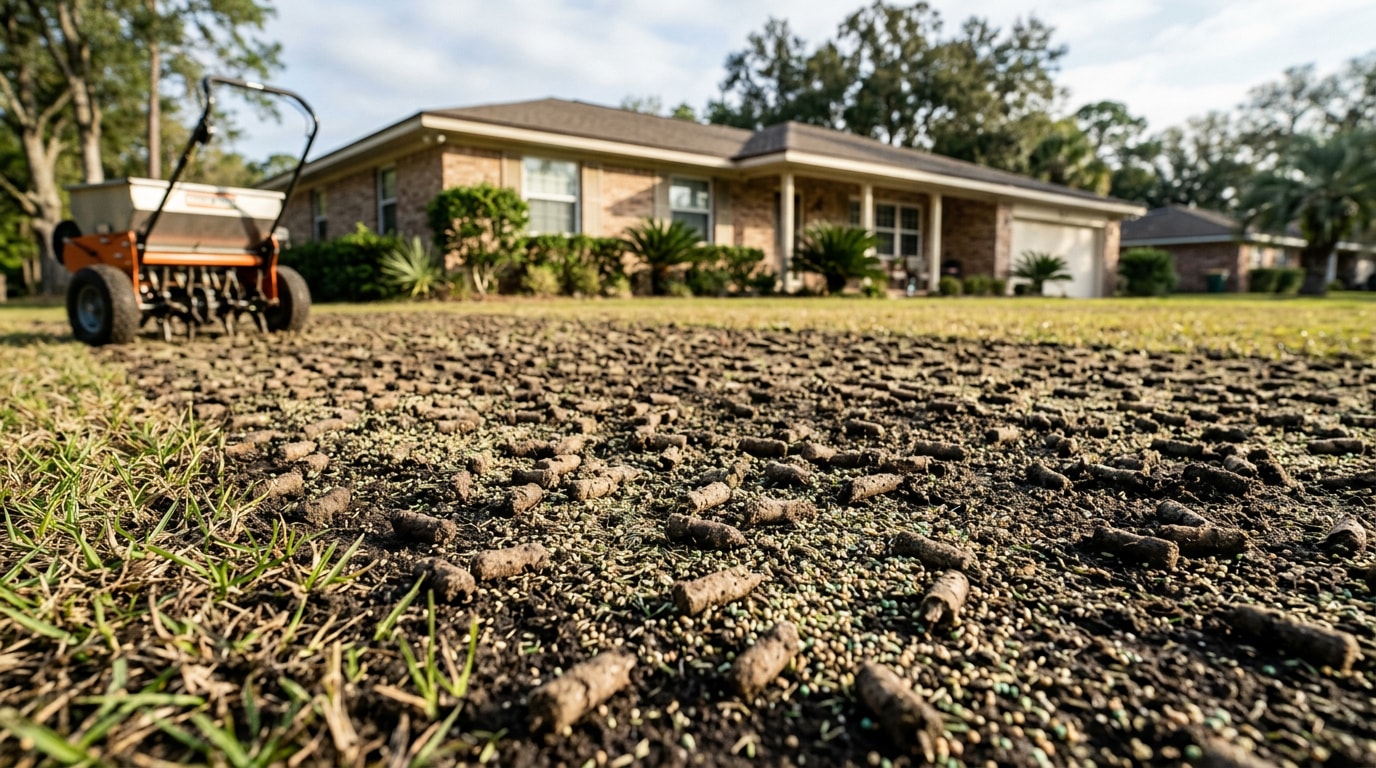
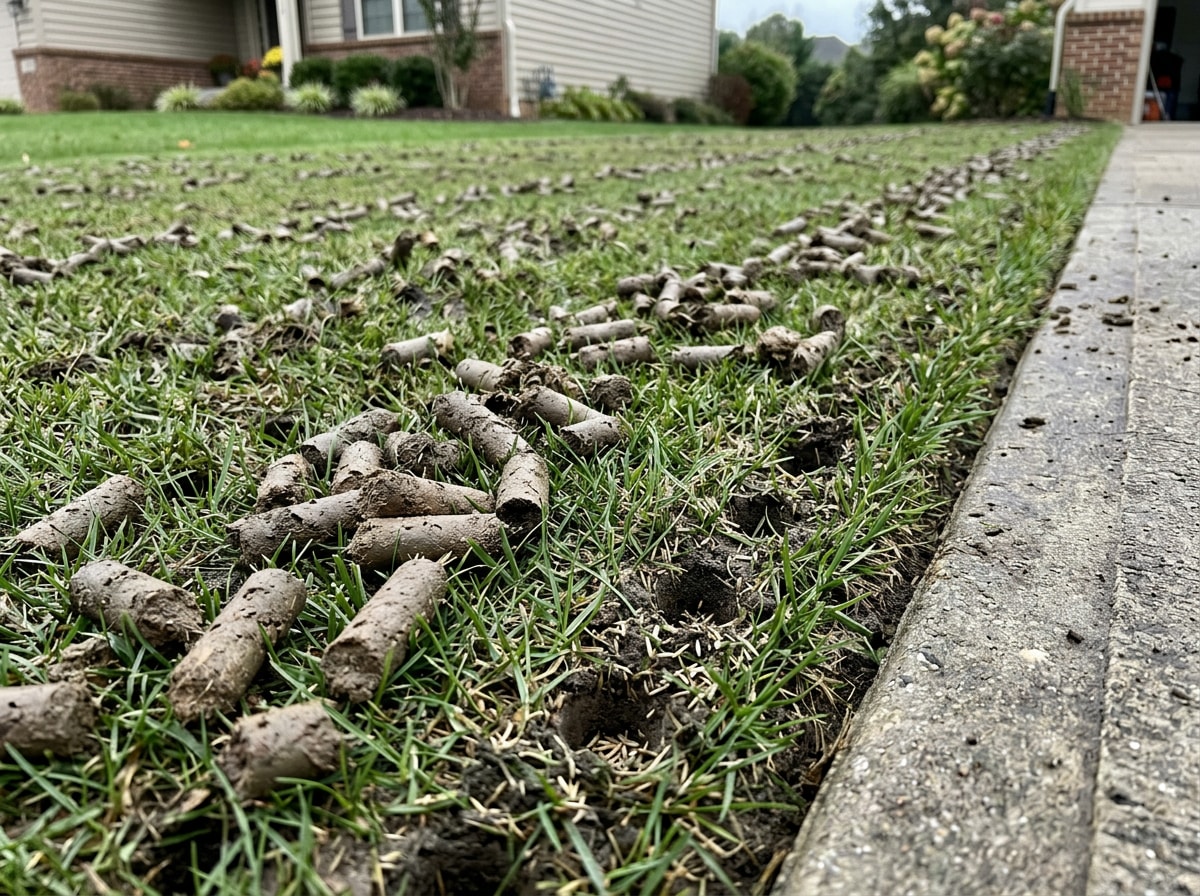
- Core aerate immediately before seeding
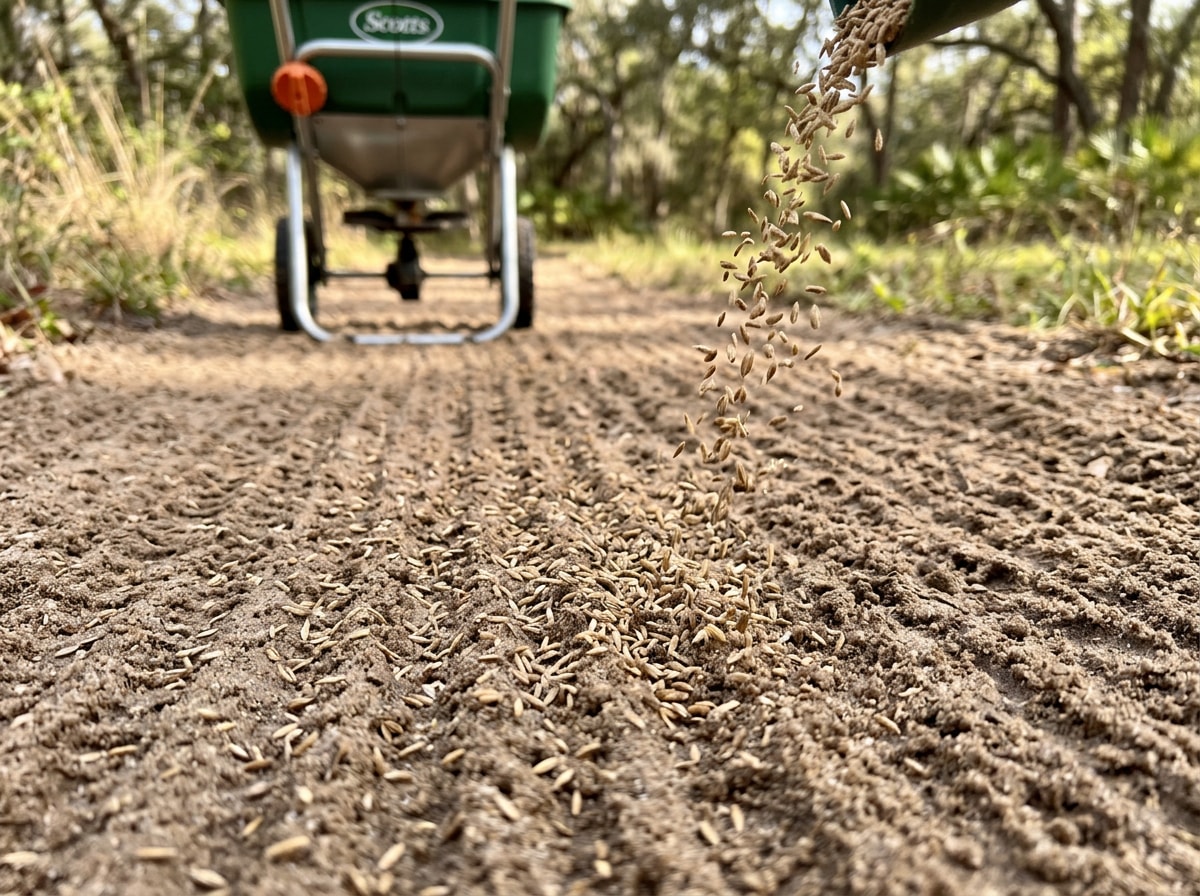
- Apply seed with a slit seeder or calibrated spreader
- Apply starter fertilizer
- Hand you a written watering schedule
Why aerate first? Seed to soil contact decides everything. Seed that lands on thatch dries out and never germinates. Seed dropped into fresh aeration holes stays moist and roots.
Watering is the part homeowners control, and it is where most jobs are won or lost. The best time to seed warm-season grass is during the spring and summer months when grass grows the quickest , which also means short, frequent cycles for the first two weeks. The City of Tallahassee water utility advises morning watering and rain sensors, and we build the schedule around current local guidance.
If your coverage is uneven or your controller is guessing, a quick irrigation check before seeding is cheaper than reseeding. Yards that need grading or topsoil work first go through site preparation.
For a step by step version of the homeowner side of this, read our guide on how to reseed a lawn in North Florida.
Hydroseeding in Leon County
Hydroseeding sprays a slurry of seed, mulch, and tackifier over prepared bare soil.
Locally it earns its keep on:
- Large open lots where broadcast seed is slow to cover
- New construction yards with no existing turf
- Erosion prone slopes and bare ditch banks where dry seed washes off
It costs more per square foot than broadcast overseeding and far less than sod. Sod still wins when you need cover the same day, which UF/IFAS recommends where immediate cover is desired for aesthetics or the prevention of soil erosion .
Lawn Seeding Near Me: Where We Work
We seed lawns across Leon County and Tallahassee, including Bradfordville, Woodville, Betton Hills, Centerville, and the Killearn area.
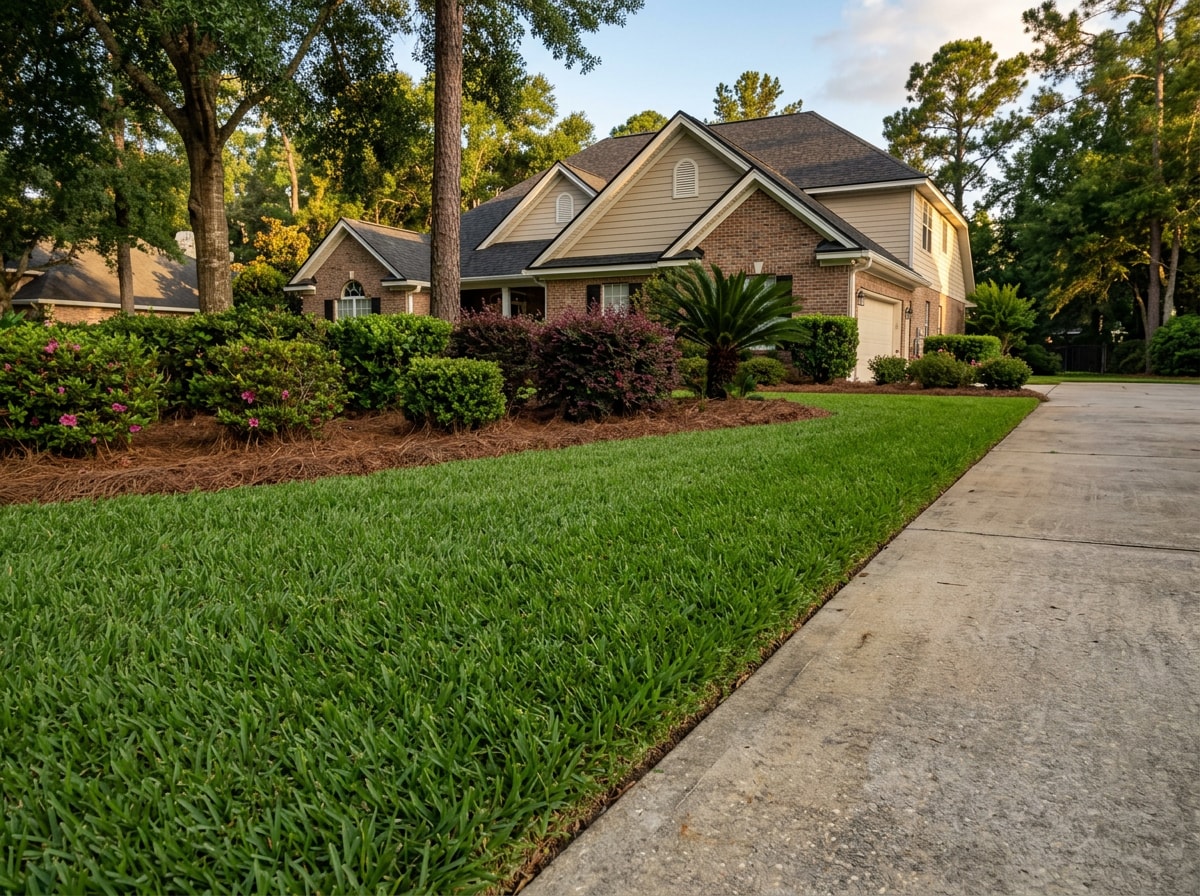
Seeding is often one piece of a larger fix. Thin turf caused by shade, standing water, or compaction comes back unless the cause is addressed, which is why many of our seeding visits get paired with landscape maintenance or drainage work.
See finished yards on our projects page, or start at the Talquin Landscaping homepage to compare services.
FAQ
How much does lawn seeding cost in Leon County, FL?
Overseeding runs about $0.08 to $0.20 per square foot in 2026. A combined aeration and overseed on a 5,000 square foot lawn typically lands between $350 and $650 with seed, starter fertilizer, and calibrated equipment included.
What grass grows best in the Panhandle of Florida?
Centipedegrass is the most common Panhandle home lawn and can be seeded. Bahiagrass and some bermudagrass types also establish from seed. St. Augustinegrass is not available in seed and must be planted using sod, plugs, or sprigs.
Can you seed St. Augustine grass?
No. The grass does not reliably reproduce from seed and seed viability is extremely low. Use sod or plugs instead.
When is the best time to seed a lawn in Tallahassee?
Late spring into early summer. For centipedegrass the best window is April to July, which allows a full growing season before winter. Avoid fall seeding in North Florida.
How long does grass seed take to germinate here?
Depends on species. Centipedegrass can take 2 to 3 weeks to germinate and another 6 to 8 weeks to establish. Bahiagrass and bermudagrass are generally faster.
Should I aerate before overseeding?
Yes, on almost every Leon County lawn. Core aeration opens the thatch layer and gives seed a moist pocket of soil to root into, which is the single biggest driver of germination rate.
Does overseeding work in sandy Tallahassee soil?
Yes, with adjustments. Sandy soils drain fast, so watering frequency, a thin compost topdressing, and starter fertilizer matter far more than adding extra seed. More seed on dry sand just means more seedlings fighting for the same moisture.
Can I mow after overseeding?
Wait until seedlings are rooted and have reached mowing height, usually two to three weeks. Use a sharp blade, raise the deck, and remove no more than one third of the leaf. Mulch clippings instead of bagging.
When should I fertilize after seeding?
Starter fertilizer goes down at seeding for root development. Follow with a balanced feeding roughly four to six weeks later. Avoid late fall nitrogen locally, since it pushes tender growth right before the first cold snaps.
Is overseeding or sod the better value?
Overseeding is cheaper and less disruptive when the lawn is alive but thin. Sod is the right call for bare ground, erosion risk, a St. Augustine lawn, or when you need cover immediately.
---
About the crew: This guide was written by the field team at Talquin Landscaping, which seeds, sods, and maintains lawns throughout Tallahassee and Leon County. We pull soil and thatch checks on every seeding estimate, and the clay under sand pattern we describe above comes from years of aerating older in town lots where a single pass is not enough. Questions about your yard? Contact us for a free estimate.