Turf installation in Centerville, FL runs roughly $8 to $15 per square foot installed for synthetic grass, and closer to $1 to $2 per square foot for sod. The gap between two bids almost never comes from the grass itself. It comes from what the crew does to the four inches underneath it, and that is the part you cannot inspect after the job is finished.
Key Takeaways
- Synthetic turf installed cost: roughly $8 to $15 per square foot in Leon County, with most residential projects near $11.
- Sod installed cost: roughly $1 to $2 per square foot for St. Augustine or Zoysia, including prep and delivery.
- Turf material is usually only 30 to 40 percent of a synthetic invoice. Excavation, aggregate base, labor and infill make up the rest.
- Typical residential synthetic job: 2 to 5 days from demolition to final brooming. Sod is usually 1 to 2 days.
- Base preparation and drainage decide longevity, not the product brochure.
- Florida law changed in 2025. Local governments can no longer ban compliant synthetic turf on single-family lots of one acre or less, though HOA covenants still apply.
These are current local market ranges, not a quote. Slope, access and what is already in the ground move the number in both directions.
Turf Installation Cost in Centerville, FL
An installed price bundles demolition and haul off, base material, labor, the turf itself, infill, and finishing. Most Centerville area synthetic projects land between $8 and $15 per square foot installed. Sod projects are a different animal entirely and price per pallet or per square foot of coverage.
Here is what actually moves your number:
| Cost driver | Effect on your quote |
|---|---|
| Project size | Larger areas lower the per square foot rate |
| Shape complexity | Curves, tree rings and borders add cutting and waste |
| Site access | No gate or truck access raises labor sharply |
| Existing surface | Sod is cheap to remove, concrete and roots are not |
| Turf specification | Face weight and backing drive material cost |
| Drainage correction | Low spots, French drains and drain boxes add line items |
| Extras | Borders, putting cups, pet grade infill |
Representative Centerville project profiles
These are calibration examples from local work, not quotes.
| Project | Application | Base material | Turf grade | Total |
|---|---|---|---|---|
| 450 sq ft | Backyard lawn | ~8 tons | 65 oz landscape | $5,000 |
| 800 sq ft | Pet area | ~14 tons | Pet grade, zeolite infill | $9,600 |
| 1,200 sq ft | Front lawn | ~21 tons | 80 oz landscape | $13,000 |
| 500 sq ft | Putting green | ~9 tons | Nylon putting, 2 cups | $8,500 |
What moved each number: the 450 sq ft yard had gate access and flat sod, so it came in low. The pet area needed extra drainage work and odor control infill. The front lawn's size lowered the per foot rate despite heavy curb and tree ring cutting. The putting green cost more per square foot than any lawn because contouring, nylon turf and cup installation are specialty labor.
A 10 year cost model you can argue with
Most local pages quote an install price and stop. Below is a transparent 10 year model for a 1,000 sq ft area so you can swap in your own numbers.
Assumptions: $11 per sq ft install, biweekly mow service at roughly $45 per visit for the lawn portion, moderate irrigation use, two pest or fungus treatments per year, one partial re-sod in year seven, and annual grooming plus infill top ups on the synthetic side.
| Line item | Synthetic turf (10 yr) | St. Augustine sod (10 yr) |
|---|---|---|
| Up front install | $11,000 | $1,300 |
| Mowing and edging | $0 | $4,500 |
| Irrigation water | $0 | $1,800 |
| Fertilizer and weed control | $0 | $1,200 |
| Chinch bug and fungus treatment | $0 | $1,000 |
| Re-sodding (once) | $0 | $1,300 |
| Grooming and infill top ups | $750 | $0 |
| 10 year total | $11,750 | $11,100 |
Break even lands around year 10 or 11 under these assumptions. It arrives sooner if you pay for full service lawn care, irrigate heavily, or keep losing sod to chinch bugs. It arrives later, or never, if you mow your own yard and water sparingly. That is the honest version of the math, and it is why we will not tell every caller that turf pays for itself.
Red flags when comparing turf quotes
Comparing bids on headline rate alone is the costliest buyer mistake in this trade. A $7 bid and a $12 bid often describe completely different scopes.
- Turf product named, but no stated base depth or material
- No mention of compaction method or equipment
- No plan for where water exits the yard
- No written workmanship warranty, only the manufacturer's
- Demolition and haul off listed as "TBD"
Want a real number for your yard? Get a free estimate and we will measure, photograph the site, and price the base separately from the turf.
Artificial Turf or Sod? Deciding Which Install You Need
"Turf installation" means two different jobs in Leon County. Plenty of Centerville homeowners call about synthetic grass and end up with sod, and the reverse happens too.
| Factor | Synthetic turf | Sod |
|---|---|---|
| Install cost (1,000 sq ft) | $8,000 to $15,000 | $1,000 to $2,000 |
| Time to usable lawn | Same day as finish | 3 to 4 weeks of rooting |
| Mowing and watering | None | Ongoing |
| Deep shade performance | Holds debris, grows moss | Poor for most varieties |
| Dog runs and worn paths | Excellent | Fails repeatedly |
| Surface temperature in July sun | Much hotter | Cooler |
| Stormwater absorption | Drains through, absorbs nothing | Roots slow and filter runoff |
| Typical service life | 10 to 20 years | Indefinite with care |
A pattern we see on Centerville estimates: the best outcome is usually a hybrid. Synthetic in the side yard, the dog run and the worn path to the shed, with sod installation across the open sunny areas where grass actually thrives. Full yard conversions look dramatic in photos and are rarely the cheapest route to a yard you enjoy.
Skip synthetic in three places: deep shade under mature live oaks, directly against grill and fire pit zones without a hardscape buffer, and any area scheduled for re-grading or a pool in the next two years.
How Turf Installation Works, Step by Step
A turf lawn is a system, not a product. The roll you pick affects how it looks on day one. Everything underneath it determines how it looks in year ten.
- Strip and haul. All living vegetation and roots come out. Nothing organic stays under the turf.
- Excavate 3 to 4 inches. Deeper where drainage correction is needed.
- Shape the subgrade. Positive slope away from the house and toward a real outlet. This is site preparation work, and it is where failures start.
- Install base aggregate in lifts. Compacting four inches in one pass does not work. Two lifts, plate compactor or roller on each.
- Screed to a firm plane. Smooth enough to roll a ball across.
- Lay weed barrier, then turf. Let the turf relax in the sun before cutting.
- Cut, seam and fasten. Blade grain runs the same direction across every panel. Nails or staples on the perimeter.
- Drop and power broom the infill. Blades stand up, fibers lock in place.
- Final clean up and walkthrough.
Most standard residential areas take two to five days. Heavy demolition, poor truck access, drainage correction and rain all stretch it.
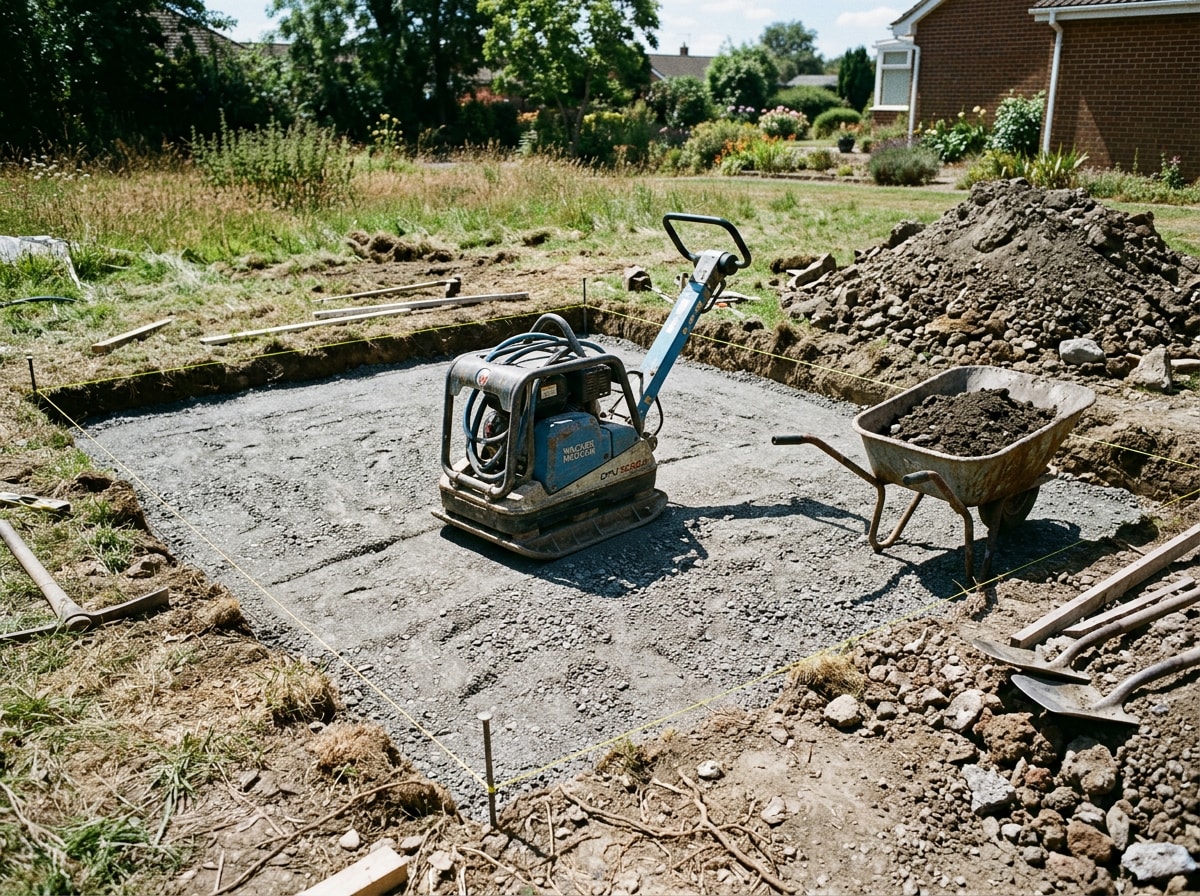
Three questions to ask any bidder, in this order:
- How deep is the base, and how many compaction lifts?
- What are you compacting with?
- Where does water leave the yard?
Vague answers tell you plenty. The Synthetic Turf Council's published installation guidelines cover base, drainage and seaming practice, and they are worth reading before you sign anything.
One hard rule: never install over living sod. It decomposes, settles unevenly, and the lawn ripples within a year.
If your yard already pools after storms, fix that first. Turf over a drainage problem is a more expensive drainage problem. Our drainage work usually runs ahead of the turf crew, not after.
What North Florida Climate Does to Turf
Centerville yards punish turf in three specific ways.
UV exposure. Summer sun here is intense enough that non stabilized fibers lose color and go brittle within a few seasons. UV stabilized polyethylene blades are the baseline spec, and anything less is a false economy in this climate.
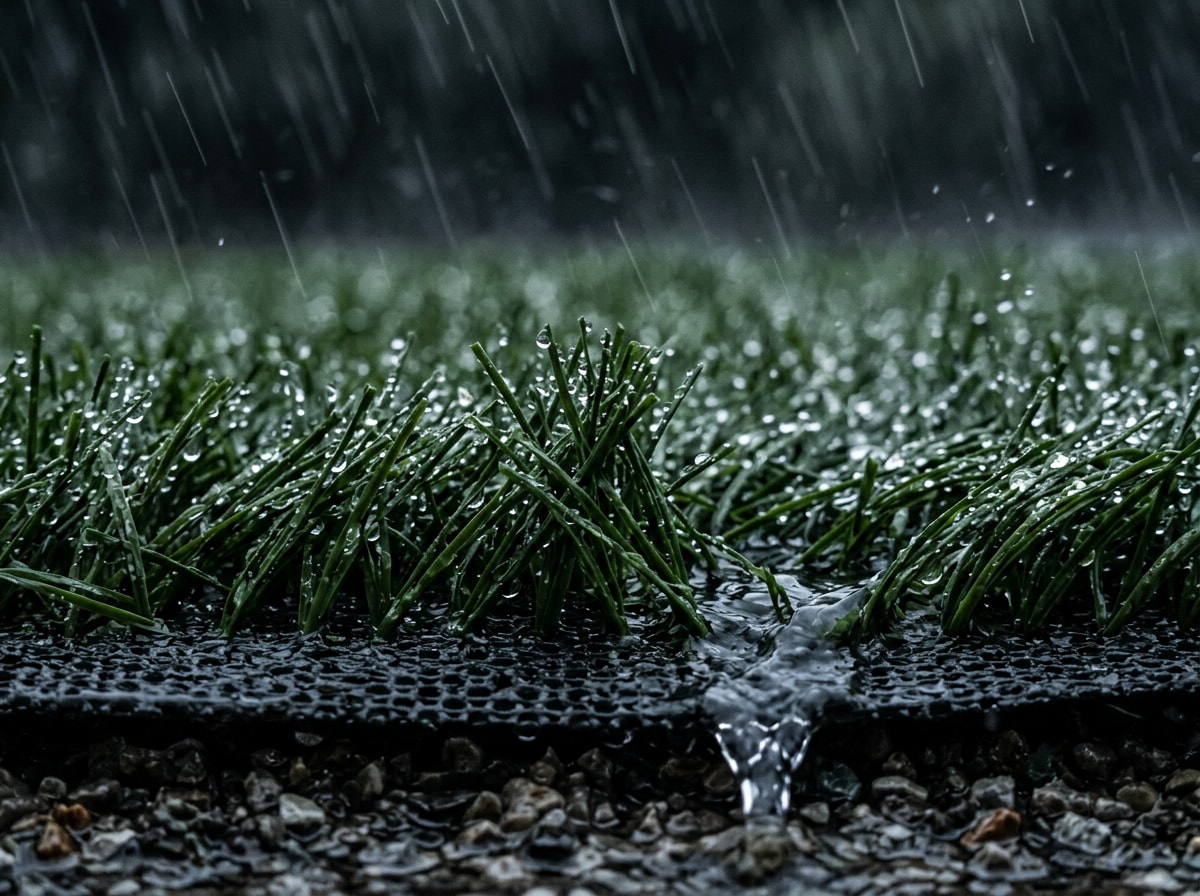
Water volume. A single afternoon thunderstorm can drop more rain than some regions see in a month. Fully permeable backing is non negotiable, paired with a base that moves water down and out instead of holding it. Leon County soils shift from sandy to tight clay sometimes within the same lot, so base depth and compaction have to match what the crew finds during excavation, not what the estimate assumed.
Heat. This deserves a straight answer rather than a sales line. UF/IFAS turfgrass researchers report that on the hottest summer days artificial turf surfaces can reach about 174°F, hot enough to burn skin, while natural turf stays nearer 102°F because of evapotranspiration and shade. You can reduce that with lighter blade colors, cooling infill, shade trees or sails, and a hose rinse before barefoot or pet use. Nobody should promise you it stays cool. Read the full UF/IFAS findings on synthetic turf and surface heat before committing a full sun front yard.
If heat is the deal breaker, a planted low water front yard is the alternative worth pricing. We covered that approach in our guide to low maintenance front yard landscaping in Centerville.
Florida's Synthetic Turf Rules and HOA Approval
This changed recently and most contractor pages have not caught up.
Florida Statute 125.572 directs the Department of Environmental Protection to adopt minimum standards for synthetic turf installation on single-family residential properties one acre or less, covering material type, color, permeability, stormwater management, potable water conservation, water quality, proximity to trees and other vegetation, and other factors affecting adjacent properties.
Once those rules were adopted, a local government may not adopt or enforce any ordinance that prohibits a compliant synthetic turf installation on single-family residential property, or that regulates synthetic turf inconsistently with the state standards.
What that means in practice for a Centerville homeowner:
- If your lot is single family and one acre or less, the county cannot ban compliant turf outright.
The preemption applies to local governments, not to private HOA covenants. Architectural review still applies.
- The state rule sets material limits, including restrictions on infill type and on heavy metals and intentionally added PFAS. Confirm the current rule text with your installer before ordering product.
- Setbacks from waterbodies and tree protection requirements still exist.
Read the statute yourself at the Florida Senate's text of 125.572. Then send your HOA the product spec sheet and a site plan before you schedule. We have had two Centerville projects delayed a month purely over an architectural review packet that could have been submitted in week one.
How Long Turf Lasts and Whether It Pays Off
Quality UV stabilized synthetic turf, properly installed, generally holds 15 to 20 years under manufacturer marketing claims. In practice in full Florida sun, plan on 10 to 15 years of good appearance for a high traffic residential lawn. Thin, low face weight product can look tired in five to eight years with blades laid flat, color washed out and seams lifting. UF/IFAS Extension materials put synthetic lifespan on the shorter end of that range, which is a fair counterweight to brochure numbers.
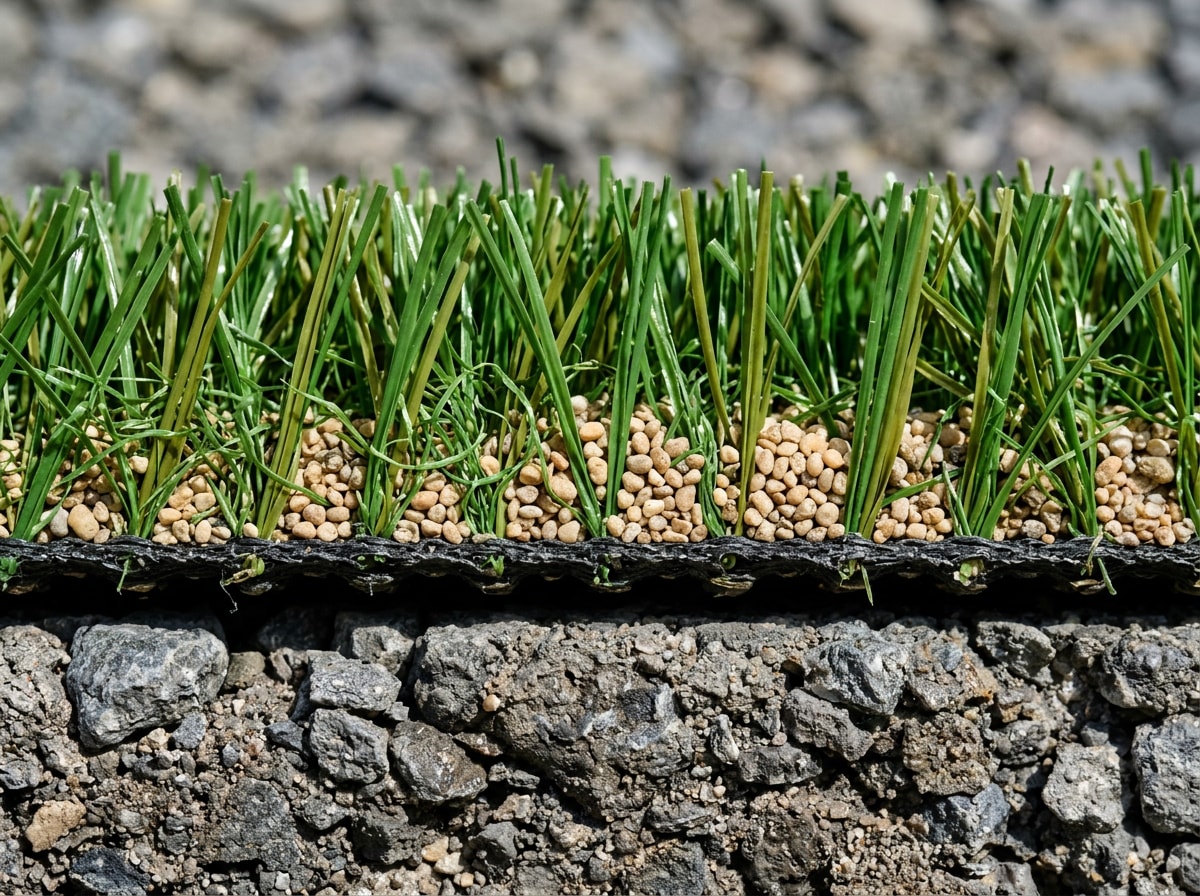
Four variables control the outcome:
- Face weight. More fiber per square yard resists matting.
- UV stabilization. The difference between fading and holding color.
- Base quality. Settling ruins good turf faster than sunlight does.
- Infill top ups. Blades need support to stand up over time.
On warranties, read both documents. Manufacturers typically cover fiber degradation and fading for 8 to 15 years. The installer's workmanship warranty is separate, usually shorter, and covers seams, wrinkles and settling. Those are the failures you are statistically more likely to see.
For the water side of the math, EPA WaterSense reports that outdoor water use accounts for more than 30 percent of total household water use on average, and that as much as 50 percent of outdoor water is lost to wind, evaporation and runoff from inefficient systems . Before you price turf purely for water savings, check the EPA WaterSense outdoor water statistics. On several Centerville jobs, fixing a leaking zone and adding a smart controller through our residential irrigation installation cut the water bill enough that the homeowner kept the sod.
See finished local work on our projects page, or start at the Talquin Landscaping home page to see the full range of services we run in Centerville and across Leon County.
FAQ
How much does turf installation cost per square foot in Centerville, FL?
Synthetic turf typically runs $8 to $15 per square foot installed, with most residential projects near $11. Sod runs about $1 to $2 per square foot installed. Base preparation and labor, not the turf roll, account for most of the variation between bids.
How long does artificial turf last in Florida?
Manufacturers claim 15 to 20 years for quality UV stabilized product. Realistically, plan on 10 to 15 years of good appearance in full North Florida sun. Low face weight, a poorly compacted base, and skipped infill top ups all shorten it.
Does artificial turf get hot in North Florida?
Yes, significantly. UF/IFAS research has measured synthetic surfaces far hotter than natural turf on peak summer days. Lighter blade colors, cooling infill, shade and a quick hose rinse before barefoot or pet use all help, but none of them make it match grass.
How long does a turf installation take?
Two to five days for most standard residential synthetic projects. Sod is usually one to two days. Concrete removal, drainage correction, tight site access and rain all extend the schedule.
Can my HOA stop me from installing artificial turf in Centerville?
Possibly. The 2025 state law restricts local governments, not private HOA covenants, so architectural review rules can still apply to your lot. Submit your product spec and site plan to the HOA before scheduling.
Do I need a permit for turf installation in Leon County?
Requirements vary by scope and by whether grading or drainage work is involved. Call the county before you excavate, and ask your installer who is pulling any required approvals. Pure sod replacement normally does not require one.
Does artificial turf drain in heavy rain?
Properly installed, yes. Fully permeable backing over a compacted, free draining aggregate base handles typical North Florida downpours. Turf installed over compacted clay with no outlet will pool, which is why grading comes before product selection.
What maintenance does synthetic turf need?
Rinse debris, blow off leaves, broom high traffic lanes a few times a year, and top up infill as it settles. Pet areas need enzyme rinses. Budget roughly $50 to $100 a year in materials for a typical yard.
Is sod or synthetic turf better for a shaded Centerville yard?
Neither is great under a dense live oak canopy. Synthetic collects leaf litter and can grow moss in persistent damp shade, and most sod varieties thin out. Shade tolerant ground cover or a mulched planting bed usually outperforms both.
Can you remove old concrete or a failed lawn first?
Yes. Demolition, haul off, excavation and grading are quoted as separate line items so you can see exactly what the prep costs versus the turf.
Ready for a site specific number? Request your free estimate and we will walk the yard, check where water goes, and quote the base and the turf as separate lines so nothing is hidden.