Low maintenance front yard landscaping in Centerville, FL comes down to three moves: less turf, tougher plants, and materials that shrug off August downpours and a January freeze. Most yards that eat your Saturday were designed wrong, not maintained wrong. Here is what actually holds up in Leon County sand, clay and pine straw.
Low Maintenance Front Yard Ideas That Work in Centerville
These are the changes that cut the most work per dollar, in the order we usually recommend them.
1. Shrink the Lawn First
The fastest way to cut yard work is to mow less of it.
Replace struggling turf with wider planting beds, groundcover or hardscape, and keep grass only where it earns its keep.
Cut turf first in the spots it never fills in anyway:
- The strip between the sidewalk and the road
- Steep slopes that scalp every time you mow
- Deep shade under live oaks and canopy-road trees
For Leon County, centipede and bahiagrass are the genuinely low-input turf choices. St. Augustine looks lush but wants more water, more fertilizer and more pest attention.
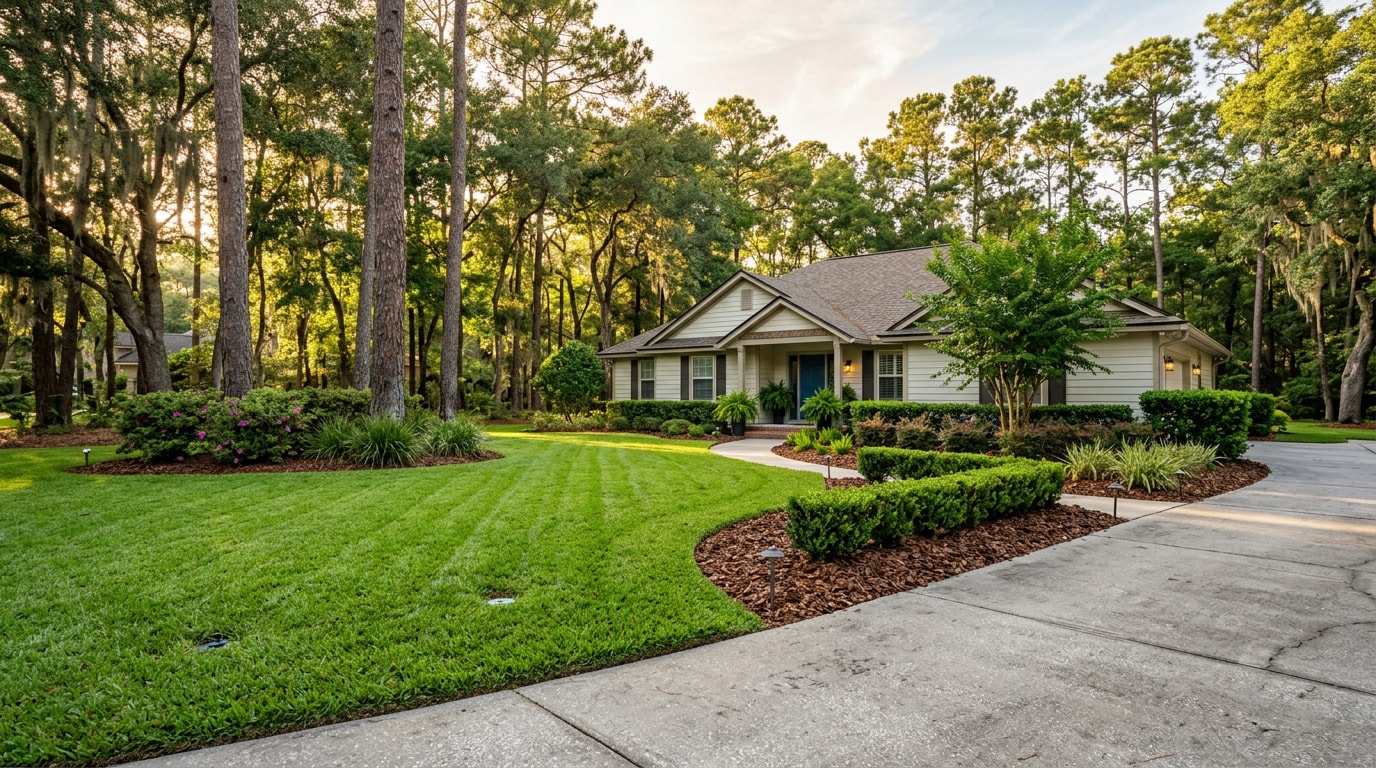
On a Killearn Acres front yard our crew reworked last spring, dropping the mowable area from roughly 4,000 square feet to about 1,400 took the homeowner's mow-and-edge routine from close to an hour down to under 20 minutes. That is the real math behind residential landscape installation: you are buying back time every single week.
2. Add Hardscape Where Plants Struggle
Hard surfaces never need mowing, watering or replanting.
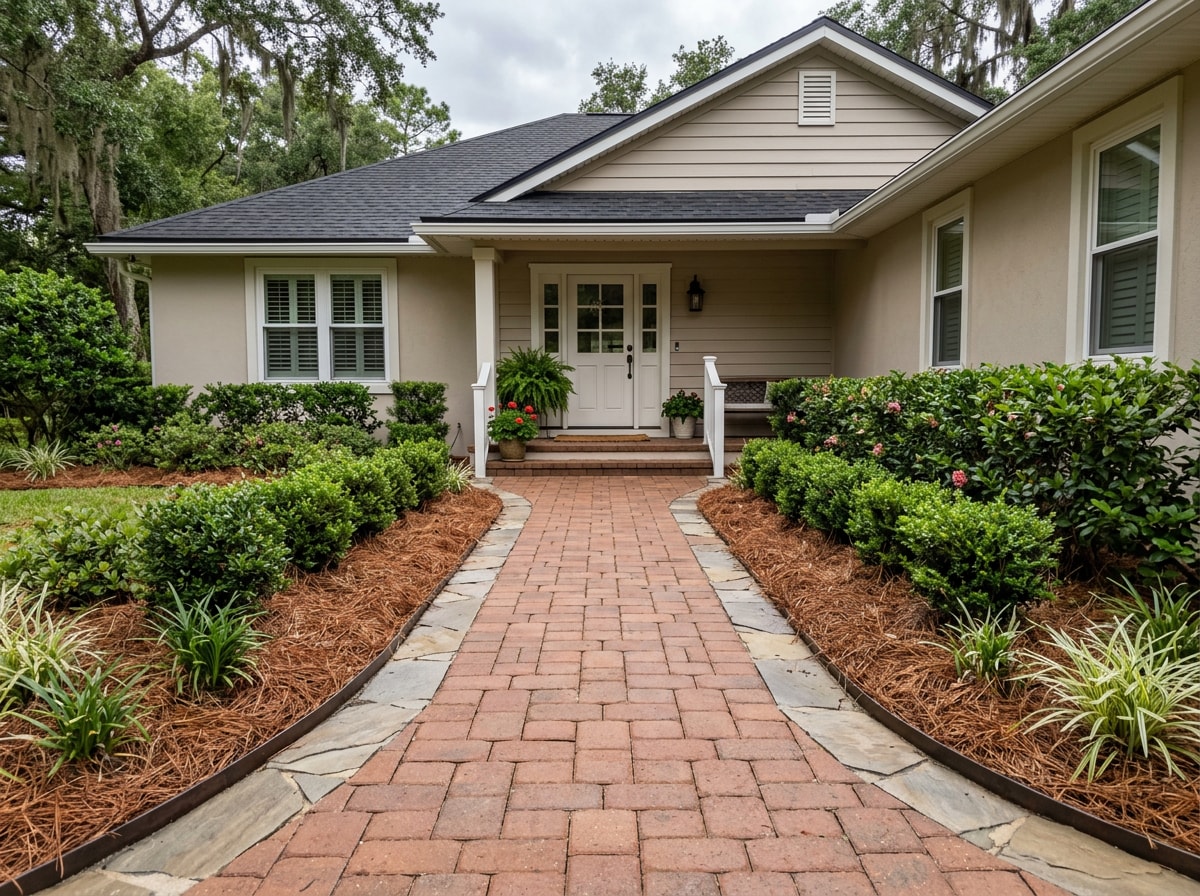
A paver walkway from the drive to the front door, a stone border framing a bed, or a small gravel court under a shade tree all reduce planted square footage while sharpening the design.
Clean bed edging, whether steel, brick or a cut-in trench, is the detail that keeps mulch out of the lawn and grass out of the beds.
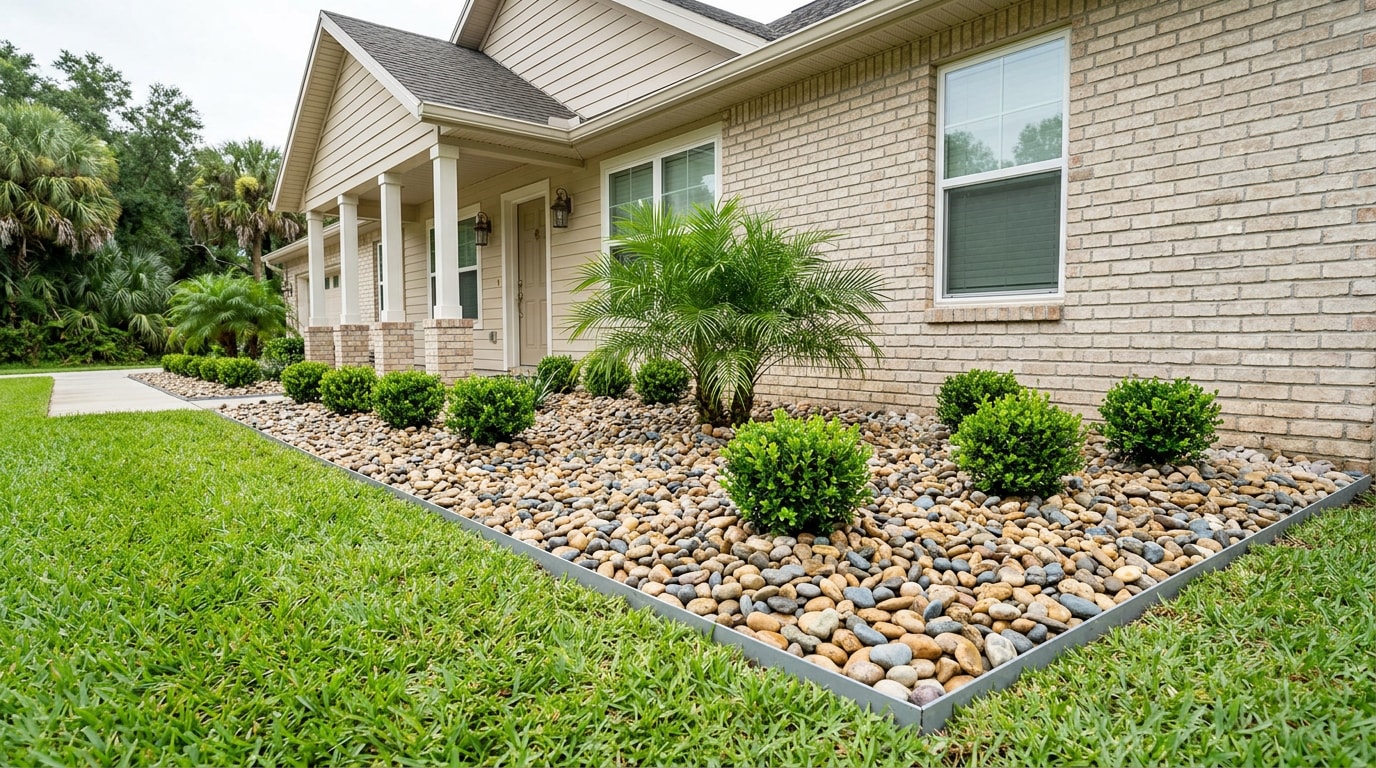
Be honest about rock versus mulch. Rock is permanent, but weeds still sprout in the dust that collects on top. Here is the caveat South Florida guides miss: our pine and oak leaf drop turns a big rock field into a blowing-and-raking chore twice a year. Keep rock areas small and accent-sized. Our hardscaping page covers material options in more detail.
3. Mulch at the Right Depth
Mulch does three jobs at once: weed suppression, moisture retention, and buffering root-zone temperature through both August heat and February cold snaps.
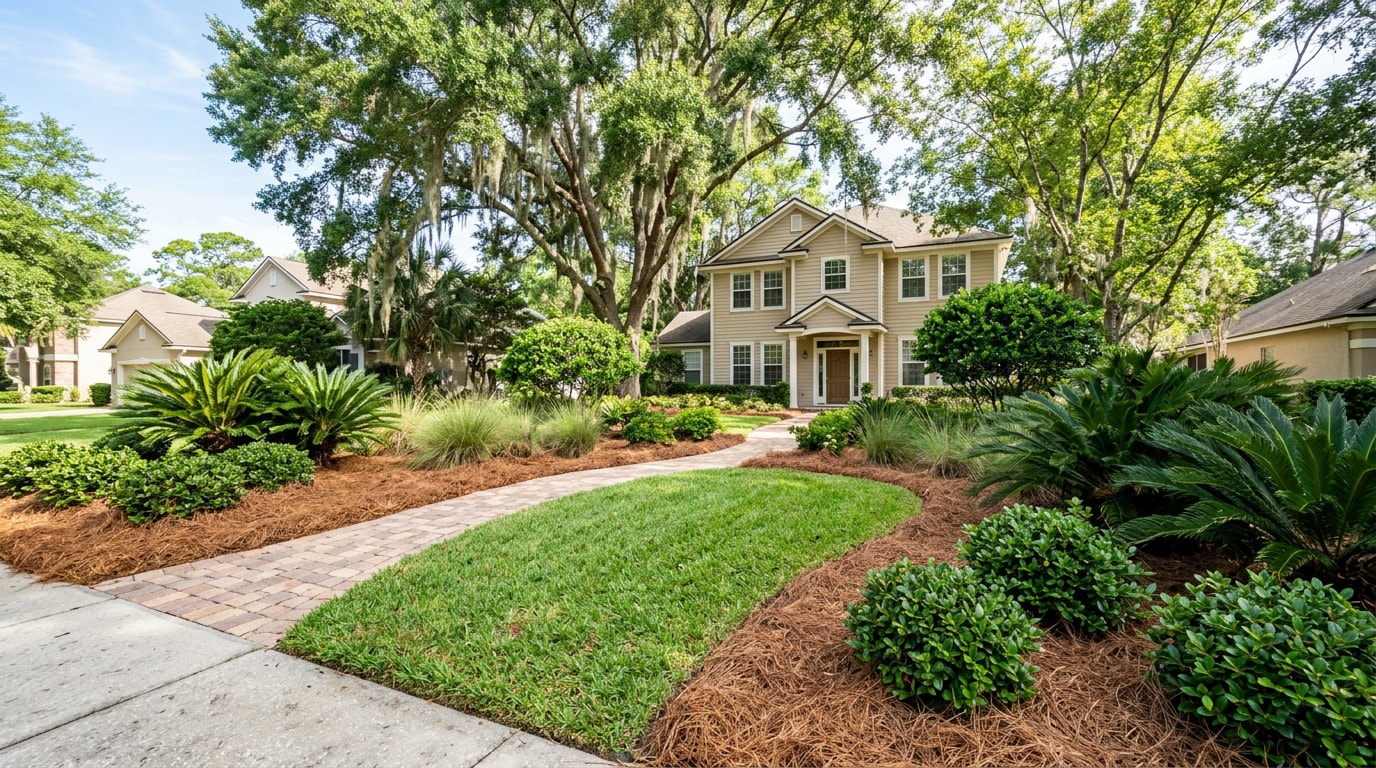
- Pine straw: locally abundant, inexpensive, knits together so it stays put on slopes
- Pine bark: lasts longer, reads more formal
- Cedar: slowest to break down, highest cost
Hold mulch depth at 2 to 3 inches and pull it back a few inches from trunks and stems. Deeper is not better; it holds water against bark and invites rot.
4. Zone the Irrigation Properly
Split your irrigation into separate turf and bed zones so beds are not drowned on the lawn's schedule.
Run drip or micro-tubing to beds so water goes to the root zone instead of evaporating off foliage. Add a rain sensor or smart controller and water in the early morning.
The EPA WaterSense program reports that residential outdoor water use nationally runs near 8 billion gallons a day, most of it landscape irrigation, which is exactly where an efficient design pays you back.
Once Florida-friendly beds finish establishing, wean them off routine irrigation rather than watering them forever.
Best Low Maintenance Plants for a Centerville Front Yard
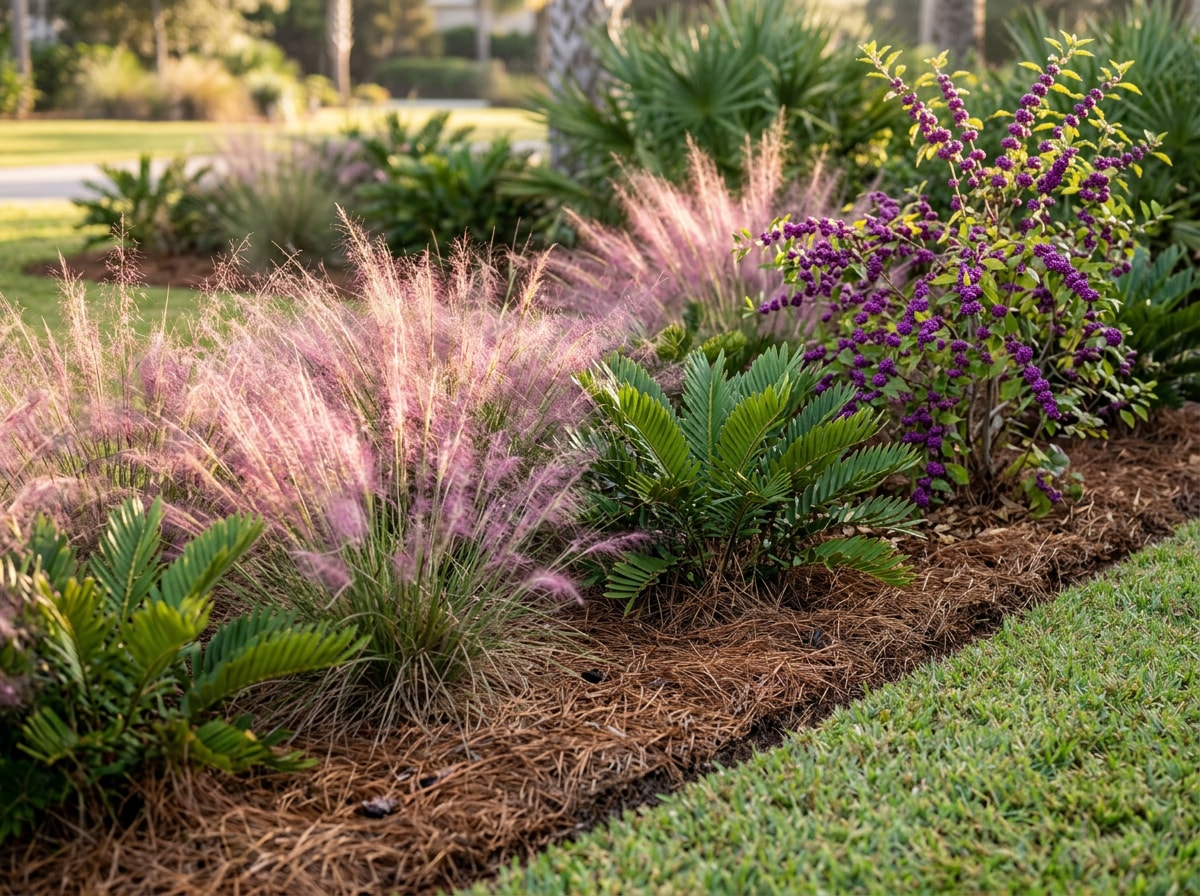
Right plant, right place beats every other trick. Match each selection to sun, drainage and mature size, then repeat a small palette of five or six species instead of planting one of everything.
| Plant | Sun | Mature size | Hardy to USDA zone |
|---|---|---|---|
| Coontie | Sun to part shade | 3' x 4' | 8b |
| Muhly grass | Full sun | 3 to 4' | 7 |
| Yaupon holly | Sun to part shade | 15 to 20' (dwarf 3 to 5') | 7 |
| Florida anise | Part to full shade | 6 to 10' | 7 |
| Oakleaf hydrangea | Part shade | 6 to 8' | 5 |
| Beautyberry | Sun to part shade | 4 to 6' | 6 |
| Saw palmetto | Sun to part shade | 5 to 8' | 8a |
Perennials and shrubs beat annuals by a wide margin here. You plant once instead of twice a year.
The Statewide Plant List Trap
Watch out for generic "Florida native" lists. Cocoplum, seagrape and firebush are all natives, to central and south Florida. In a Leon County freeze they burn back hard or die outright, and we replace them for homeowners every few winters.
The 2023 USDA Plant Hardiness Zone Map puts the Tallahassee area in Zone 9a, but that number is an average annual low, not a ceiling on how cold it gets. Treat a Zone 9b tag as a gamble and a Zone 10 tag as a seasonal decoration.
For regionally vetted selections, the UF/IFAS Florida-Friendly Landscaping program publishes North Florida plant guidance worth checking before you buy.
Cold-Hardy Palms for Structure
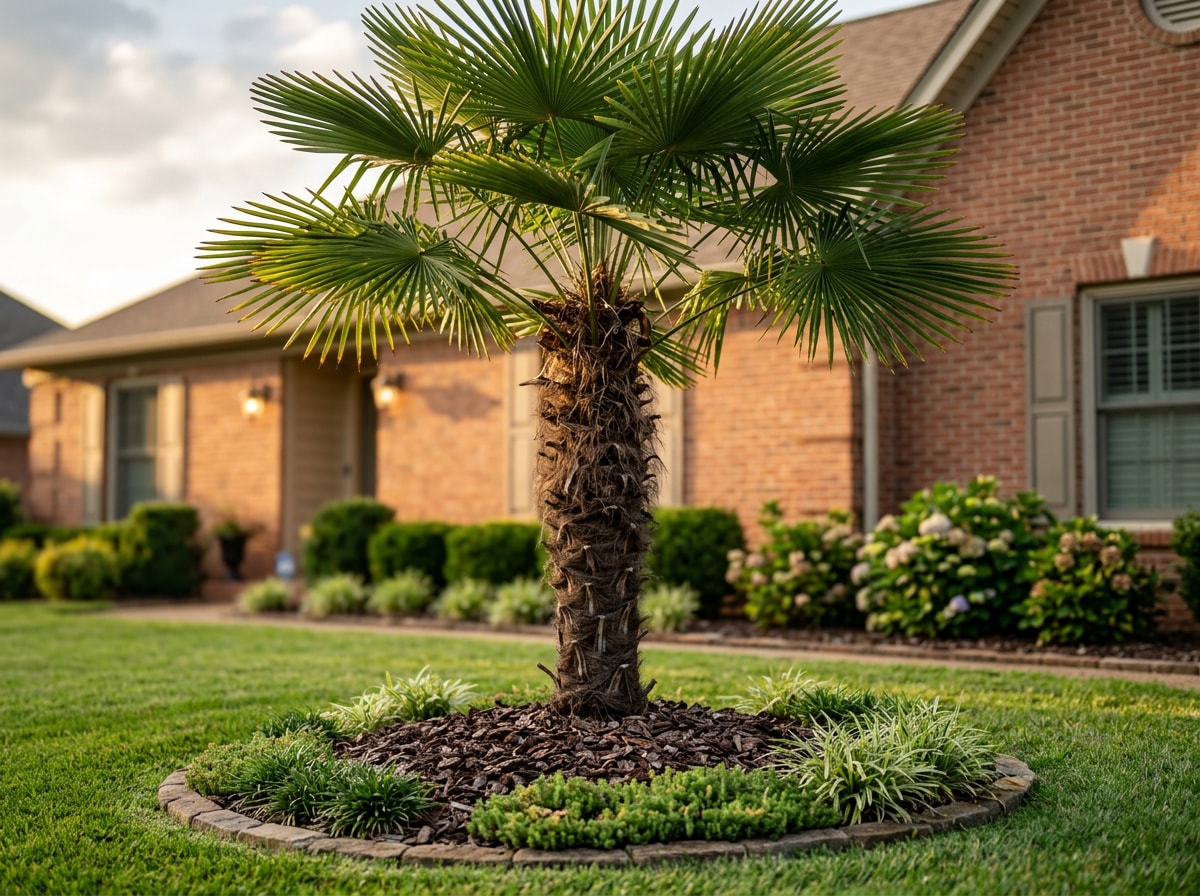
Palms give a front yard height and a clean focal point without much ground-level work.
Windmill palm, needle palm, cabbage palm and sago (technically a cycad) all handle Centerville winters. Coconut, royal, foxtail and adonidia palms, the staples of Gulf-coast designs, brown out or die in a Tallahassee-area freeze.
Stick with cold-hardy species and give each one room for its mature spread.
Low Maintenance Does Not Mean No Maintenance
Plants keep growing. Heavy summer rain shifts mulch downhill. Palms drop fronds.
A well-designed Centerville front yard still needs roughly 8 to 15 hours of attention a year. Here is how that typically distributes, based on the service schedules we run for local clients:
| Season | Tasks | Rough time |
|---|---|---|
| Late winter | Cut back grasses, prune summer bloomers, assess freeze damage | 3 to 4 hours |
| Spring | Top up mulch to 2 to 3 inches, pre-emergent in beds | 2 to 4 hours |
| Summer | Spot weeding, light shaping, irrigation check | 2 to 3 hours |
| Fall | Leaf and pine straw cleanup, bed edge recut | 2 to 4 hours |
Treat those as planning estimates, not quotes. If you would rather not own the calendar at all, landscape maintenance handles it on a set rotation, and our guide to garden maintenance in Centerville breaks down what a visit actually includes.
Plan the Design Before You Plant
Most of your future workload is decided before a single plant goes in the ground.
Sketch bed shapes, walkways and sight lines first, then choose plants to fit them. That sequence is the whole point of landscape design.
Two local details people skip:
- Soil. North Florida ground here runs from loose sand to heavy clay, and both are low in nutrients. Working compost or aged pine bark into beds before planting pays off for years.
- Deed restrictions. Subdivisions around Killearn Acres and Bradfordville often set rules on turf ratios, front-yard rock and border materials. Check before you buy pallets of anything.
Ready to hand it off? Get a free estimate and we will walk the yard with you.
Mistakes We See in Leon County Front Yards
Planting too close together. Three-gallon shrubs look sparse on install day, so people crowd them, then spend every spring pruning a green wall. Space for mature size.
Ignoring shade reality. We watched a client's bed of sun-loving perennials go in under a mature canopy oak off Centerville Road. It had thinned to bare mulch within two seasons.
Overcomplicating the plan. Simple, repeated groupings read better from the street and stay easier to maintain.
See our Centerville service area page for local coverage, or start at the Talquin Landscaping homepage to see the full range of work.
FAQ
Do I still need to maintain a low-maintenance front yard?
Yes. Expect light weeding monthly, pruning once or twice a year after bloom, a mulch top-up each spring, and cleanup after leaf drop and any freeze damage. Plan on a few hours per season, not per weekend.
What is the cheapest low maintenance landscaping in North Florida?
Pine straw beds with a small palette of tough shrubs. Straw is cheap and locally available, and reducing turf costs almost nothing beyond removal. Hardscape delivers the biggest long-term labor cut but has the highest upfront price.
What grass is easiest to maintain around Tallahassee?
Centipede, because it needs less fertilizer and mowing than St. Augustine. Bahiagrass is tougher on large sunny areas but coarser looking. Neither performs in heavy shade, which is where beds or groundcover belong instead.
Should I use mulch or rock?
Use both, strategically. Mulch belongs in planted beds, where it improves soil and holds moisture. Rock works as an accent: a dry creek line, a border strip, a small feature area. Given our leaf drop, keep rock zones modest so cleanup stays simple.
Does landscape fabric stop weeds long term?
Not really. Fabric helps for a season or two, then organic debris builds on top and weeds root in that layer instead. Correct mulch depth plus tight plant spacing is more durable.
Can palms work in a low-maintenance landscape?
Yes, with two conditions. Choose a species reliably hardy for Zone 9a, such as windmill, needle or cabbage palm, and place it where its mature spread will not crowd the house or walkway.
Does low maintenance landscaping hurt resale value?
No, when it is designed rather than defaulted. Buyers respond to clean bed lines, healthy plants and a tidy entry walk. A sparse yard of bare rock and dying shrubs reads as neglect, which is a design problem, not a maintenance-level problem.
How long does a front yard conversion take?
Most Centerville front yards are a two to five day job, depending on demolition, irrigation changes and hardscape. Plant establishment watering runs through the first growing season after that.