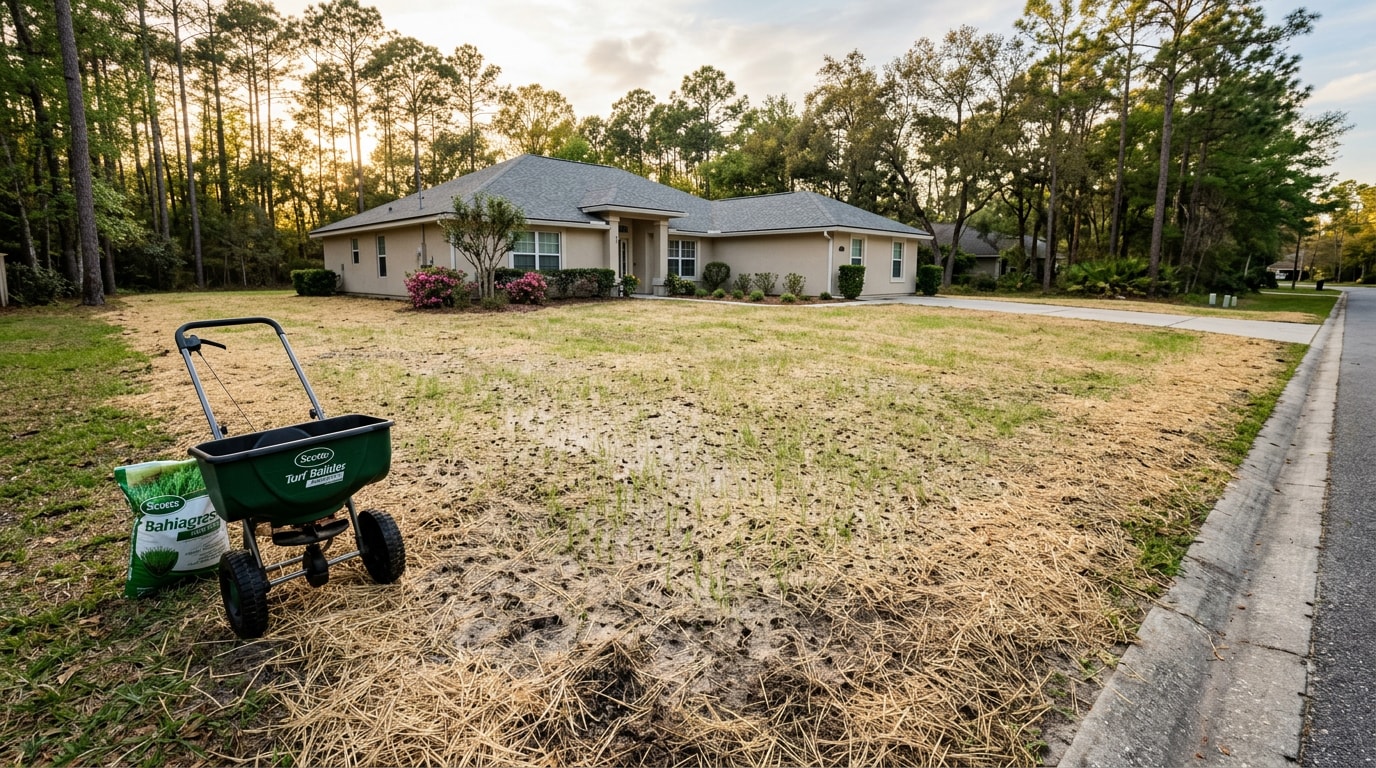
Knowing how to reseed a lawn in Woodville, FL starts with one hard truth: only a couple of the grasses that grow here can be started from seed, and only inside a narrow window of the year. Hit that window with a properly built seedbed and you can rebuild an entire yard for a fraction of what sod costs. Miss it and you have bought very expensive bird food.
Quick Answer: The Reseeding Process in 7 Steps
- Confirm your grass can actually be grown from seed (bahiagrass and bermuda, mostly).
- Wait until soil at 2 inches deep holds above roughly 70°F, usually late April through July here.
- Kill or strip the old turf and weeds, then rake the area down to bare soil.
- Soil test, correct pH, then till and add compost to the top 4 to 6 inches.
- Spread seed at the labeled rate in two half rate passes at right angles.
- Rake lightly, roll or tamp the surface, apply starter fertilizer, and mulch with clean straw.
- Water in short cycles several times a day for two weeks, then taper off.
Everything below is the detail that decides whether those seven steps work.
When Is the Best Time to Reseed a Lawn in Woodville?
The seeding window for warm season grass in North Florida runs from late April through July, once soil temperature at a 2-inch depth stays above about 70°F. That is when bahiagrass and bermuda germinate fast enough to outrun summer weeds. Seed put down in fall leaves seedlings too small to survive the first hard frost.
We probe soil temperature before every seeded job. On open, sandy Woodville lots the 2-inch reading usually crosses 70°F in mid to late April. Shaded, low lying yards near the flatwoods off Natural Bridge Road can run two to three weeks behind that, and seeding them on the calendar instead of on the thermometer is the single most common reason a DIY reseed fails around here.
| Grass | Can it be seeded? | Local seeding window |
|---|---|---|
| Bahiagrass | Yes, the most reliable seeded option | Late April through July |
| Bermuda | Yes, with dependable irrigation | May through July |
| Centipede | Technically, but slow and patchy | May through June |
| St. Augustine | No viable seed sold | Sod or plugs, warm months |
| Annual ryegrass | Yes, temporary winter color only | Late October to November |
Overseeding with annual ryegrass is a different job entirely. It greens things up until it dies out in May. It does not repair a failed lawn.
University of Florida guidance on establishing a Florida lawn lists establishment methods and seeding rates species by species, and it is worth reading before you buy anything.
Reseeding vs. Overseeding: Which Does Your Lawn Need?
Reseeding is a full reset. You kill or strip the existing turf, rebuild the seedbed, and seed bare soil.
Overseeding drops new seed into a lawn that is still mostly alive, just to thicken it.
The rough rule:
- More than half the yard is weeds or bare sand? Reseed.
- Turf is intact but thin and hungry? Overseed or fix the maintenance program first.
One local catch before you buy a bag. Most Woodville lawns are centipede, St. Augustine, or bahiagrass. St. Augustine is not sold as seed at all, and improved centipede is slow and unreliable from seed, so a true seed based renovation really only pencils out for bahiagrass or bermuda. For the rest, plugs or sod beat seed every time. Our landscape installation crew handles the sod and plug side when seed is the wrong tool.
How to Reseed a Lawn, Step by Step
Plan on three to five weekends from kill off to first mow. Gather your removal tool of choice, a stiff rake, a broadcast spreader, starter fertilizer, and a bale of clean straw before you start.
1. Kill and Remove the Existing Lawn
Three methods work, and all three end at bare soil.
Non selective herbicide is cheapest. Spray on a calm, dry morning, wait 7 to 14 days, then spot treat anything still green. Read the label for residual activity, because some products block germination for weeks.
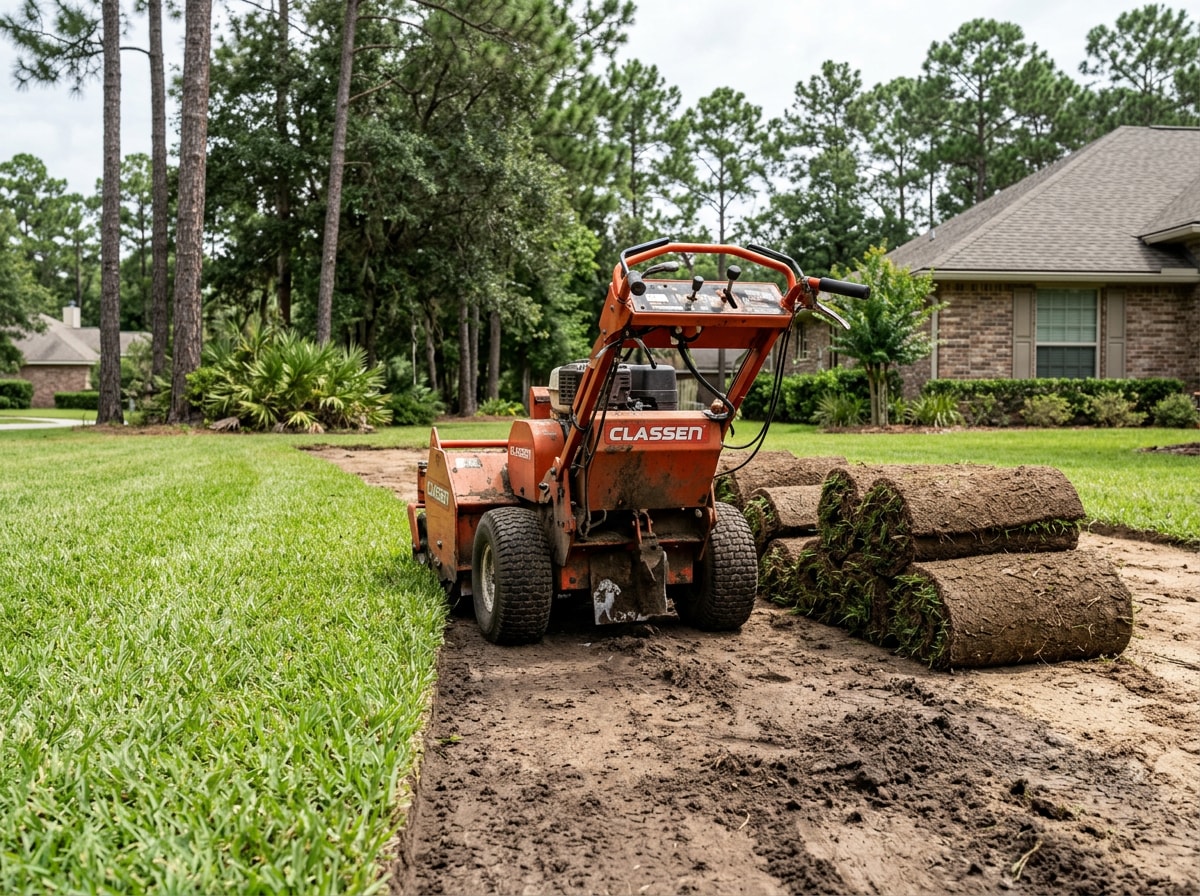
Sod cutter rental is fastest. One day of work, and the strips haul off with the thatch and most of the weed seed bank.
Solarization with clear or black plastic pinned tight over moist soil takes four to six weeks and uses no chemicals. June and July heat here makes it work quickly.
Two local warnings. Afternoon storms build fast, so spray early and respect the rainfast window on the label. And tarp nearby azaleas and beds, because drift onto landscape plants happens easily on breezy days.
2. Prepare the Soil
Start with a soil test. It tells you pH and what nutrients are missing for a few dollars. Most turf here wants pH between 5.5 and 6.5, and bahiagrass tolerates the low end better than most. Lime raises pH, elemental sulfur lowers it. Your county office, UF/IFAS Extension Leon County, supplies sample bags and forms and can walk you through pulling a proper sample.
Next, break up compaction in the top 4 to 6 inches with a tiller or core aerator. Pull rocks and roots, fill low spots, and grade so water runs away from the foundation.
Our sandy soil drains fast and holds almost no organic matter, so amendments matter more here than in clay country. Spread half an inch to an inch of compost or quality topsoil, roughly 1.5 to 3 cubic yards per 1,000 square feet.
Good seedbed prep comes down to one mechanism. A seed germinates only when its coat stays in contact with moist soil. Loose, lumpy ground leaves air gaps, the seed dries between waterings, and it dies.
3. Spread the Grass Seed
Use the rate printed on the bag. Bahiagrass typically runs up to about 10 pounds per 1,000 square feet, and cutting the rate to save money buys you an open stand that weeds move into.
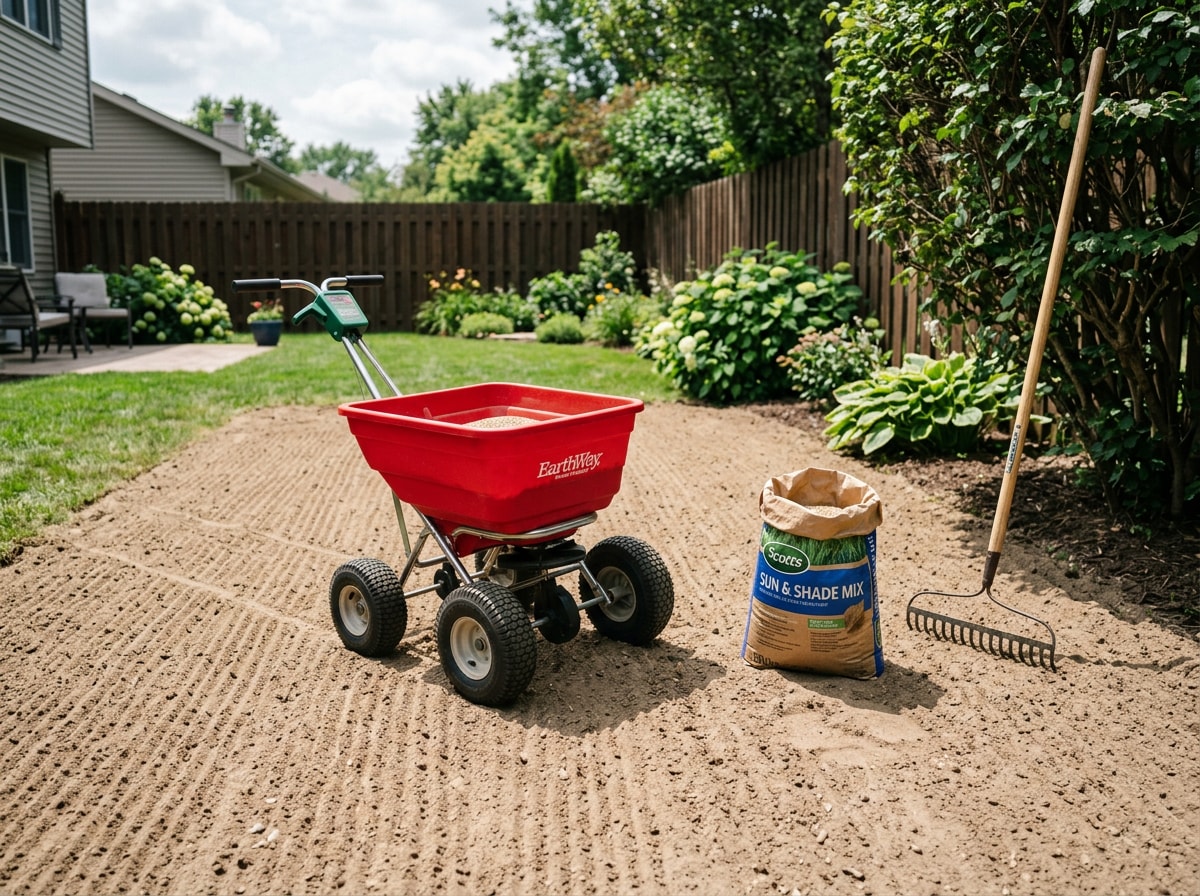
Set the spreader to half the target rate and make two passes, one running north to south, the second running east to west. The crossing pattern removes stripes and fills gaps.
Then rake lightly so only about 10 percent of the seed is still visible, and firm the surface with a water filled roller or by walking it down.
Before you buy, read the label: high germination percentage, purity above 95 percent, weed seed at or near zero, and low inert matter. Bargain seed is cheap because of what fills the other half of the bag. Florida's seed labeling law spells out what every line on that tag has to disclose.
A field test worth ten minutes: count out 20 seeds from the bag, fold them into a damp paper towel inside a zip bag, and leave it somewhere warm. Count sprouts at day 10. If fewer than 14 have popped, the lot is weak and you are better off returning it than spreading it across 5,000 square feet.
4. Apply Starter Fertilizer
Starter fertilizer carries extra phosphorus, which pushes root growth in new seedlings instead of top growth. Apply at the bag rate right before or right after seeding, then water it in.
One caveat. Florida regulates phosphorus in turf fertilizer, and many local governments restrict application during the summer rainy season. Rules vary by ordinance and change, so confirm what is currently allowed in Leon County before you buy.
5. Water Properly
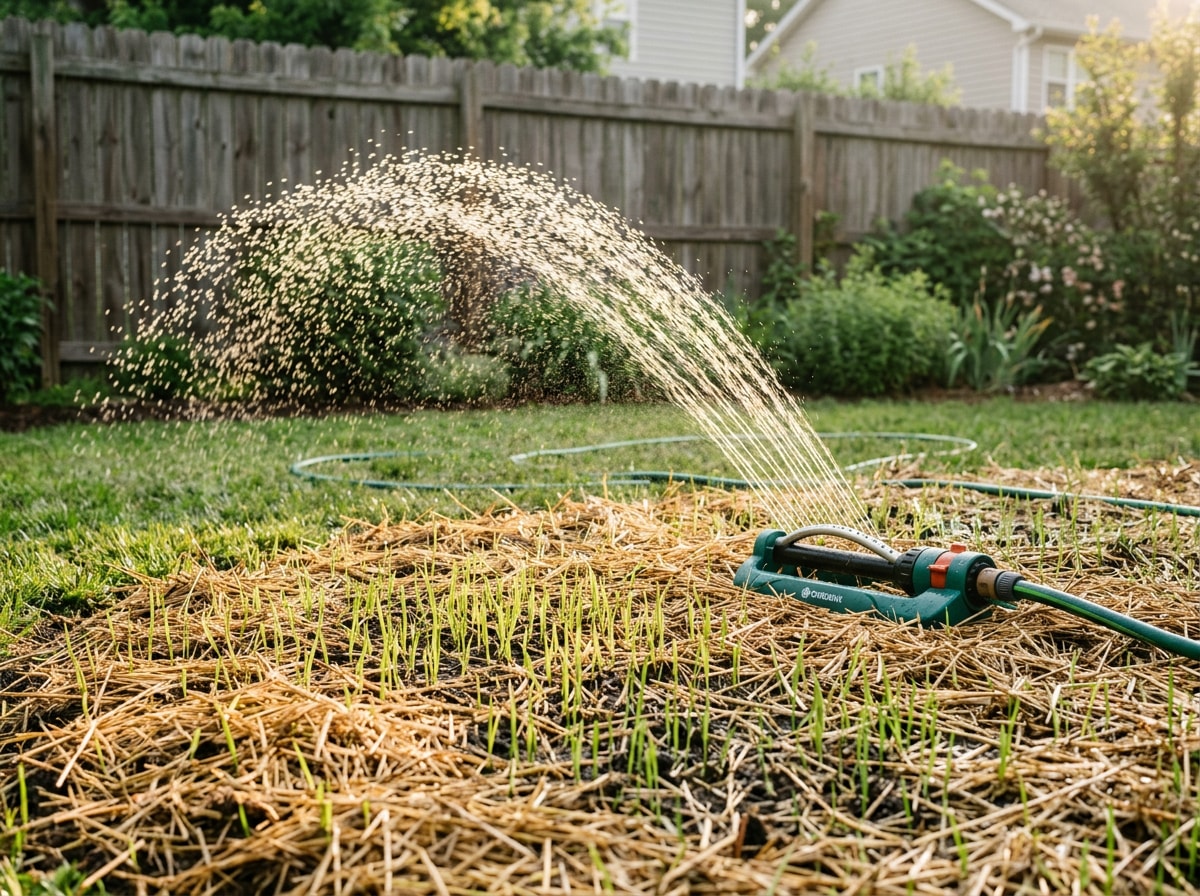
Watering new seed is about frequency, not volume. Keep the top inch damp with two to four short cycles a day for the first two weeks, just short of puddling.
Once germination is underway, shift to once a day for weeks three and four, then every other day with deeper soakings through week six. By week eight you are on a normal schedule.
A thin layer of straw mulch shades the surface, cuts evaporation, and can save you a watering cycle a day in June heat.
Watering limits come from the Northwest Florida Water Management District and, inside city service areas, from the utility. New planting allowances usually exist but carry conditions, so check current rules before you program the controller. If coverage is patchy to begin with, fixing heads and zones beats adding minutes, which is why we often pair a reseed with irrigation work.
Caring for New Grass Through Week 8
Stay off it. Foot traffic on 2-inch seedlings shears roots that have not anchored yet, so rope the area off if kids or dogs use the yard.
Hold the first mow until the grass reaches about 3 inches, then remove no more than a third of the blade with a sharp mower.
Expect uneven fill in weeks two through eight. Some patches green up in ten days and others take a month. That is normal for seeded bahiagrass.
Skip weed and feed and all broadleaf herbicides until you have made three or four real mowings. Young grass cannot take it. If you would rather hand off the follow through, our lawn maintenance program covers Woodville and the surrounding communities.
What It Costs to Reseed a Lawn in Woodville
| Approach | Typical cost per sq ft | 5,000 sq ft lot |
|---|---|---|
| DIY seed renovation | $0.10 to $0.25 | $500 to $1,250 |
| Professional seeded renovation | $0.45 to $1.20 | $2,250 to $6,000 |
DIY numbers cover seed, amendments, starter fertilizer, straw, and a rental. Professional pricing adds removal, hauling, grading, and the warranty of a crew coming back.
Cost drivers are removal method, how much compost the soil needs, grading work, seed grade, and equipment rental. These are 2026 estimates from local jobs and they move with yard condition. Get a free estimate if you want a real number for your lot.
The Woodville Problem Seed Cannot Fix
Plenty of yards out here sit low, with a hardpan under the sand and water that stands for a day after a storm. Seed drowns in those spots no matter how well you prep.
If the same areas turn to moss, algae, or bare mud every summer, the fix is grade and drainage first, turf second. That means drainage solutions or excavation and grading before a single bag of seed goes down. You can see examples of that sequence in our project gallery, and we cover the same ground on lawn, sod, and drainage work in our guide to landscaping in Golden Eagle.
FAQ
Can I just sprinkle grass seed on my lawn?
Not effectively. Seed tossed onto hard ground or living turf never makes soil contact, so it dries out between waterings, germination craters, and birds take much of the rest.
How long does it take for reseeded grass to grow?
Most warm season seed germinates in 7 to 21 days, and the lawn takes 8 to 12 weeks to fill in and handle normal use. Bahiagrass sits on the slow end and can push past three weeks in cooler soil.
Do I need to remove dead grass before reseeding?
Yes. Rake off dead vegetation and thatch so seed reaches soil. A thin layer of loose clippings is fine, but a dead mat holds seed off the ground and it will not root.
Should I put topsoil over grass seed?
No. Cover seed no deeper than about a quarter inch by raking lightly. Burying it under topsoil smothers germination. Use straw mulch for moisture instead.
Can you overseed a St. Augustine lawn?
No. St. Augustine produces almost no viable seed, so there is nothing to overseed with. Repair thin areas with plugs or patch in sod. Annual ryegrass only adds temporary winter color.
Do I need to aerate before overseeding?
Only if the soil is compacted. Push a screwdriver into moist ground, and if it stops short of 6 inches or takes real force, core aerate first. Loose sandy soil often does not need it.
Is it better to seed or sod a lawn in Florida?
Seed is cheaper and works for bahiagrass and bermuda in the warm months. Sod is the only practical option for St. Augustine, gives instant cover on slopes, and is the safer choice if you need the yard usable this season.
How often should I water new grass seed in summer?
Two to four short cycles a day for the first two weeks, enough to keep the top inch damp without puddling. Taper to once daily in weeks three and four, then every other day with deeper soakings.
Talquin Landscaping is a Tallahassee area landscape, hardscape, and excavation contractor serving Woodville, Leon County, and the surrounding communities. Questions about your yard, or want a set of eyes on it before you buy seed? Reach our crew through our contact page or start at our homepage.