Most homeowners searching for lawn renovation in Centerville, FL have the same yard: enough living turf to feel worth saving, not enough to look good. The right call comes down to three things you can check in ten minutes, and the wrong call costs a full growing season.
Renovate or Re-Sod? Start With the 50% Rule
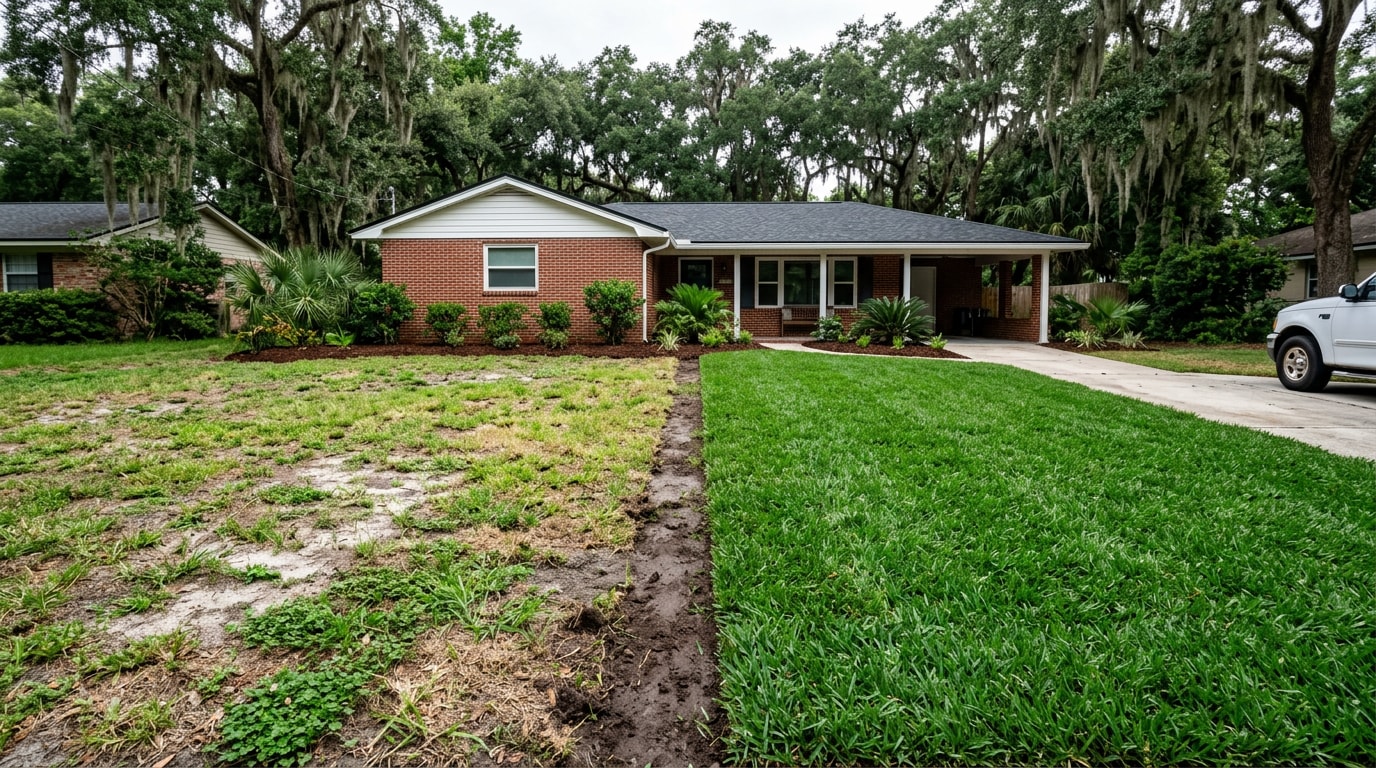
Walk the yard and estimate what percentage is still living, desirable grass. That single number drives the decision.
- Above 50% living turf: renovate. Fix the conditions, let the existing runners fill back in.
- Under about 40%: replace. You are paying to water weeds otherwise.
- 40% to 50%: the tiebreakers are weed load and compaction. Heavy weed pressure or ground you cannot push a screwdriver into tips a borderline lawn toward sod.
This threshold is not a sales rule of thumb. UF/IFAS turf guidance frames the same question before any renovation work: ask whether over 50% of the present lawn is in need of renovation, and if the existing species should even be the one that stays . Grass choice matters as much as grass quantity. A Bermuda lawn under a live oak canopy fails no matter how perfectly it is installed.
One more check before you decide anything: push a screwdriver into moist soil. If it stops within two or three inches, compaction is the real problem and neither plugs nor sod will fix it without tillage or aeration first.
What Lawn Renovation Costs in Centerville, FL in 2026
Renovation is priced by square footage and site conditions. The ranges below are typical for Centerville and the surrounding Leon County area. Access, slope, debris volume and irrigation repairs move them.
| Scope | Typical 2026 range | What it covers |
|---|---|---|
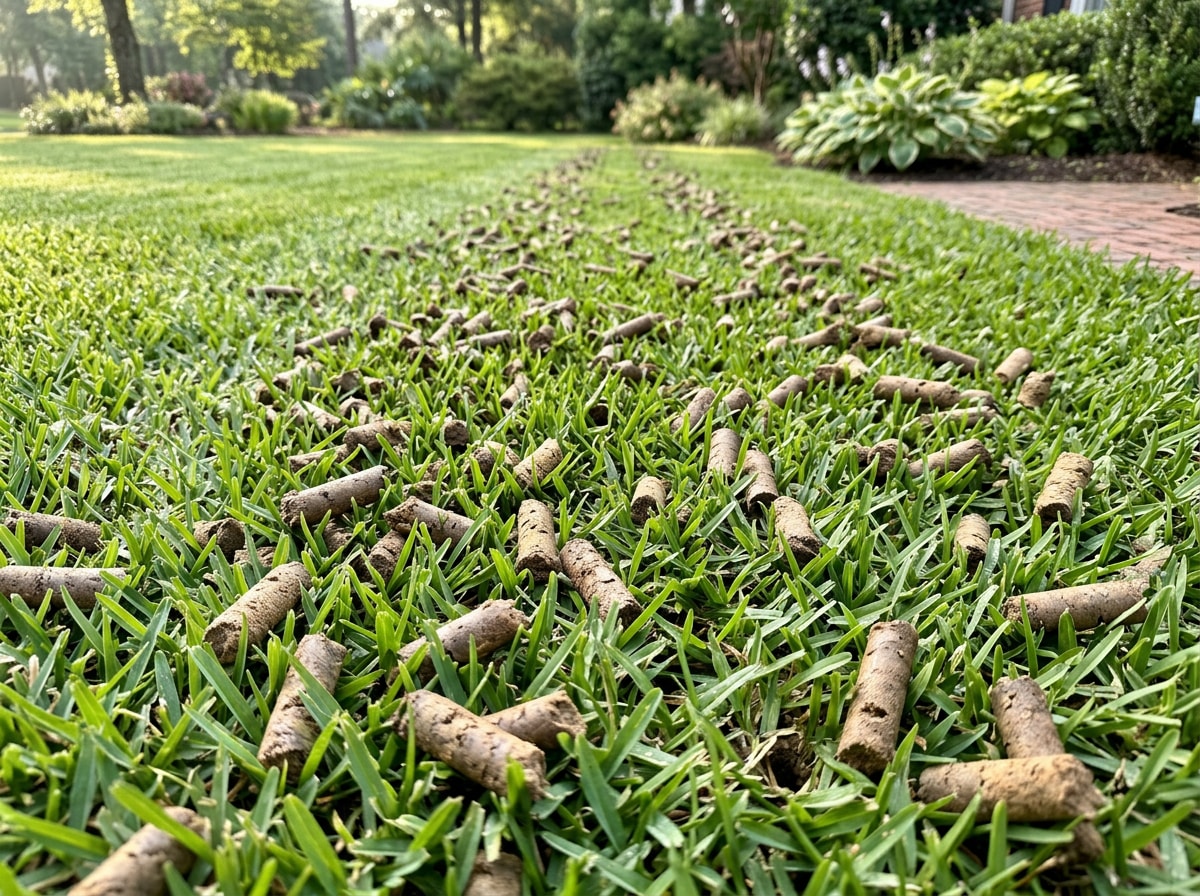
| Core aeration only | $0.05 to $0.12 per sq ft | Single pass, plugs left to break down |
| Full renovation package | $0.25 to $0.60 per sq ft | Weed control, aeration, dethatch, amendments, plugs |
| Lawn plugging (bare areas) | $0.30 to $0.75 per sq ft of treated area | Plugs on 6 to 12 inch spacing, starter fertilizer |
| Full sod replacement | $1.00 to $2.25 per sq ft | Strip, haul off, grade, amend, lay, roll |
| Soil test | $10 to $25 per sample | Lab pH and nutrient analysis |
Two cost traps show up constantly in quotes:
- Haul-off. Stripping a 5,000 square foot lawn generates several tons of debris. Confirm disposal is included, not invoiced afterward.
- Irrigation damage. Sod cutters shred heads and lateral lines. Flagging and protection should be in the scope, not a change order. If the system is already patchy, address irrigation before new turf goes in, not after.
Want a number for your actual yard instead of a range? Get a free estimate and we will measure it.
What a Lawn Renovation Actually Includes
Renovation is the keep-and-rebuild path. You fix what thinned the lawn out, then let warm-season runners do the filling. The order is fixed, and skipping steps is why renovations fail.
- Site evaluation. Sun hours, drainage patterns, soil hardness in traffic lanes.
- Weed control. Broadleaf and grassy weeds first. New plugs cannot outcompete an established weed population.
- Core aeration. Pulls soil plugs, opens compacted ground, improves root depth.
- Dethatching. Worth doing once the thatch layer passes roughly half an inch.
- Soil correction. Lime, sulfur or organic matter based on test numbers, not guesses.
- Plug or sprig the bare spots. Then feed the new growth.
North Florida changes step six. We are working with warm-season grass (St. Augustine, Zoysia, Bermuda, centipede) that spreads by runners instead of reseeding itself. Renovation here is plug-and-fill, not the cool-season overseeding written about up north.
On herbicides: most products require a waiting period between application and replanting, and the interval varies by active ingredient. The EPA is direct about this, noting that pesticide labels are legally enforceable and carry the federal-law violation statement. Read the product label rather than a rate found on a forum.
Lawn Plugging for Patchy Turf
Plugging is the middle ground for turf that is thin but not dead. Small sod squares go in on 6 to 12 inch spacing across the bare areas, then spread outward.
It works best with aggressive spreaders: St. Augustine, Zoysia and Bermuda. Centipede creeps, so plan on a longer wait. In a good growing season with steady water, plugs typically close in over 6 to 12 weeks.
Where plugging turns into false economy: large open areas, heavy weed pressure, or soil so compacted that runners cannot root. You will spend a season watering plugs that never knit.
Sod Replacement: When Starting Over Is the Cheaper Mistake to Avoid
Sod replacement means removing what is there and starting clean. Old turf, weeds and thatch come out, the soil gets regraded and amended, and new grass goes down as rolls for instant coverage or plugs for a slower fill.
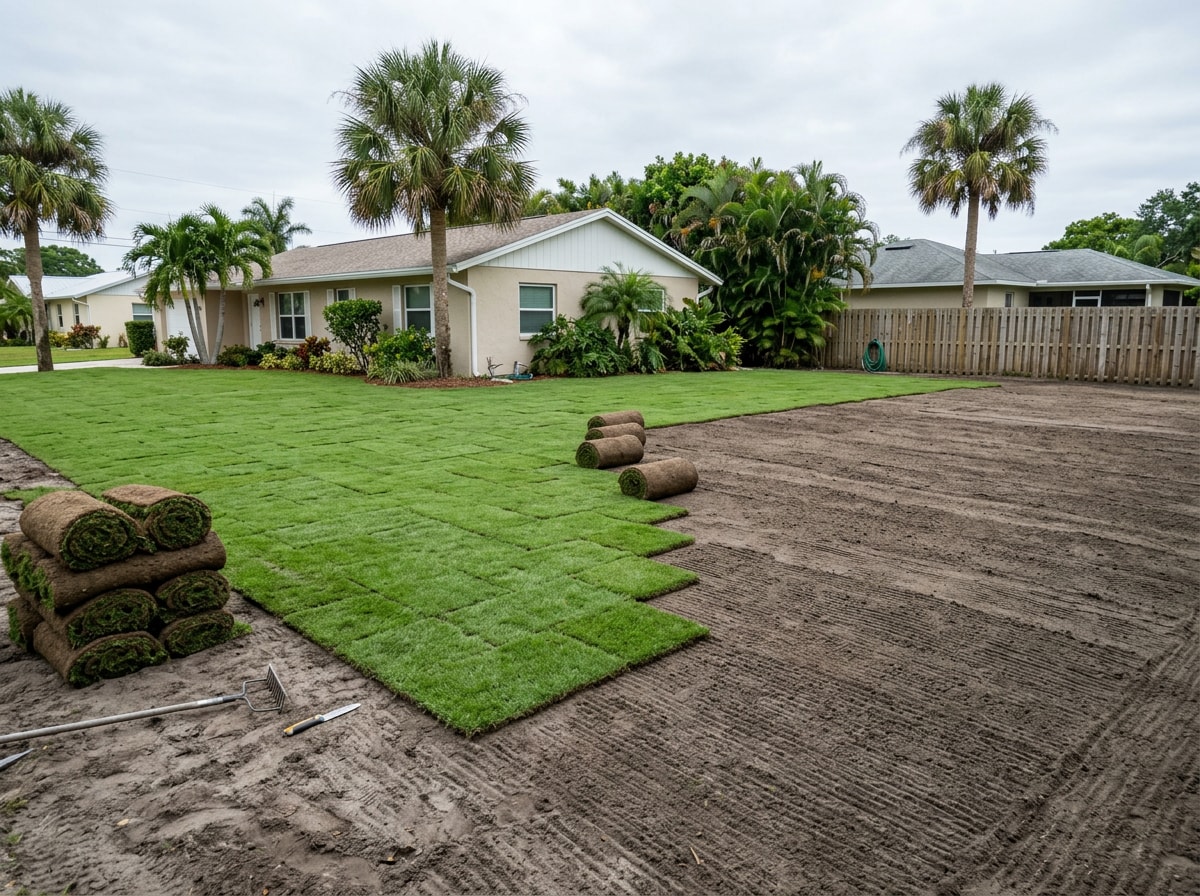
The install details that separate a lawn that takes from one that browns in August:
- Staggered seams. Rows laid in a brickwork pattern so joints never line up end to end, which prevents long drying cracks.
- Tight butted edges, trimmed cleanly around beds and walks.
- Rolling. The surface gets pressed so roots meet soil instead of air pockets.
- Establishment watering. Heavy and frequent for the first two weeks, tapering as roots knit.
- Patience. Hold off mowing until roots peg down, generally about 14 to 21 days.
Variety selection deserves more thought than price per pallet. Shade tolerance, foot traffic, irrigation capacity and mowing appetite should all drive it. Our sod installation page breaks down what performs locally, and the turf installation cost guide for Centerville walks through the install sequence in more detail. If you are weighing seed against sod, the lawn seeding or sod comparison covers that tradeoff.
Soil Prep: The Part That Decides the Outcome
Lawns around here rarely fail because of bad sod. They fail because the ground underneath was never corrected.
Strip to clean dirt. Old turf, weeds and thatch come out entirely. Laying fresh sod over dead material builds a barrier that holds water at the surface and keeps roots shallow.
Grade with a real number. UF/IFAS site prep guidance calls for sloping the site at 1% to 2%, roughly a half-foot to one-foot fall per 50 feet, away from the house . Low spots near the foundation are the most common and most expensive thing we find at this stage. Persistent pooling is a drainage problem, and no amount of new grass will outrun it.
Correct pH before planting, not after. Lime and sulfur move through soil slowly. Surface applications take months to reach the root zone, and lime can need up to six months for full effect.
Test the soil. Soils around Centerville run from sand to sandy clay, sometimes in the same yard. Sandy areas need organic matter to hold water and nutrients. Clay-heavy areas need loosening for drainage. A county extension soil test is inexpensive and comes back in roughly two weeks with amendment recommendations. The UF/IFAS publication on preparing to plant a Florida lawn covers sampling and grading specs in full.
Best Time for Lawn Renovation in Centerville
Centerville sits in USDA zone 8b, which gives a long but not unlimited growing season. Timing beats almost every other variable.
- March to April: soil temperatures climb past 65°F and warm-season turf breaks dormancy. Good window for aeration, weed control and replanting bare areas.
- May to August: the best stretch for sod and plugs. Warm soil plus reliable rain drives the fastest rooting.
- September to mid-October: still workable, but install early enough to allow six weeks of rooting before cool weather.
- November to February: do not start. Dormant turf will not root or spread, and plugs sit idle all winter.
Treat these as typical-year ranges. A late cold snap or a dry May shifts them by weeks. You can confirm the zone for your exact address on the USDA Plant Hardiness Zone Map, which is based on the average annual extreme minimum winter temperature .
A Borderline Centerville Yard, and What We Did With It
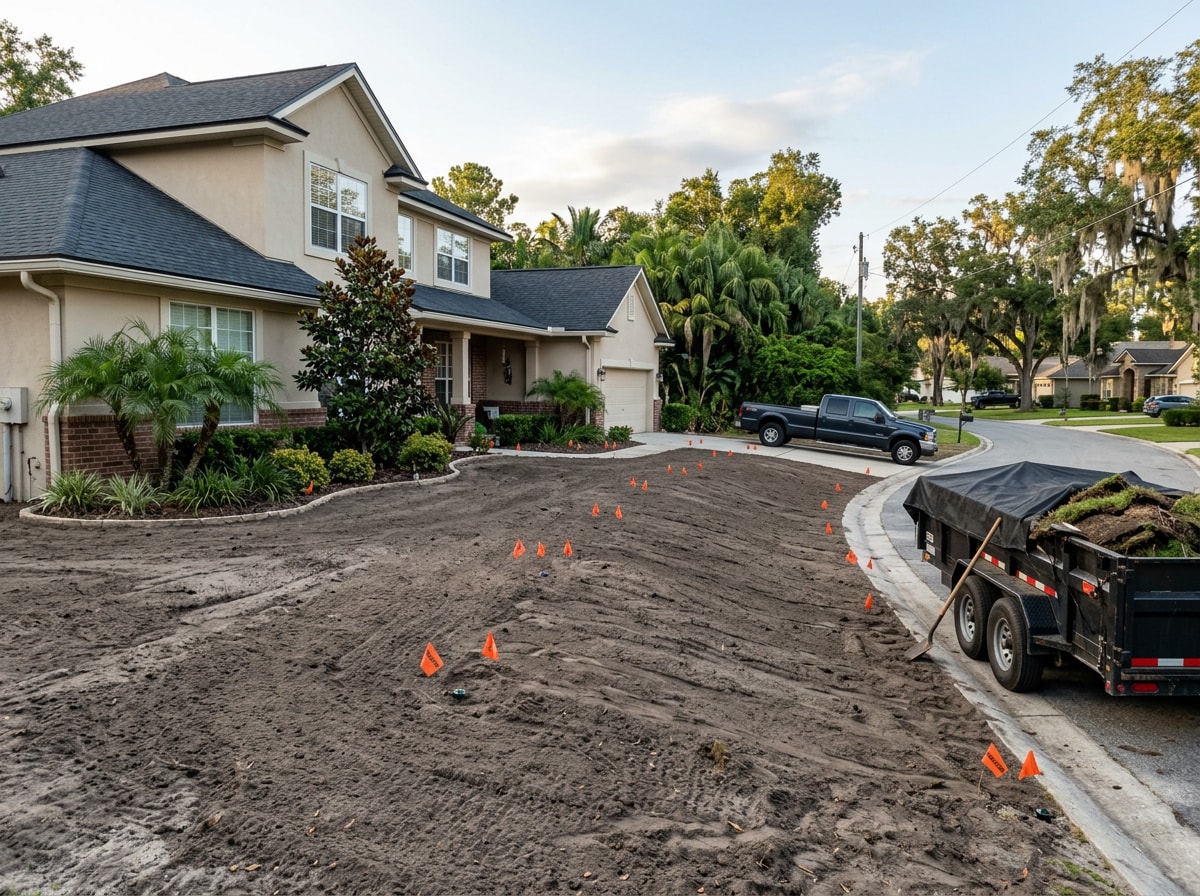
A homeowner off Pisgah Church Road had almost exactly the 45% yard: living St. Augustine out front, thin patches concentrated under two large oaks in back.
The front half was salvageable with aeration and plugs. The shaded back section was never a turf problem at all. It was a light problem, and sod would have died in the same footprint.
We renovated the sun-exposed areas and converted the deep shade to planting beds. Full re-sodding would have cost roughly twice as much and failed in the identical spots within a year. That judgment call is the reason we walk a property before quoting rather than pricing off satellite imagery.
Ongoing mowing height, fertility and irrigation timing decide whether the result holds. Our landscape maintenance crews handle that side for Centerville homeowners, and you can see more of what we do across Centerville and the rest of our service area.
FAQ
How much does lawn renovation cost in Centerville, FL?
Most full renovation packages run $0.25 to $0.60 per square foot in 2026, versus $1.00 to $2.25 per square foot for full sod replacement. Aeration alone is far less. Final pricing depends on square footage, access, grading and debris volume.
How long does a lawn renovation take to show results?
Expect gradual thickening over 4 to 10 weeks during the growing season. Plugs typically close in over 6 to 12 weeks with steady water. Sod gives same-day coverage but needs 2 to 3 weeks of restricted traffic.
Is lawn renovation worth it, or should I just re-sod?
If more than half the lawn is still living, desirable grass, renovation usually costs a third to half of sod replacement and gets you to the same place. Below 40% living turf, or with the wrong grass for the light conditions, renovation wastes a season.
What type of grass grows best in Centerville, FL?
St. Augustine handles partial shade and is the local default. Zoysia gives dense, fine-bladed turf with good traffic tolerance but needs more maintenance. Bermuda wants full sun and heavy use. Centipede is the low-input option for acidic sandy soil.
When should I overseed my lawn in Centerville, FL?
March through early May is the practical spring window, but true overseeding does not work with warm-season turf, which establishes poorly from seed. Bare areas get plugged or re-sodded instead. Seeding here is mostly limited to temporary winter ryegrass.
Can I renovate without killing the existing grass?
Yes. Selective herbicides target weeds while leaving your turf species intact, and aeration, dethatching and topdressing cause no lasting damage. Non-selective products are only used when you are replacing the lawn entirely.
How do I care for my lawn during winter in Florida?
Warm-season grass goes tan and dormant. That is normal, not damage. Cut watering back sharply, mow only when growth demands it, and skip fertilizer on dormant turf. How the lawn looks in late February tells you whether a spring renovation is warranted.
What is the average cost of recurring lawn service in Florida?
Routine maintenance generally runs $35 to $75 per visit for an average residential lot. Renovation and sod work are quoted separately by square footage. Ask for a measured estimate rather than a per-visit figure.
Ready to find out which path your yard actually needs? Request a free estimate and we will walk the property, check compaction and grade, and give you both numbers side by side.