Large rocks for landscaping in Betton Hills, FL live or die on one decision: weight class. Pick too small and the stone sinks into the mulch or rolls down the slope after the first August downpour. Here is how sizing, weight, 2026 pricing, and machine access actually work on these lots.
Key Takeaways
- A "large" rock starts around 18 inches across. Below that it reads as decorative gravel, not a feature.
- Match size to the job: accent stone under 18 inches, slope and wall stone 24 inches and up, specimen stone 30 inches and up.
- Boulder weight roughly doubles with every 6 inches of diameter. That is what decides your equipment and your labor bill.
- Bulk stone is priced per ton or per cubic yard. Boulders are priced per stone.
- Plan machine access before you order anything. A misplaced 1,500 pound stone stays misplaced.
What Counts as a Large Rock, and What It Weighs
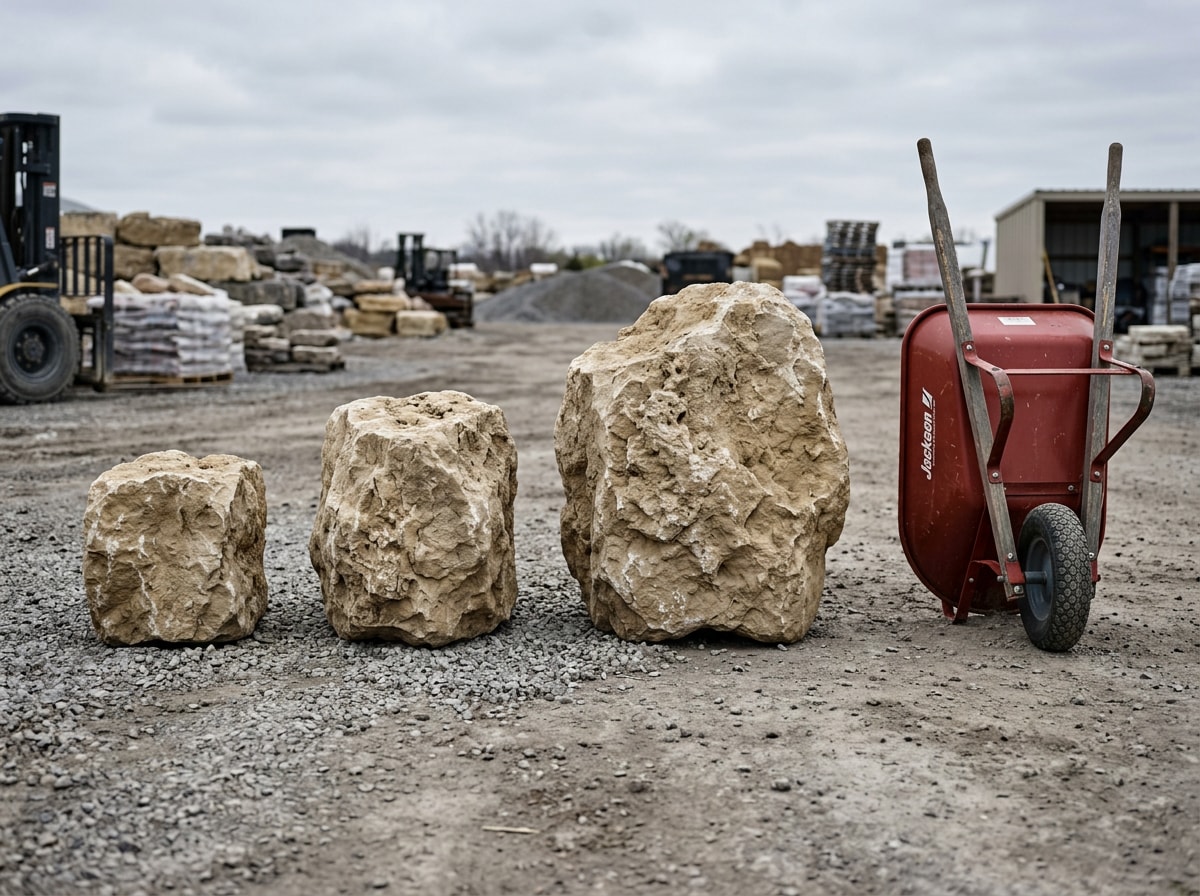
Size is the first thing people guess wrong. A boulder that looks huge sitting on a flat supply yard looks ordinary once it is under a 60 foot live oak on a sloped Betton Hills lawn.
You can estimate weight before you buy. Treat the stone as a ball, then use this:
Length x width x height (in feet) x 0.52 x 150 lb per cubic foot
The 0.52 factor accounts for the rounded shape, and 150 pounds per cubic foot is a workable average for limestone and granite. Irregular, flatter stones come in lighter, often by 20 to 30 percent.
| Longest dimension | Estimated weight | What moves it |
|---|---|---|
| 18 in | 180 to 300 lb | Two people, hand truck, ramps |
| 24 in | 400 to 700 lb | Skid steer or mini excavator |
| 30 in | 800 to 1,300 lb | Mini excavator with rated straps |
| 36 in | 1,500 to 2,200 lb | Excavator, staged placement |
| 48 in | 3,000 to 5,000 lb | Machine placement, crane if no gate access |
That table is the real reason sizing matters. Going from a 24 inch stone to a 36 inch stone roughly triples the weight, and it moves the job from a rented machine to a planned mobilization.
When you are torn between two sizes, take the bigger one. It is the cheapest correction you will ever make.
How Much Do Large Rocks for Landscaping Cost in Betton Hills, FL?
Three pricing units show up on quotes: cost per ton for bulk stone, cost per cubic yard for gravel and river rock, and per stone pricing for boulders. Boulders get quoted individually because no two weigh the same and each one gets handled separately.
| Line item | 2026 Tallahassee area estimate | What moves it |
|---|---|---|
| Material, bulk stone | $65 to $160 per ton | Type, quarry haul distance |
| Material, river rock or gravel | $70 to $180 per cubic yard | Size, color, washing |
| Material, boulders | $120 to $600+ per stone | Weight, type, availability |
| Delivery | $95 to $350 per load | Load minimums, truck access |
| Installation and placement | $90 to $225 per ton, or $75 to $250 per boulder | Equipment mobilization, site access |
Worked example. A 350 square foot sloped side bed with a 3 inch river rock layer needs roughly 4.5 tons, plus five fieldstone boulders in the 24 to 30 inch range.
Material lands near $1,100 to $1,500. One delivery runs around $200. Placement with a mini excavator runs $700 to $1,100.
Call it $2,000 to $2,800 finished, assuming the machine can reach the bed.
Access is the swing factor. A backyard job through a 48 inch gate can add a full day of labor to that same scope. Figures are 2026 estimates, so request a site specific estimate before you budget.
Types of Large Landscape Rock: A Buying Guide
| Stone type | Typical size range | Look | Structural capability | Best use |
|---|---|---|---|---|
| Florida fieldstone | 12 in to 36 in+ | Weathered tan gray, irregular | Good | Tree rings, low walls, accents |
| Limerock and caprock | 12 in to 48 in | Pale cream, pitted | Good | Terracing, slope walls |
| Granite boulders | 18 in to 48 in+ | Dense gray or pink | Excellent | Specimen stones, loaded walls |
| River rock and cobble | 2 in to 10 in | Rounded, mixed earth tones | None | Dry creek beds, bed fill |
| Flagstone | 1 in to 3 in thick slabs | Flat, layered | Light | Walks, steppers, patios |
| Riprap | 6 in to 24 in | Angular, quarried | Good | Swales, outfalls, bank armoring |
Freight is a bigger share of the bill than most buyers expect. Stone quarried in Florida and south Georgia usually lands cheaper than granite trucked in from the Carolinas.
Color matters too. Pale limerock stays bright in full sun but shows algae in deep shade, while darker granite holds its color and reads stronger as a focal point. If you want a broader look at local stone options, our guide to rock types that hold up in North Florida yards compares them side by side.
Where Large Rocks Actually Earn Their Keep
Specimen Boulders as Focal Points
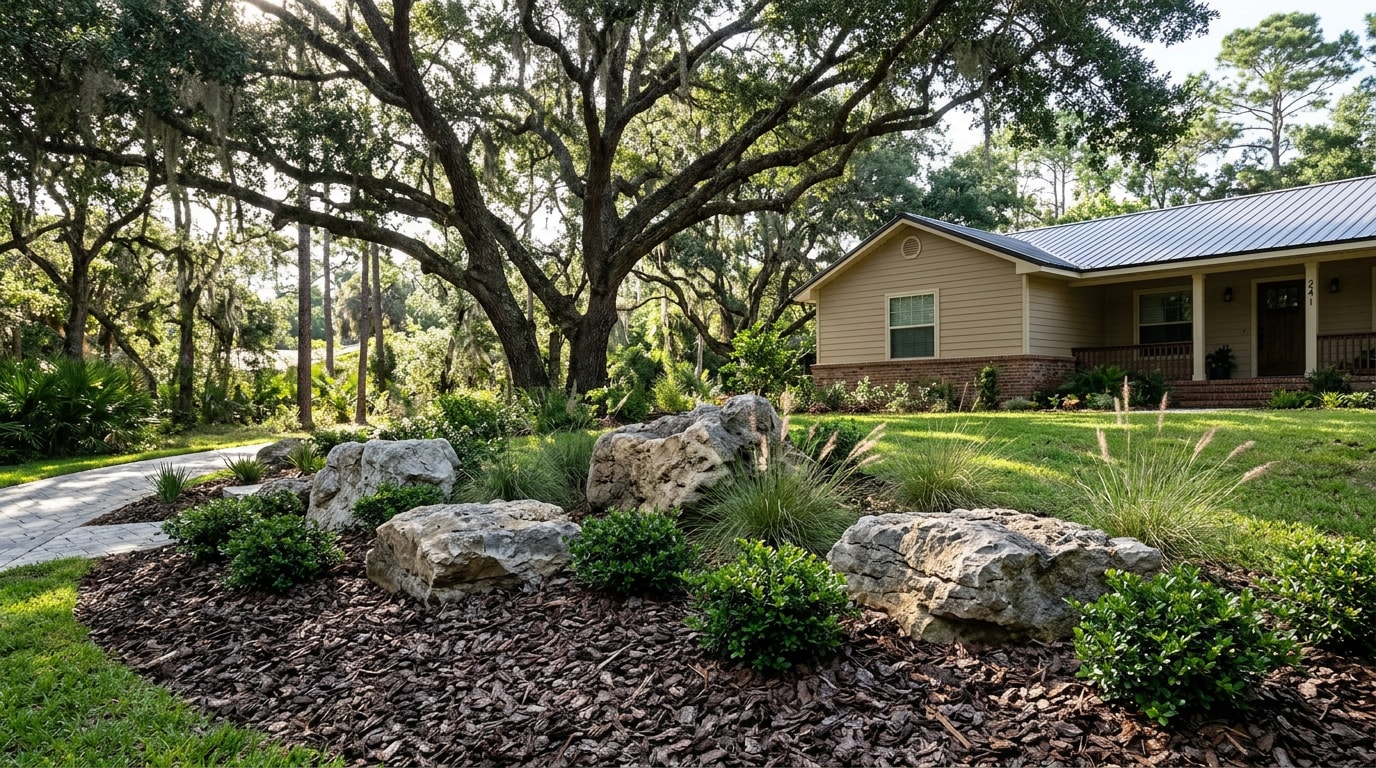
One statement stone beats three medium ones. A single specimen boulder anchoring a bed, an entry, or a turf island gives the eye somewhere to land.
Scatter several mid size rocks and they compete with each other. The bed starts to look like leftover fill.
In the shaded front yards common around Betton Hills, a light toned accent stone reads well against dark mulch and deep green foliage. Keep the plantings around it low, such as dwarf yaupon, muhly grass, or liriope, so the stone stays the first thing you notice from the street.
Our landscape design and hardscaping work covers how feature stone gets tied into beds, lighting, and walkways.
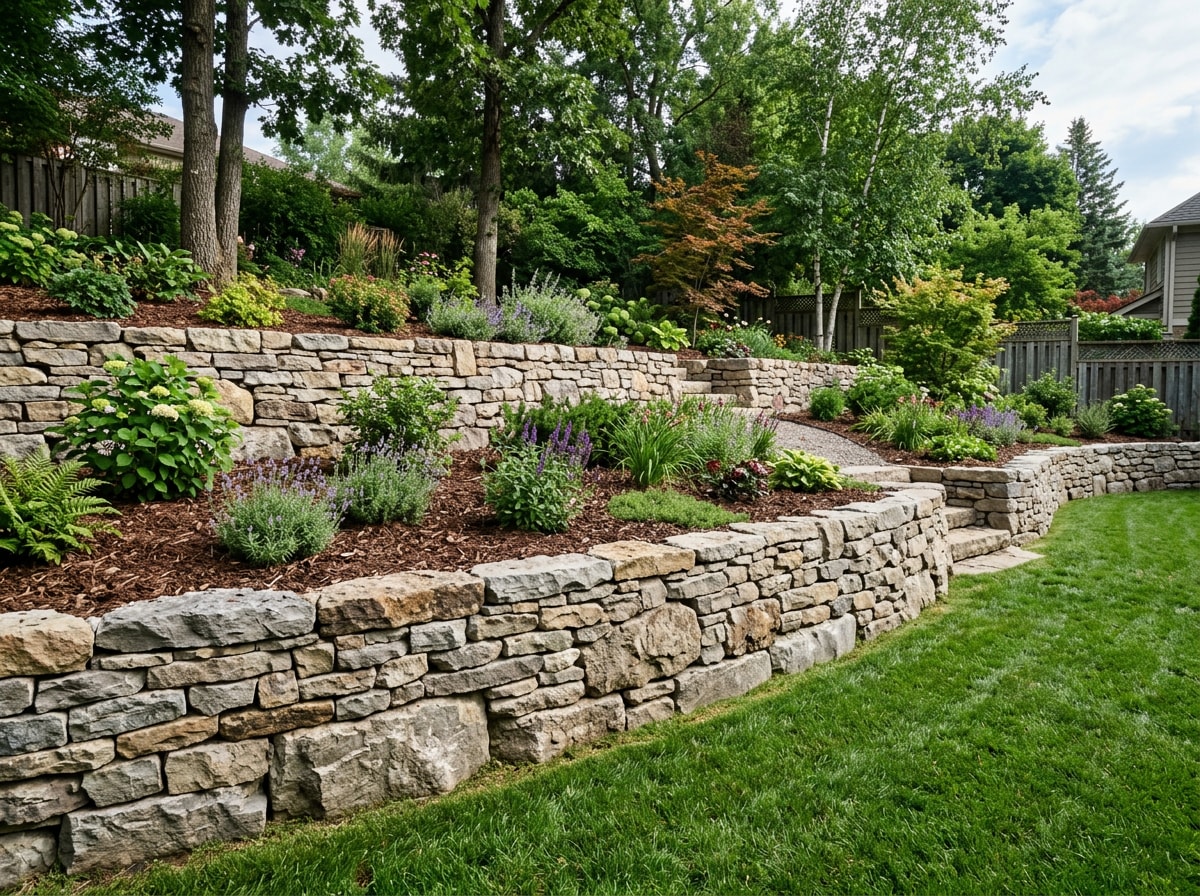
Boulder Retaining Walls and Terracing
A boulder wall does what engineered block does, without the manufactured look. Once a wall holds back real soil load, the stone has to get heavy, because mass is what keeps it from rotating out.
That usually means 24 inch stone minimum, with 30 to 40 inch pieces in the base course.
Terracing works well on grade changes and tree rings around mature oaks, where you are raising a bed a foot or two without trenching through roots. Set the largest stones first, then step sizes down as you build up.
Height and load eventually push a wall into permitting territory. Leon County lists retaining walls among the projects that require a building permit, so confirm your wall before you design around it. For engineered work, see our retaining wall construction and erosion control walls pages.
Drainage, Swales, and Dry Creek Beds
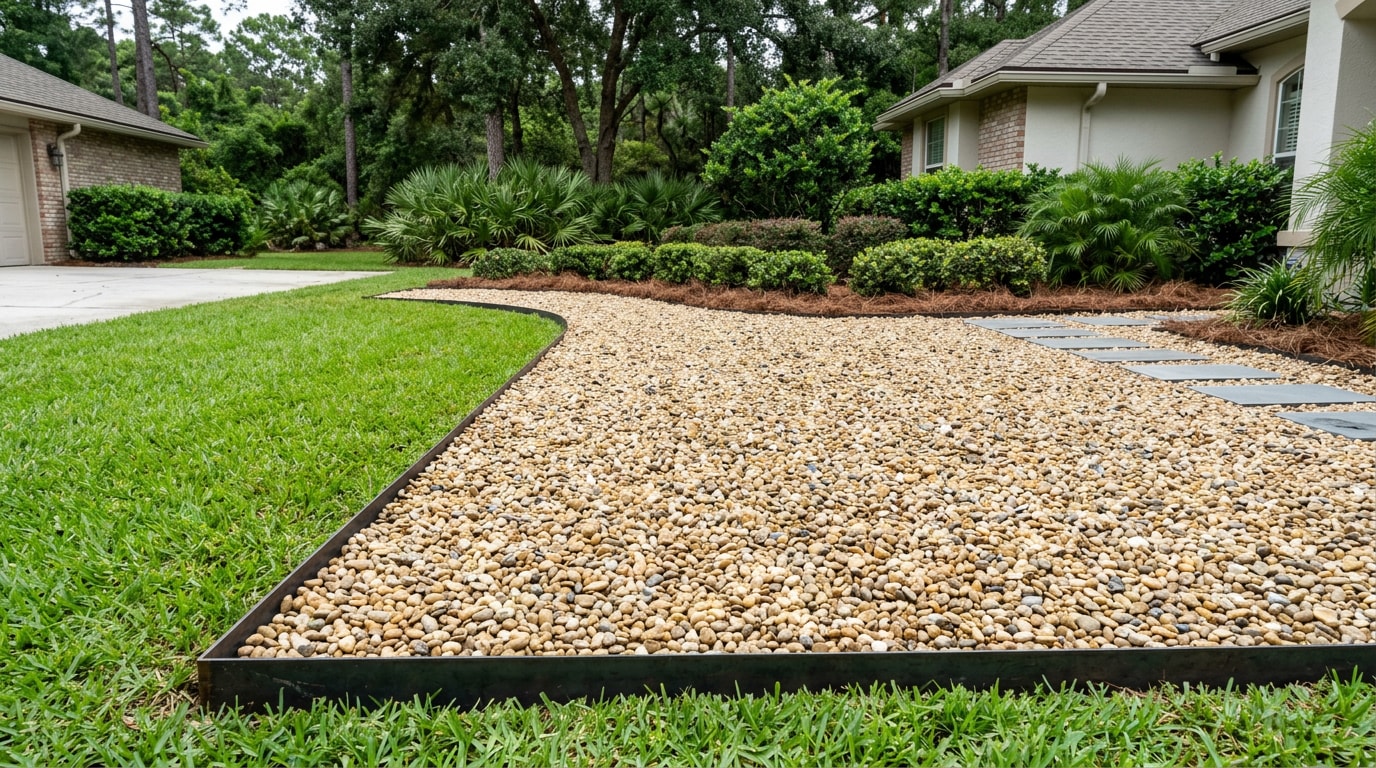
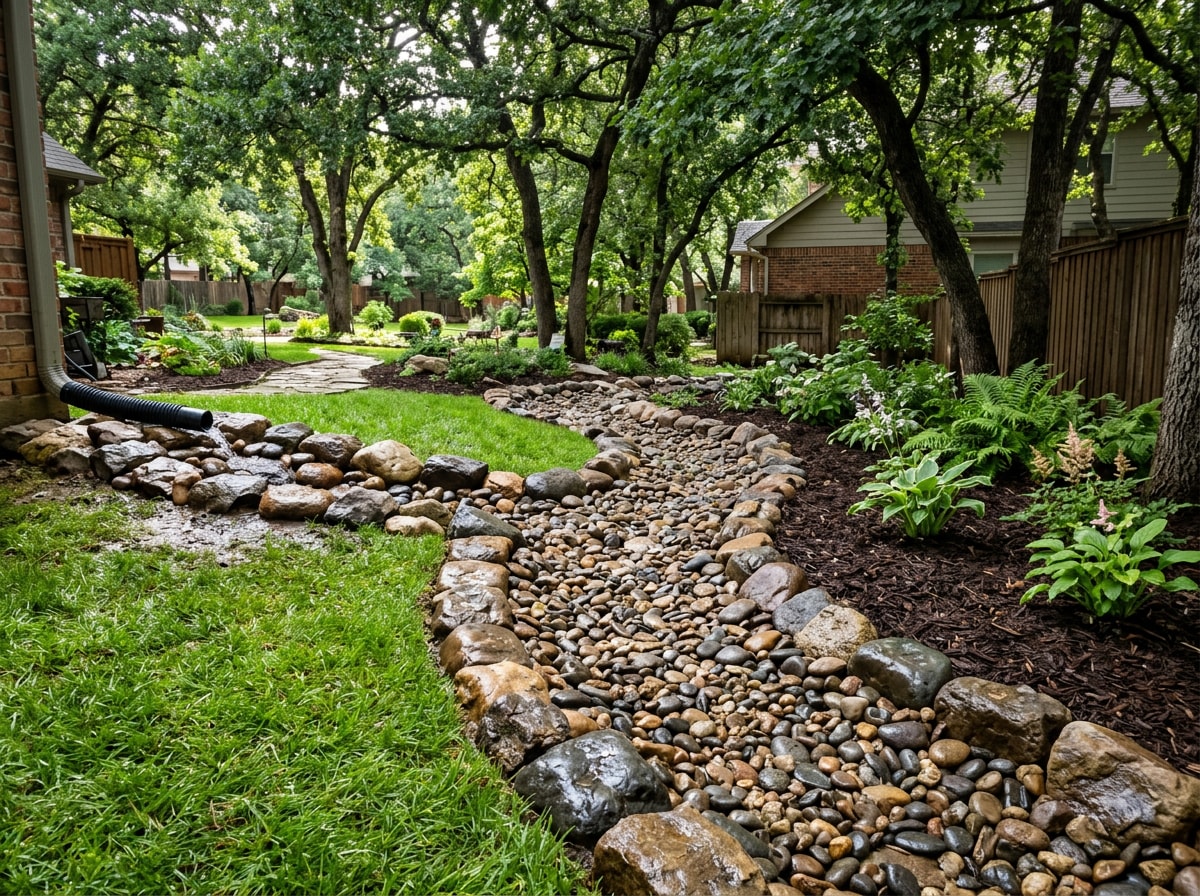
Large river rock and cobble are the workhorses for dry creek channels, downspout outfalls, and swales that move runoff after a North Florida storm.
The stone has to be big enough to stay put. Two to five inch river rock holds in gentle flow. Cobble up to 8 or 10 inches belongs anywhere water picks up speed.
Our crews pull washed out pea gravel from Betton Hills downspout outfalls more often than any other callback, and the fix is almost always the same: step up two sizes and extend the splash zone. Installed over graded, compacted base, a cobble channel like that runs for decades with only occasional leaf cleanout.
See how we handle drainage and stone features across the Betton Hills service area.
How to Place Boulders So They Look Natural
- Bury roughly one third of the stone. That single step separates a seated boulder from one that looks dropped off a truck.
- Turn the most interesting face toward the main viewing angle, usually the street or a window.
- Keep grain or bedding lines running the same direction across a group.
- Group in odd numbers, and tuck groundcover against one shoulder.
- Fill voids between set stones with river rock so the grouping reads as one feature.
The practical side matters just as much. Narrow side yards, 36 inch gates, fences, and shallow oak roots all shape where a stone can realistically go.
Before any excavation for boulder seating, have buried utilities marked. Sunshine 811 notifies member utilities to mark their lines, and the request is free.
Large Rock vs Mulch: The Ten Year Math
Mulch costs less per square foot up front but gets re topped every year or so. Stone costs three to five times more installed and then sits there for decades. Over a ten year window, rock usually wins on total spend.
Weeds are a draw. Neither material stops them alone. Fabric under stone helps for a few years, then organic debris builds on top and weeds root in that layer.
Mulch still wins in plenty of Betton Hills beds. It conditions soil as it breaks down, it is light enough to spread by hand, and oak leaf litter blends into it instead of needing to be blown out of rock.
There is a horticultural caveat worth knowing. University of Florida extension guidance recommends using rock mulch minimally in planting beds, since gravel and stone add nothing to soil nutrients or water holding capacity, and it advises landscape fabric underneath so stone does not sink into sandy soil.
Practical translation for this neighborhood: use large rock for structure, drainage, and focal points. Use mulch where plants are actually growing.
Delivery and Site Access in Betton Hills
Bulk stone arrives by the ton on a dump truck. Flagstone and smaller boulders come palletized. Large boulders get set individually by machine.
A loaded tandem needs a clear approach and room to raise a bed. Tight, tree lined streets and short driveways around 32308 and 32312 sometimes mean a smaller truck and more trips.
A few things to settle before the truck rolls:
- Most bulk deliveries carry a one to two ton minimum.
- Pick a staging spot that is not under a canopy drip line.
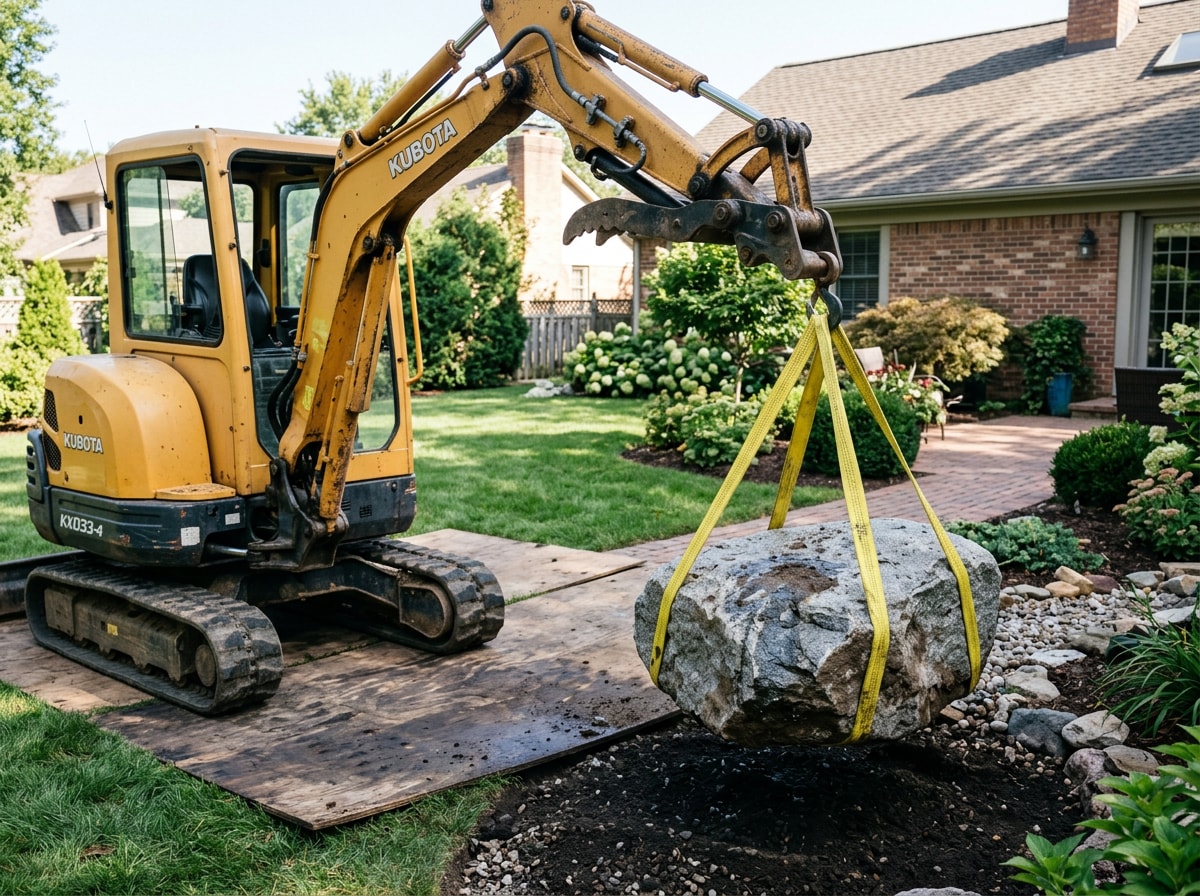
- Lay plywood or ground mats to protect driveways, turf, and oak root zones.
- Common sizes are usually stocked locally. Special colors or oversized specimen stone can take one to three weeks.
Ready to price your beds? Get a free estimate and we will walk the access route with you before anything gets ordered. You can also browse our full range of work on the Talquin Landscaping homepage or the landscaping services page.
FAQ
What are the best landscaping rocks for my front yard?
Use one specimen boulder, or an odd numbered group of three, as the anchor. Add river rock or cobble along bed edges and under downspouts, and flagstone for the walk. Light stone brightens shade. Darker stone reads stronger as a focal point.
How much does 1 yard of landscaping rock cost?
Expect roughly $70 to $180 per cubic yard in the Tallahassee market in 2026, depending on stone type and size. Heavier material is often sold by the ton instead, and one cubic yard of rock weighs about 1.3 to 1.5 tons. Delivered prices run higher than yard pickup prices.
How much does a large landscaping boulder weigh?
Estimate it with length x width x height in feet, times 0.52, times about 150 pounds per cubic foot. A 24 inch stone lands near 400 to 700 pounds. A 36 inch stone runs 1,500 to 2,200 pounds.
How do you move large landscaping boulders into a backyard?
A skid steer or mini excavator with rated lifting straps handles most stones. You generally need about 48 inches of clear gate width, plus plywood or ground mats over turf and oak root zones. With no gate access at all, crane or boom truck placement over the house is the remaining option.
What is the cheapest rock for landscaping?
Crushed stone, limerock screenings, decomposed granite, and locally sourced fieldstone are the budget picks, mostly because short quarry hauls keep freight down. Going too cheap backfires in one place: undersized stone in a swale or downspout outfall washes out and gets replaced.
Do you need landscape fabric under large rocks?
Under river rock and gravel, yes. In sandy North Florida soil the stone works its way down without a separation layer. Under set boulders, skip the fabric and seat the stone directly on compacted subgrade so it does not shift.
Do large rocks need a permit in Leon County?
Decorative boulders and gravel beds do not. A retaining wall is a different matter, since Leon County lists retaining walls among projects that require a building permit. Confirm with the county before building any wall that holds back soil.
Does rock landscaping attract snakes or pests?
Loose rock with deep voids gives small animals cover, which is one more argument for seating stone properly and filling gaps. Tight, well set stone and clear sight lines around the foundation reduce the harborage that loose piles create.