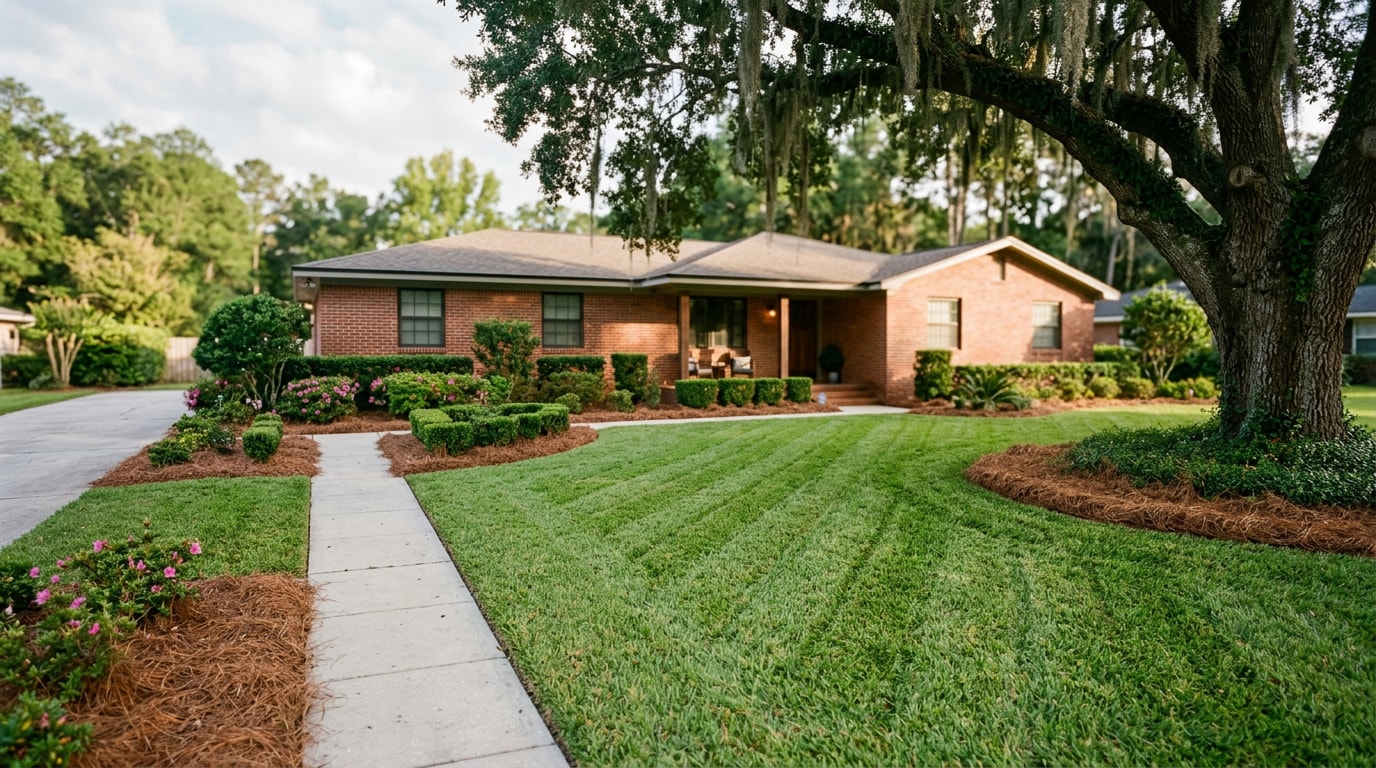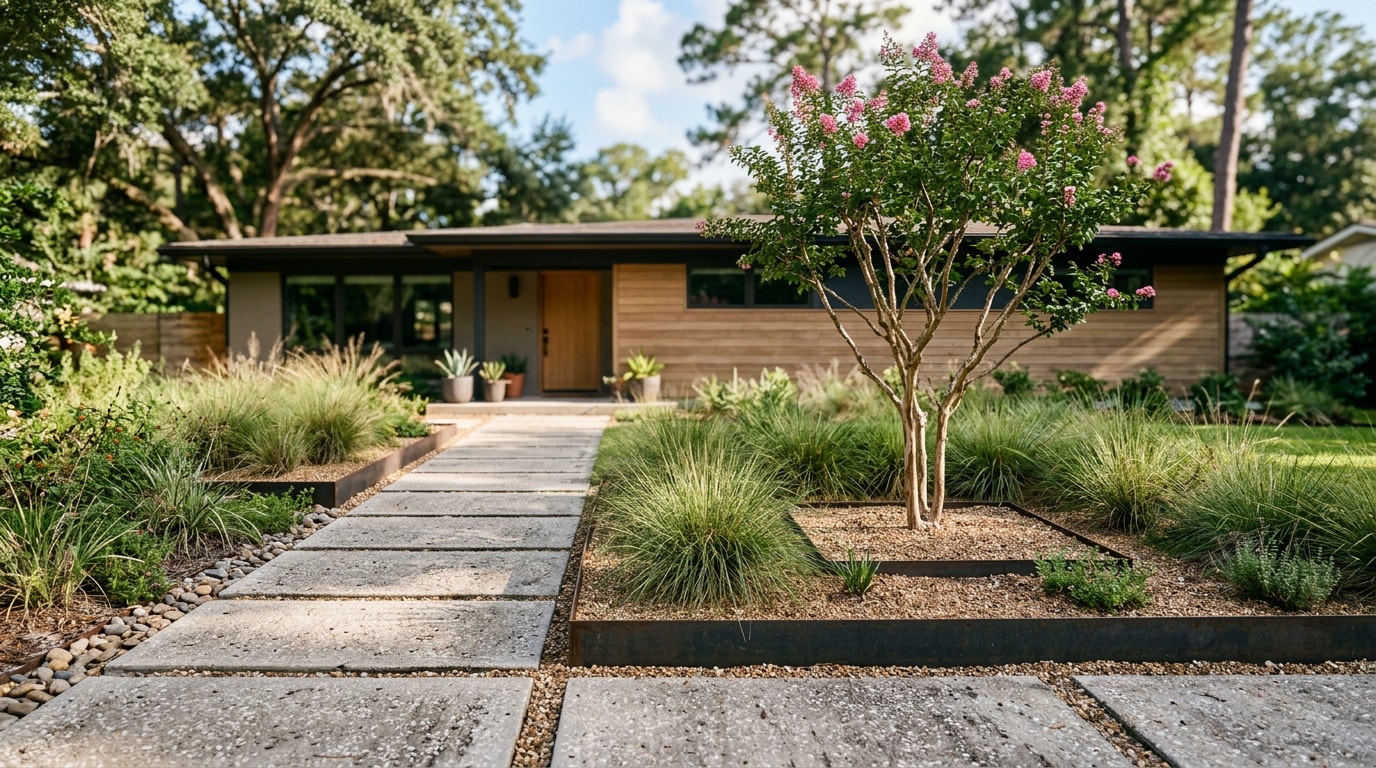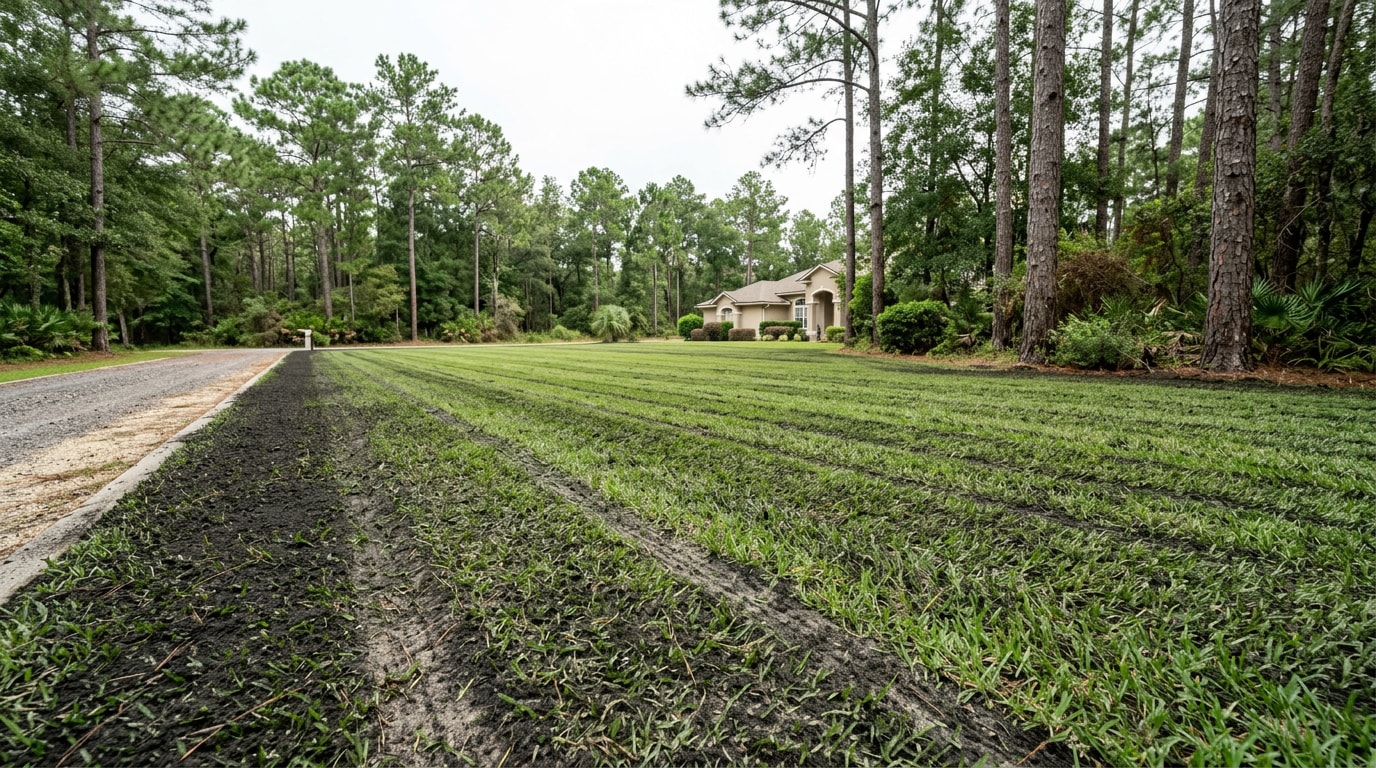
Lawn dressing in Woodville, FL is the quiet fix for the three things that wear down turf south of Tallahassee: deep sand, hard summer rain, and spongy thatch. It is a thin layer of compost, screened soil, or a blend spread across living grass to rebuild what the sand keeps washing away. Done right it levels bumps and feeds the root zone. Done wrong it smothers the lawn in a week.
What Lawn Dressing Actually Is
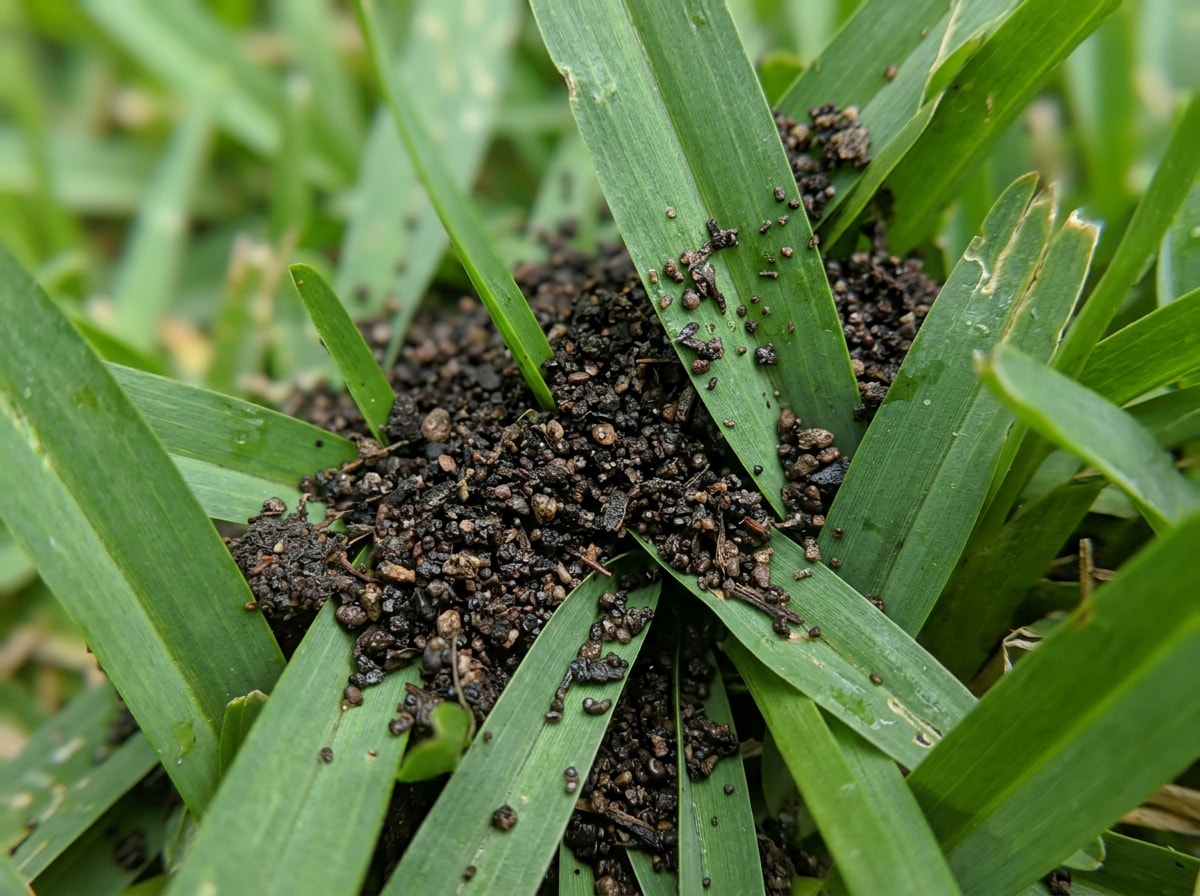
Lawn dressing (most of the country calls it top dressing) means spreading roughly a quarter inch of material over an existing lawn so it settles into the surface and the grass grows up through it.
No tear out. No resodding. The turf stays where it is.
That thin layer targets four specific problems:
- A thatch layer thick enough that water runs off instead of soaking in
- Compacted ground under traffic, pets, or construction fill
- Low spots, scalped humps, and settled trenches
- Soil too thin and sandy to hold nutrients near the roots
Greenkeepers have used the technique on golf and sports turf for decades, which is why it translates so well to home lawns.
Lawn Dressing vs. Topsoil
These two get swapped in conversation, and they are not the same.
Screened topsoil is one material that may be part of a dressing blend. A dressing is a chosen amendment, sized and mixed to correct a specific problem.
The mistake to avoid: having a dump truck of unscreened fill dirt spread across the yard. Fill dirt compacts, imports weed seed, and buries grass crowns instead of feeding them.
What It Costs in Woodville in 2026
Material choice drives most of the bill. Below are typical delivered ranges for the Woodville and south Leon County area in 2026. Fuel and haul distance move these numbers, so treat them as planning figures, not quotes.
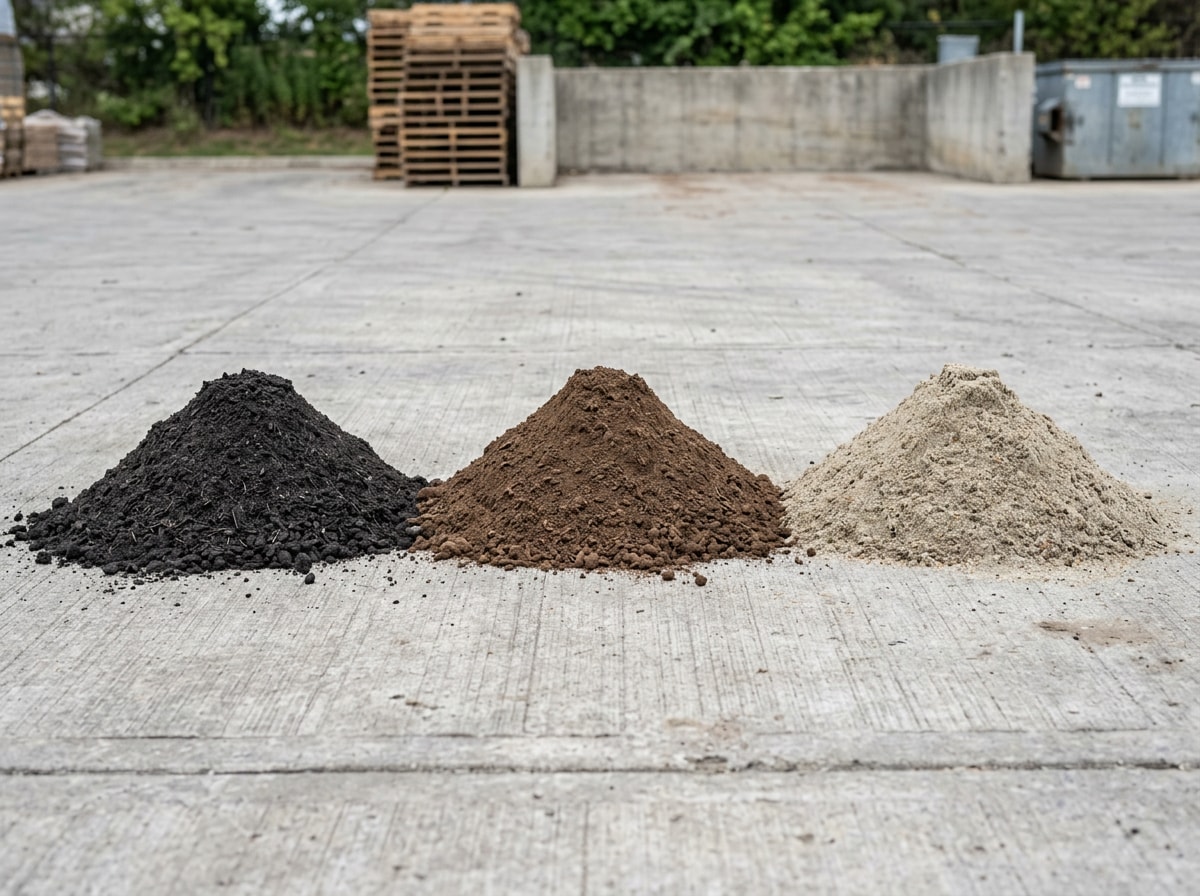
| Material | Best-fit problem | Main risk | Delivered cost per cubic yard | Coverage at 1/4 inch |
|---|---|---|---|---|
| Screened compost | Low organic matter, poor water holding | Weed seed if not fully composted | $45 to $70 | ~1,300 sq ft |
| Screened topsoil | Thin or bare areas needing structure | Texture mismatch with native sand | $30 to $55 | ~1,300 sq ft |
| Washed sand | Leveling and surface smoothing | Wrong particle size seals the surface | $25 to $45 | ~1,300 sq ft |
| Sand and compost blend | General purpose dressing | Costs more than a single material | $40 to $65 | ~1,300 sq ft |
Do the Yardage Math Before You Call Anyone
One cubic yard covers about 324 square feet at a full inch. The working formula:
(square feet x depth in inches) ÷ 324 = cubic yards needed
So a 6,000 square foot lawn at a quarter inch needs about 4.6 cubic yards. That is one tandem load, not three.
Most homeowners we talk to overestimate by double, then end up spreading the extra too thick because it is already in the driveway. Order to the math, not to the truck size.
Labor is the other half. Spreading and dragging 5 yards by hand is a full Saturday for two people. A crew with a topdresser and drag mat does it in a couple of hours, which is why a one time dressing and aeration service usually lands in the low hundreds for a standard Woodville lot.
Get a free estimate if you want the number for your actual square footage instead of a range.
Which Material Fits Woodville Soil
Routine sand only dressing is a poor default here. Repeat sand passes over ground that is already sand make a dry lawn drier.
Soil mapping for the Woodville corridor commonly shows deep, droughty sands, with some low parcels sitting over a seasonally high water table. You can pull the map for your exact lot through the USDA NRCS Web Soil Survey.
Practically, that means a Woodville lawn absorbs a light compost based pass well, while a heavy sand pass just sits on top.
Grass type matters too. St. Augustine and centipede respond well to compost based dressing. Bermuda and zoysia tolerate leveling passes better because they spread aggressively and recover fast.
What We Saw on One Woodville Street
On a street off Natural Bridge Road we dressed two similar centipede lawns with a compost and sand blend and left the neighboring yard on its normal mow and fertilize routine.
By the following September the two dressed lawns had visibly denser color and fewer bare patches at the driveway edges. The untouched yard still had the same thin strip along the curb.
That is the honest version of the result: not a miracle, a measurable difference over one season. Our crews cover most of that corridor through our Woodville service area.
When to Dress a Lawn in Woodville
For warm season grass here, the window runs from late spring into early summer, once the lawn is fully green and actively growing.
Active growth is what lets blades push up through the layer in a week or two instead of suffocating under it.
Skip it during:
- Drought stress
- Peak August heat
- Winter dormancy, when the grass cannot recover from being covered
Locally, late April through June is the reliable stretch.
Frequency is where national advice oversells. For most home lawns this is an as needed correction, not an annual chore. Every two to four years, or whenever thatch and low spots come back, is realistic.
Worth knowing: UF/IFAS notes that thatch builds fastest in lawns that are overfertilized and overwatered, and lists roughly one inch of thatch as the point where it needs attention (see St. Augustinegrass for Florida Lawns). If your irrigation runs daily, fix that first or you will be dressing again in 18 months. Our irrigation services page covers how we re-time zones for sandy soil.
How to Top Dress a Lawn, Step by Step
This is the order a crew follows on a paid job. Skipping prep is what turns a DIY attempt into a smothered lawn.
1. Test the Soil First
A soil test reports pH, nutrient levels, and organic matter. Those three numbers decide what you buy.
Guessing usually means buying compost when the lawn needed lime, or sand when it needed organic matter.
Florida homeowners can submit a sample to the UF/IFAS Extension Soil Testing Laboratory for a small fee, with results back quickly by email.
2. Aerate Before You Dress
Core aeration pulls plugs of soil out so air, water, and new material can reach the root zone.
It comes before dressing, never after. The open holes are what let the material get down where it does any good.
High traffic yards with kids, dogs, or clay fill around a slab lock into a compaction cycle that aeration breaks. Recurring aeration and turf care falls under our landscape maintenance program.
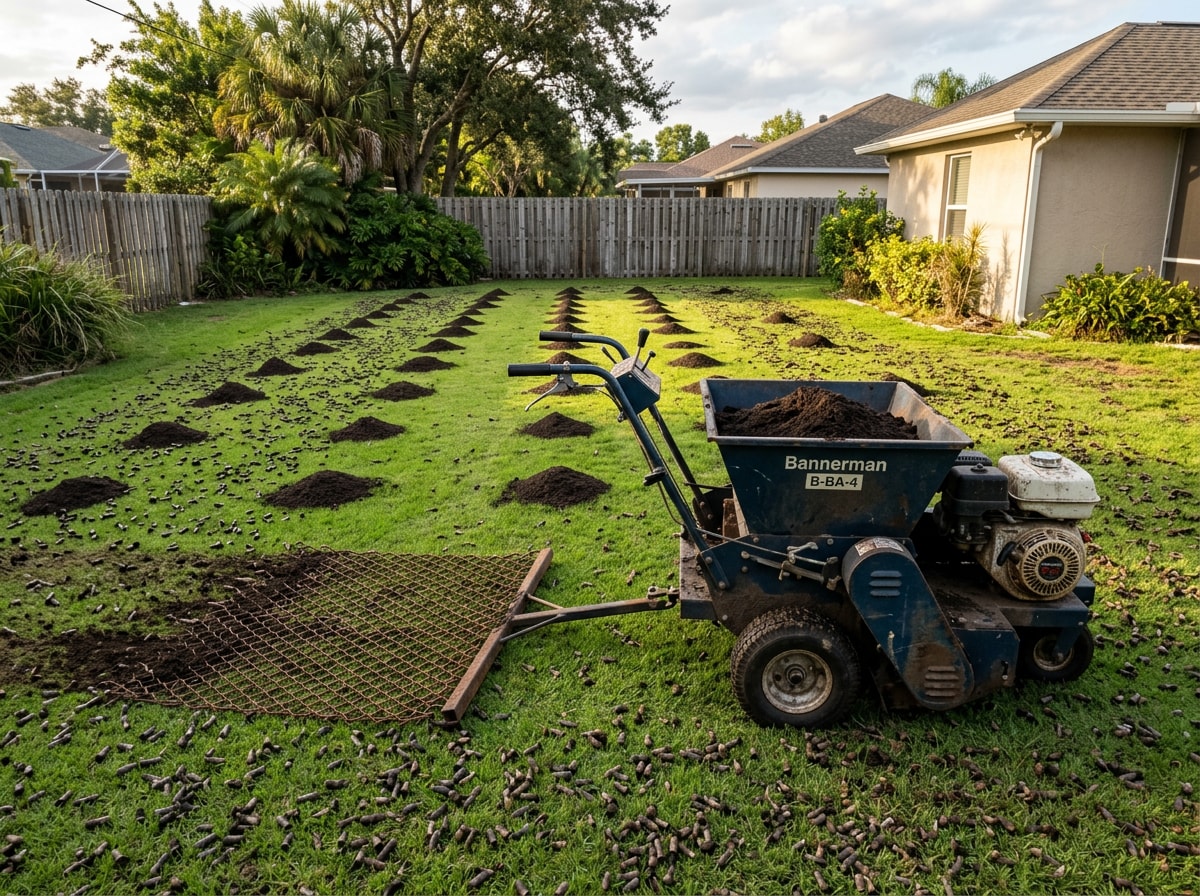
3. Mow Short, Then Drop Small Piles
Mow slightly lower than usual so the canopy is open.
Drop small, spaced piles instead of one heap. Then work the material in with a drag mat, a leveling rake, or the back of a standard rake until grass blades are clearly visible again.
If you cannot see green through the layer, it is too thick.
4. Water In and Wait
Water lightly right after. Hold off mowing for about a week.
At four weeks the lawn should look greener and flatter. If a spot is still bare, that area probably needs sod or seeding, not more dressing.
5. Fix the Cause, Not the Symptom
Dressing a low spot that holds water after every storm is a temporary patch. The water keeps coming back and the new soil settles again.
Chronic pooling is a grading or drainage problem. We handle those through yard drainage work, and you can see finished examples on our projects page. For a broader picture of how dressing fits into a year round schedule, our guide to grounds maintenance in Tallahassee breaks down what gets done and when.
FAQ
How thick should lawn dressing be?
About a quarter inch per pass, and never more than half an inch. Grass blades must still be visible after you drag the material in. Thicker layers bury the crowns and kill the turf underneath.
Can you put topsoil over existing grass?
A thin layer of screened topsoil, yes. A truckload of unscreened fill dirt, no. Fill dirt compacts, carries weed seed, and smothers the lawn instead of feeding it.
Does top dressing level a lawn?
It levels minor dips and mower scalps over two or three passes across separate seasons. It will not fix a deep depression, a settled utility trench, or a yard that slopes toward the house. Those need grading.
Should I aerate before or after top dressing?
Before. The core holes are how the material reaches the root zone. Dressing an unaerated, compacted lawn mostly leaves the material sitting on the surface.
Does grass grow year round in Florida?
Not in this part of the state. North Florida warm season turf slows sharply and goes semi dormant through winter, unlike South Florida lawns that keep creeping along. That dormancy is exactly why dressing is a growing season job and not a January project.
What are the most common lawn dressing mistakes?
Sand only passes on ground that is already sand. Unscreened fill dirt. Laying it on too thick. Dressing a dormant or drought stressed lawn. And dressing a soggy low spot instead of fixing the drainage causing it.
What are good alternatives to grass in a Florida lawn?
When an area stays too shaded or too wet, dressing will not rescue it. Groundcovers like perennial peanut, mulched planting beds, or native shrubs hold up better there and cut water use at the same time.
Talk to a Local Crew
Lawn dressing is cheap compared to resodding, and it is easy to get wrong by a half inch.
If your Woodville lawn is thin at the edges, spongy underfoot, or bumpy enough to scalp on every mow, we can walk the yard, measure square footage, and tell you whether dressing is the right call or whether the real problem is drainage. See the full range of what we do on the Talquin Landscaping homepage or contact us for an estimate.
Written by the Talquin Landscaping field team, Leon County landscape and drainage contractors serving Woodville, Tallahassee, and SouthWood. Reach us through our contact page.