Searching for "MCM landscaping Tallahassee, FL" usually means one of two things: you're trying to track down a specific company, or you're after the mid-century modern look for your own yard. We cover both below, and show how this decades-old style actually holds up in North Florida's heat and humidity.
Is There an "MCM Landscaping" Company in Tallahassee?
Not a well-known one. Local directory listings for "MCM" searches tend to surface similarly named businesses, most often C&M Landscaping & Lawncare, a long-running Tallahassee lawn and landscape company with no direct connection to the MCM style or branding.
If a dedicated MCM Landscaping company existed with real local reviews and project history, it would already be showing up ahead of directory sites in these results. It isn't, which tells you the term is mostly being searched as a design style.
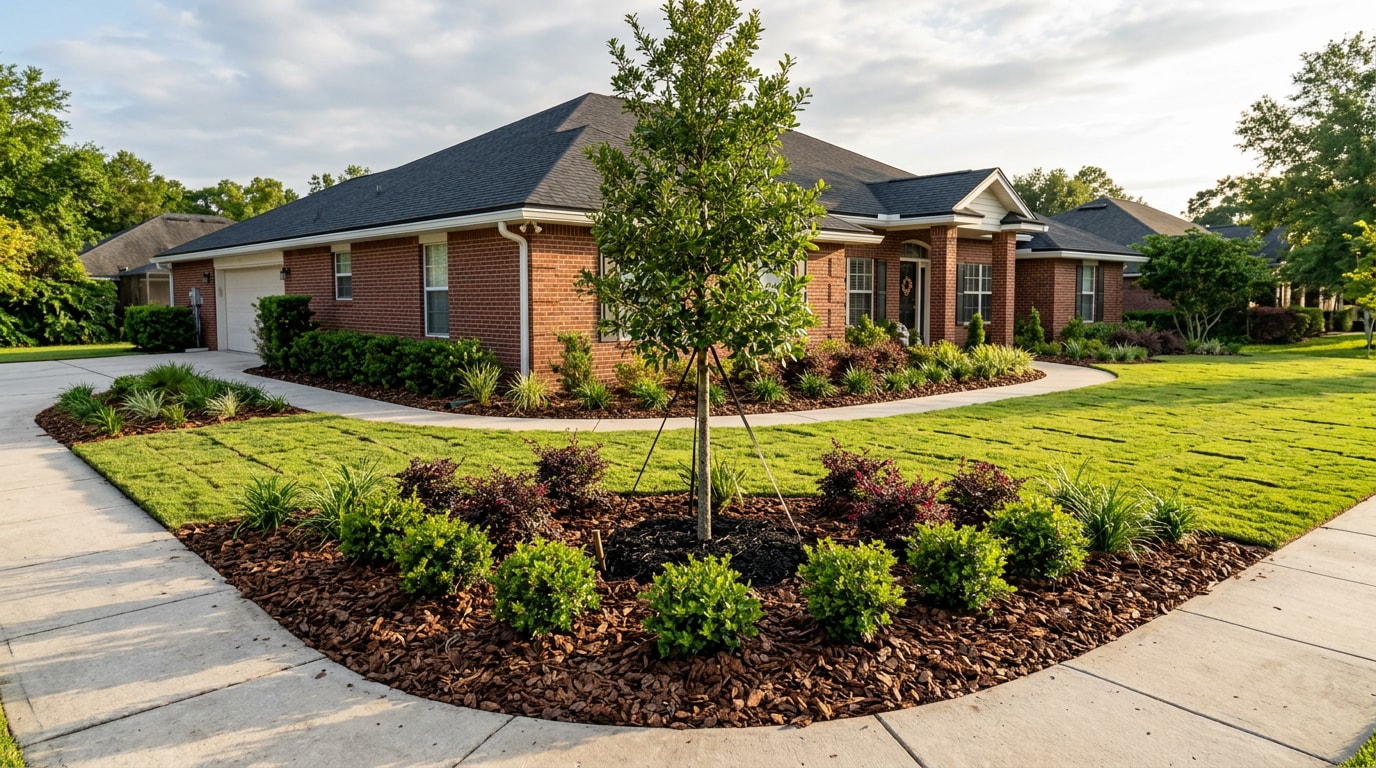
That's the angle we take here. For homeowners who want the mid-century modern look translated into a buildable plan, our landscape design team handles that locally, and you can see examples of finished work from our Tallahassee service area.
What Is Mid-Century Modern Landscaping?
Mid-century modern (MCM) landscaping is a design style rooted in mid-century architecture. It's built around clean lines, geometric structure, and a strong visual connection between indoor and outdoor space. The palette stays muted and natural, blending organic materials like wood and stone with modern elements such as concrete and steel.
It's worth repeating: this is an aesthetic, not a brand. Anyone searching for MCM landscaping in Tallahassee is really asking how to bring this mid-20th-century look to a Southern climate. The style's emphasis on simplicity and natural materials pairs well with our region, once plant choices are adjusted for humidity and rainfall.
Origin & History of Mid-Century Modern Landscape Design
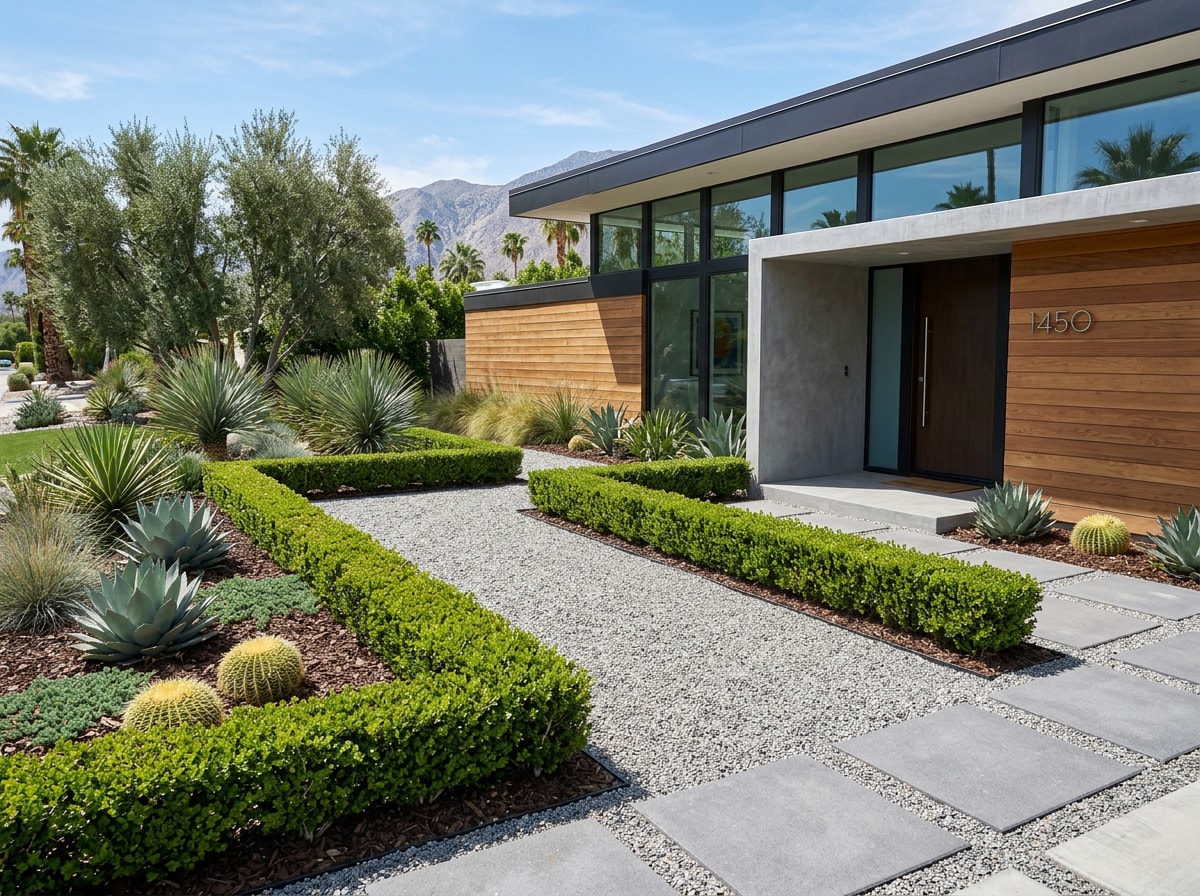
The style emerged in the 1950s and 60s alongside a broader retro-futuristic movement in architecture and furniture. Landscaping became central to it because mid-century homes used floor-to-ceiling glass, which meant the yard was always on display from inside the house.
Influential Landscape Architects of the Mid-20th Century
A handful of mid-century landscape architects defined the principles still used today.
Thomas Church is often credited as the creator of the modern California garden. He studied landscape architecture at both UC Berkeley and Harvard before opening his own San Francisco practice, where he championed asymmetrical, function-first gardens designed around how people actually move through a space.
Garrett Eckbo pushed geometric, modular planting beds that treated the garden as an extension of architectural floor plans. At Harvard, Eckbo collaborated with fellow students Dan Kiley and James Rose on what's often called the "Harvard Revolution," a push that helped move landscape architecture toward modernism.
Dan Kiley apprenticed for four years before entering Harvard's landscape architecture program, and favored grid-based layouts and tree allées that borrowed structure from classical design while stripping away ornamentation. Each of these three left a traceable fingerprint on how modern residential landscapes are organized today, and UC Berkeley's College of Environmental Design maintains an archival collection of Church's project records for readers who want primary-source detail.
Core Principles & Elements of Mid-Century Modern Landscape Design
Every true mid-century modern landscape shares a few repeatable elements, regardless of climate or region. These fall into two broad categories: structural geometry and indoor-outdoor material flow.
Simplicity, Clean Lines & Geometric Forms
MCM landscaping follows a function-over-form philosophy. Nothing exists purely for decoration.
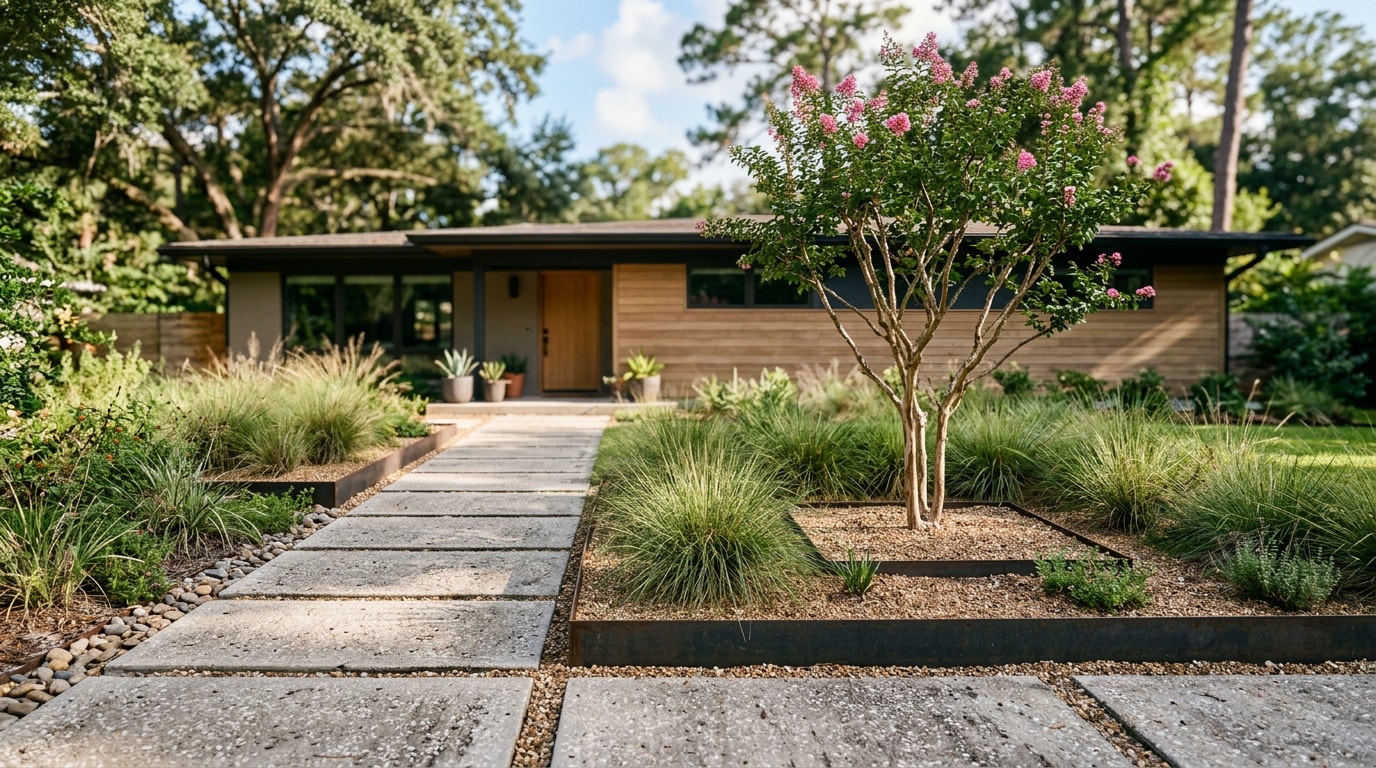
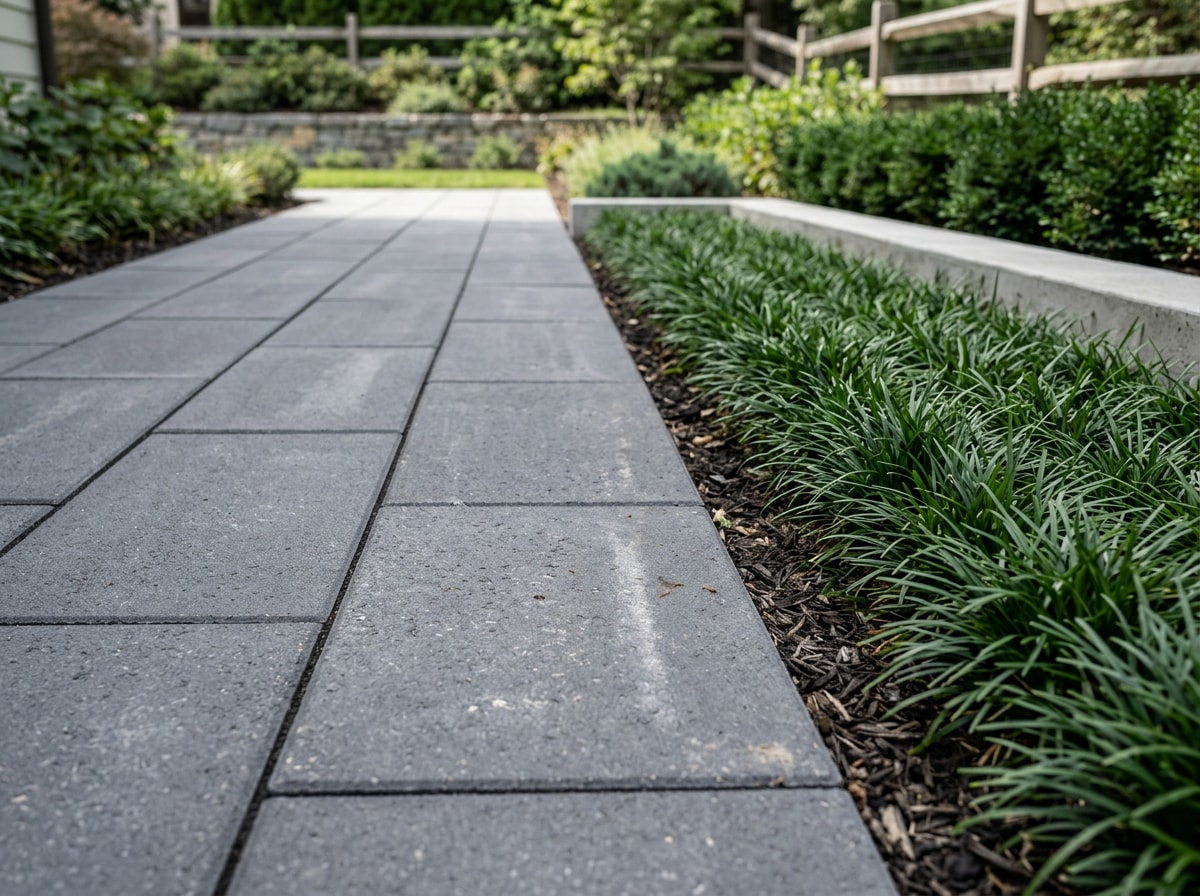
Hardscaping tends toward rectangular pools, grid-pattern walkways, and low retaining walls arranged on clean, intersecting lines rather than curves. Planting beds mirror this geometry, often laid out in simple rectangles or circles rather than free-form borders.
The overall effect reads as calm and intentional rather than sparse. That restraint is part of what makes the style photograph well, and age well, since it rarely feels dated the way busier, trend-driven landscaping can. Our hardscape design team can help plan the paver and retaining-wall layout before any planting begins; our guide to hardscaping in Tallahassee covers material options in more depth.
Indoor-Outdoor Flow & Natural Materials
Large windows and sliding glass doors were a hallmark of mid-century homes, and the landscaping was designed to be seen from inside as much as walked through outside. Patios and courtyards function as extensions of the living room, often sharing flooring materials or sightlines with the interior.
Natural materials carry this connection further. Wood decking, stacked stone walls, and exposed-aggregate concrete are standard hardscaping materials in MCM design, chosen because they age gracefully and tie the built environment back to the natural one.
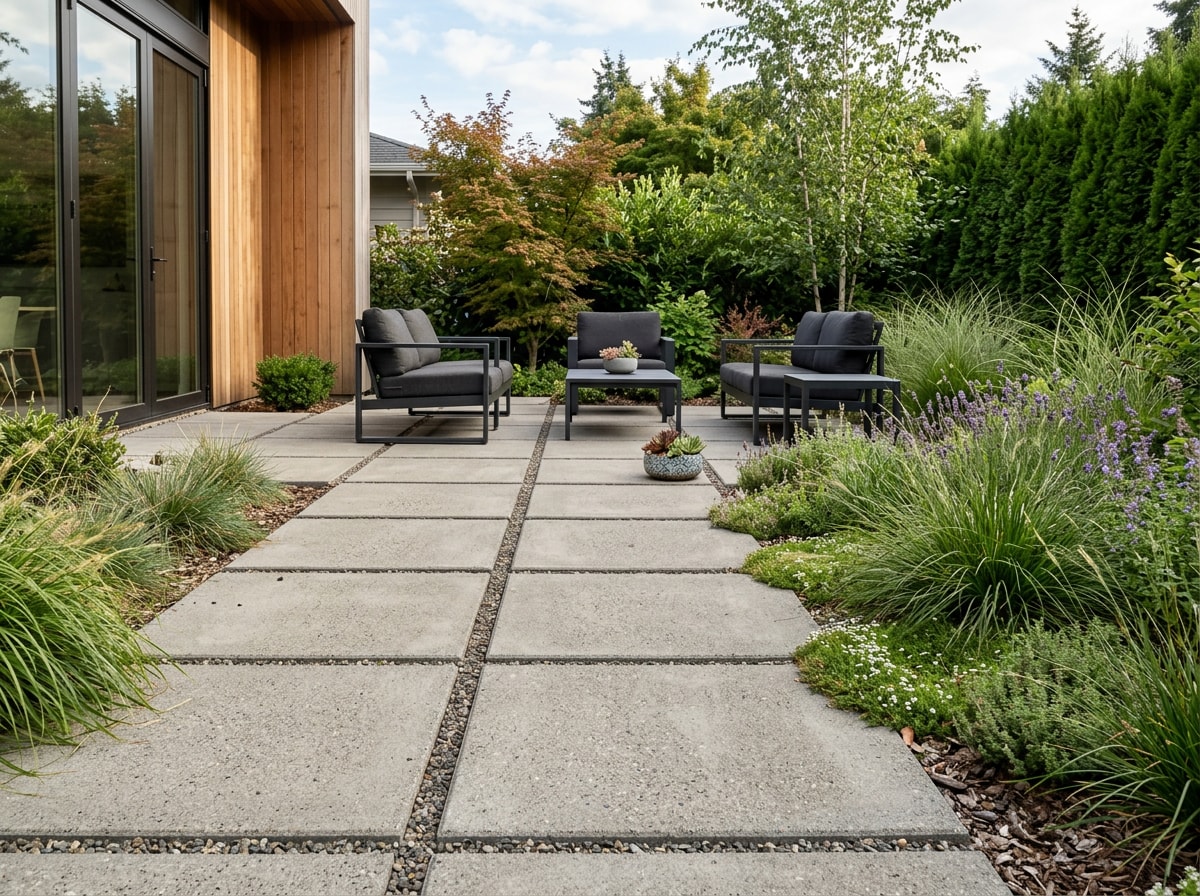
In a humid climate, that choice matters more than it does out West. UF/IFAS Gardening Solutions notes that rock and concrete can trap heat and make a Florida landscape feel uncomfortable, so leaving gaps between concrete pavers and sticking to sealed stone or composite decking instead of untreated softwood helps the space stay usable in summer.
Best Plants for Mid-Century Modern Landscaping in Tallahassee
MCM planting schemes prioritize form and texture over bold color, favoring sculptural silhouettes over flowering displays. That approach needs some translation here, since the plants used in classic mid-century California gardens don't always suit our rainfall and humidity.
Centerpiece Trees & Focal Specimens
A single striking tree often anchors the entire yard, chosen for sculptural branching rather than showy blooms. Classic MCM choices like Japanese maples and pruned junipers can work in Tallahassee's cooler microclimates, but they're not the only option.
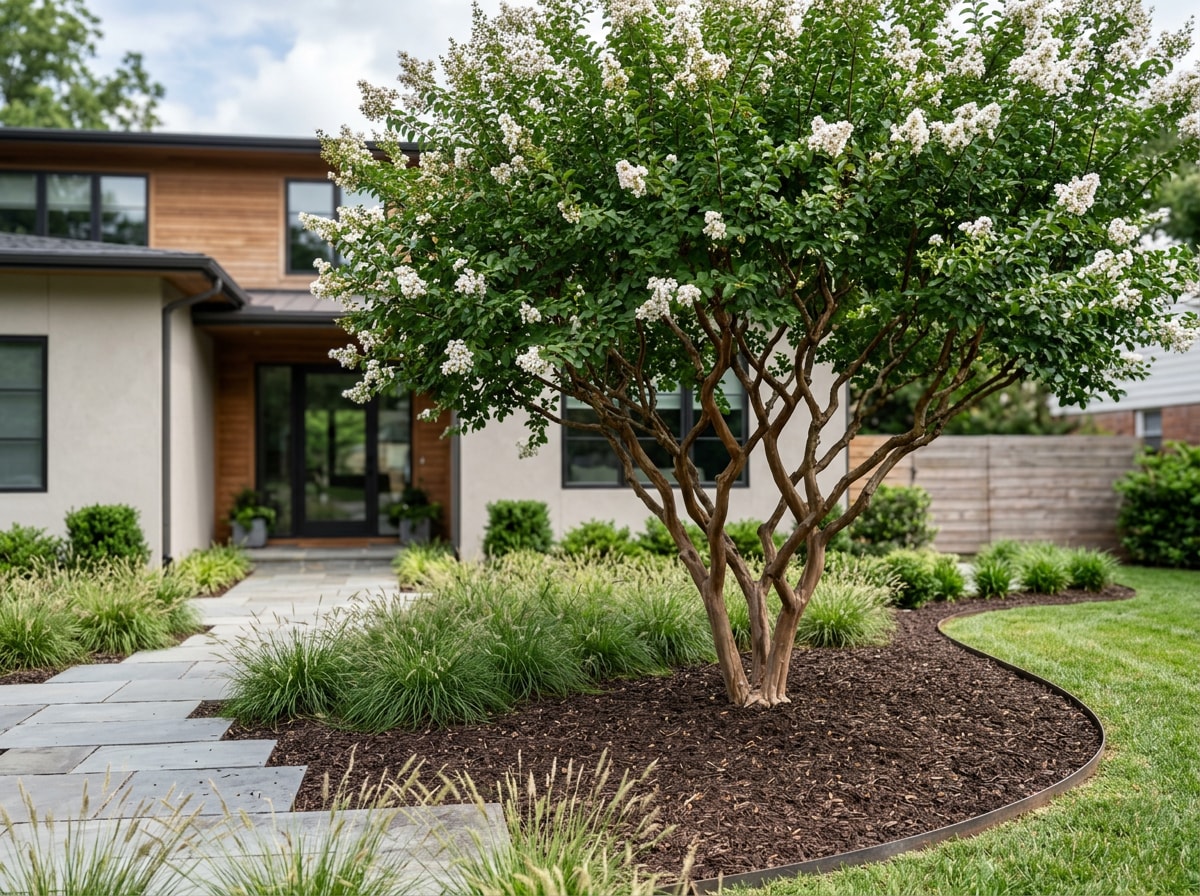
In our own installs across Betton Hills and Golden Eagle, crape myrtles have held up better than Japanese maples planted in full Tallahassee sun. They offer similar multi-trunk, sculptural form with far more tolerance for our heat and humidity.
Live oaks, trained and limbed up, can also serve as a dramatic focal specimen on larger lots. Our trees and shrubs team can help select and place a specimen tree that draws the eye without cluttering the yard with competing focal points.
Ground Covers, Grasses, Succulents & Minimalist Planting Schemes
Low ground covers, ornamental grasses, and structural succulents round out a minimalist planting scheme without overwhelming the clean lines above. Mondo grass and creeping thyme both work as low-maintenance ground covers across most of Tallahassee's planting zones.
Ornamental grasses like muhly grass add movement and soft texture against hard paving. Succulents are trickier here: desert varieties like agave can rot in Florida's humidity, but hardy sedums and certain yucca species tolerate wetter conditions while still delivering the sculptural look MCM design calls for.
Mid-Century Modern Landscaping Design Tips & Ideas
Once the principles are clear, applying them is mostly a matter of discipline. These tips bridge the gap between understanding the style and actually planning a yard.
- Balance hard with soft. Pair hard surfaces like patios and pavers with soft plantings so the yard doesn't feel like a parking lot. A roughly even split between paved and planted area keeps the design from tipping too far in either direction.
- Go symmetrical with geometric shapes. Repeat the same paver shape, planter style, or furniture arrangement on either side of a walkway or entry. It creates the orderly, intentional feel central to mid-century design.
- Create cohesion through repetition. Pick two or three materials, colors, or plant species and reuse them throughout the yard instead of introducing something new in every bed.
- Embrace negative space. Leaving areas of plain lawn, gravel, or bare concrete gives the eye room to rest and keeps a design from feeling cluttered.
Browse Native Plants
Native plants fit naturally into MCM's drought-tolerant, low-maintenance ethos, and that logic holds even more weight in Florida's climate. Species already adapted to local rainfall and pest pressure need less irrigation and fewer chemical inputs over time.
The University of Florida's Florida-Friendly Landscaping program builds its entire approach around this idea, starting with "right plant, right place" as its first core principle for choosing and siting plants. Coontie and muhly grass are two natives commonly recommended for North Florida yards that also happen to offer the clean, sculptural forms MCM design favors.
Ready to put this into a plan? Get a free estimate and we'll walk the property with you before drawing anything up.
Bold Color, Water Features & Artistic Accents
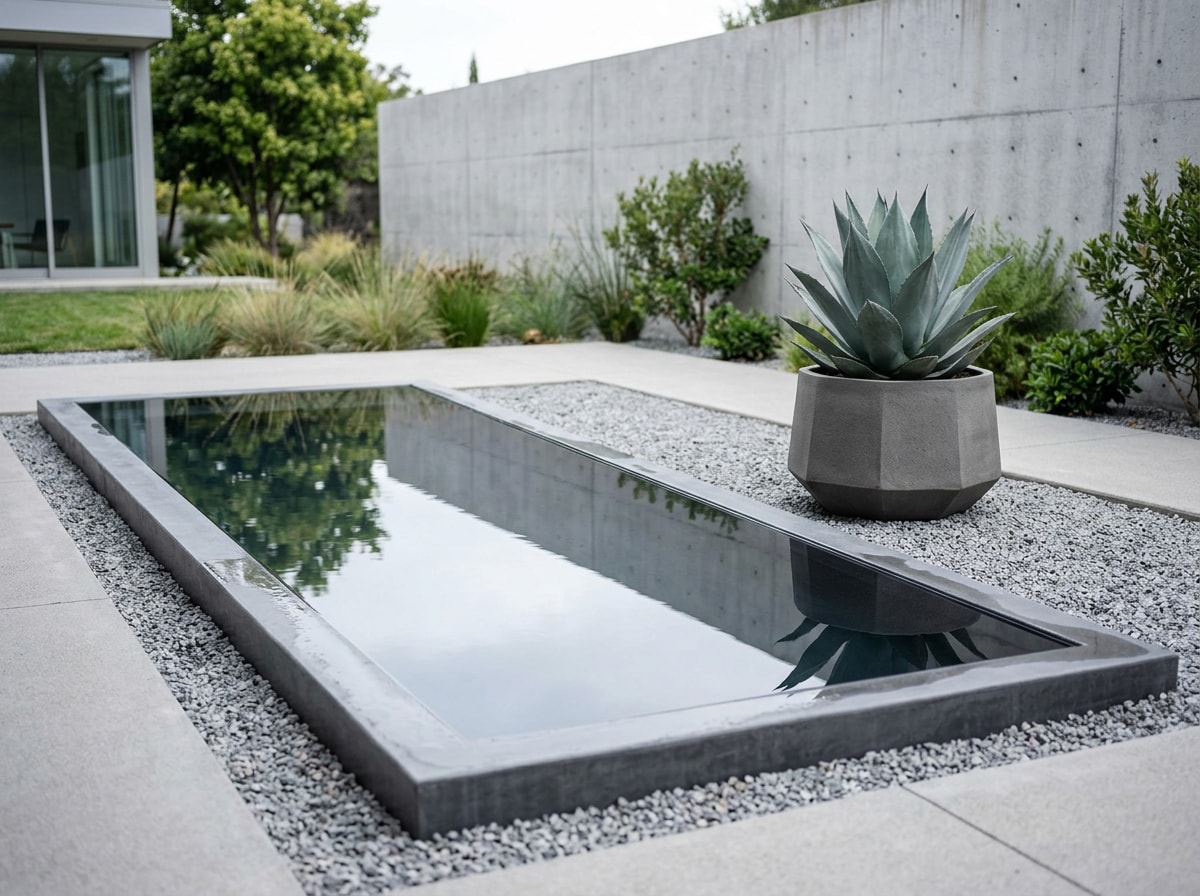
A reflecting pool or simple fountain makes an effective focal point against an otherwise restrained palette, echoing the geometric calm of the rest of the yard. Against that neutral backdrop, a few ceramic planters or a single metal sculpture can carry bold color without overwhelming the design.
If you'd rather see this applied to a full property than piece it together room by room, our homepage has recent project photos from across Leon County, and our landscape installation cost guide breaks down what a full install typically runs in 2026.
FAQ
Is there a landscaping company called MCM in Tallahassee, FL?
Not one with an established local presence. Searches for this term usually surface C&M Landscaping & Lawncare or similar-sounding directory listings rather than a dedicated MCM-branded company. Most people searching the phrase are actually looking for the mid-century modern design style.
What does MCM mean in landscaping?
MCM stands for mid-century modern, a design movement from the 1950s and 60s built around clean lines, geometric forms, and a strong connection between indoor and outdoor living space.
What is the difference between mid-century and mid-century modern landscaping?
"Mid-century" refers broadly to the 1950s to 70s era, while "mid-century modern" describes a specific design style from that period emphasizing clean lines, geometric forms, and organic materials. Not everything built in that timeframe follows MCM principles. The term describes an aesthetic choice, not just a date range.
Is mid-century modern landscaping low-maintenance?
It tends to be lower-maintenance than traditional garden styles, thanks to minimalist planting schemes, drought-tolerant species, and a higher ratio of hardscape to softscape. It isn't maintenance-free, though. Pruning for clean lines and controlling weeds in open beds still takes regular attention. Our landscape maintenance team handles that upkeep for clients who want the look without the weekend work.
Does mid-century modern landscaping work in hot, humid climates like Florida?
Yes, with some plant substitutions. It adapts well to Florida's humidity when desert-climate plants are swapped for heat- and moisture-tolerant equivalents, and hardscape materials are sealed properly for year-round humidity. Tallahassee sits in USDA Plant Hardiness Zone 9a under the current map, which supports a wide enough plant palette to keep the style's sculptural look intact. You can confirm your exact zone using the official USDA Plant Hardiness Zone Map.