Choosing rocks for landscaping Havana, FL yards comes down to one question: what do you need the stone to do? Hold a slope, dress a bed, carry foot traffic, or move water away from the foundation. Pick the color first and you will usually buy the wrong stone twice.
Best Types of Landscaping Rock for a Havana Yard
The stones that actually move in bulk around Havana and Gadsden County are crushed limestone, crushed granite, river rock, pea gravel and marble chips. Lava rock and flagstone show up too, usually bagged or by the pallet, which changes the price math.
| Rock type | Typical size | Best use | Approx. bulk cost per ton (2026) | Upkeep |
|---|---|---|---|---|
| River rock | 1 to 3 in. | Dry creek beds, downspouts, slopes | $90 to $180 | Low |
| Crushed limestone | 1/2 to 1 in. | Paths, base layers, drives | $45 to $90 | Low |
| Pea gravel | 3/8 in. | Walkways, patios, play areas | $60 to $120 | Medium, it migrates |
| Crushed granite | 3/4 in. | Driveway gravel, compacted paths | $70 to $140 | Low |
| Marble chips | 1/2 to 1 in. | Bright accent beds, pool surrounds | $150 to $300 | Medium, it stains |
| Lava rock | 1/2 to 1 in. | Accent beds, planters | Usually sold by bag or yard | Low, color fades |
| Flagstone | Slabs | Stepping paths, patios | Priced by pallet | Low |
Those are planning ranges for delivered bulk material in 2026, not quotes. Freight distance and order size swing them more than the stone itself does.
One local note worth money: coral rock and coquina are South Florida materials. Hauling them up here adds freight to every ton, which is why limestone, granite and river rock dominate yards in this part of the Panhandle.
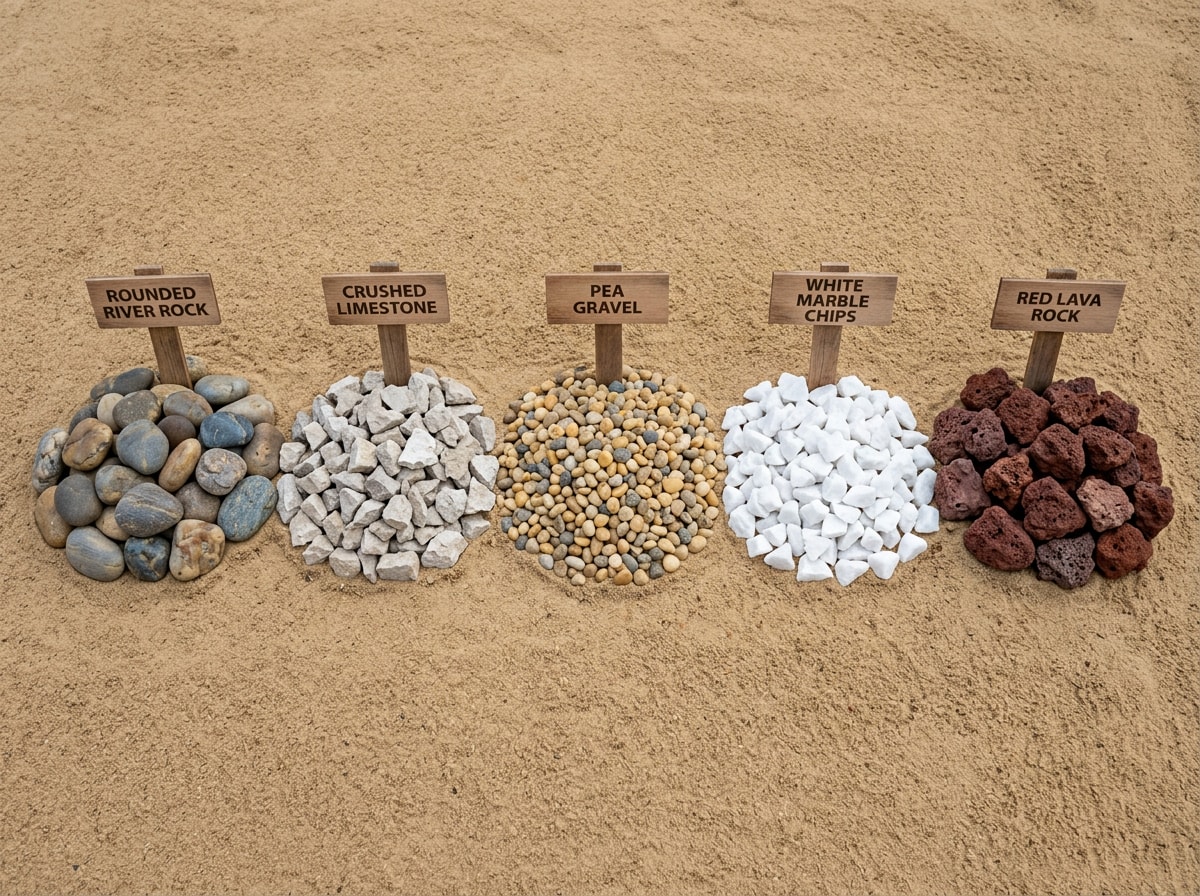
River rock
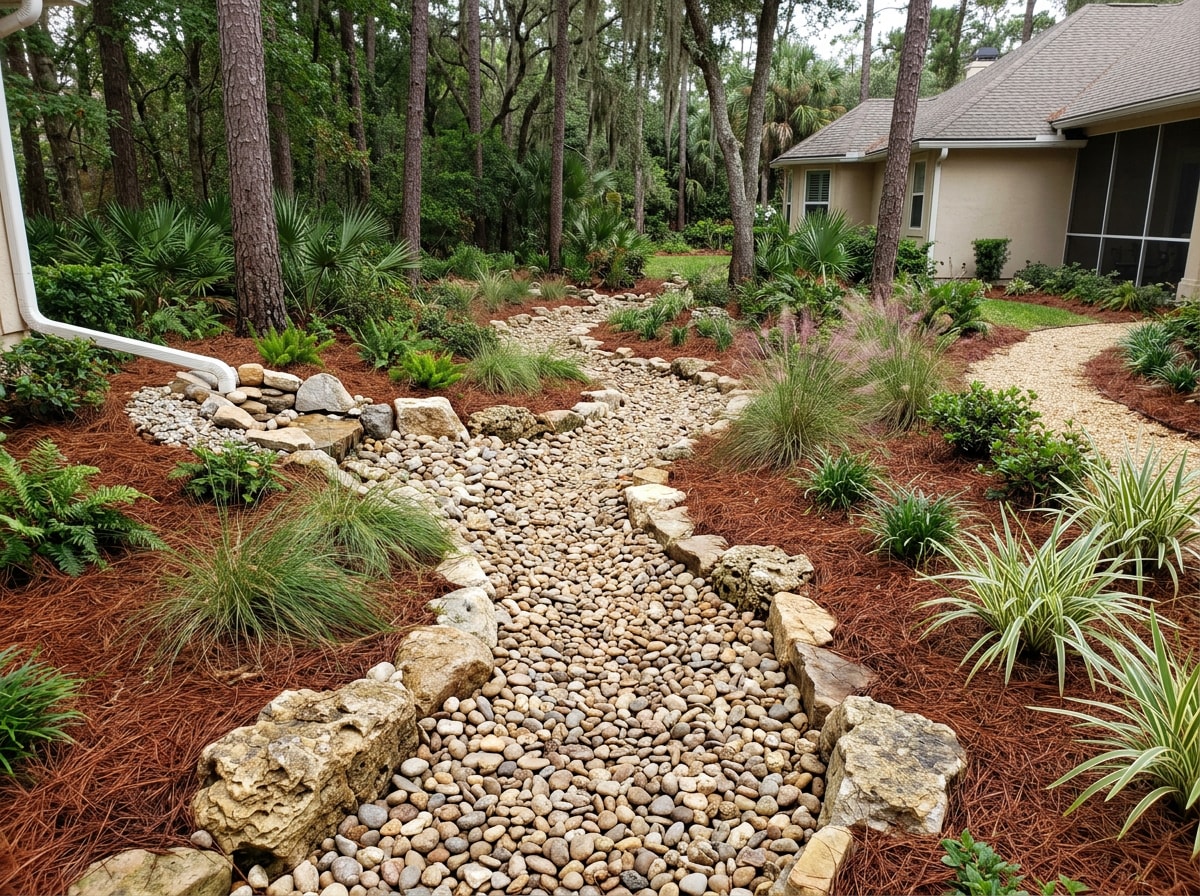
Rounded, 1 to 3 inch stone. It is the default for dry creek beds, downspout splash zones and anywhere water moves fast enough to float lighter material. Size up to 2 or 3 inch on a grade, because 1 inch stone walks downhill after a few storms. Our breakdown of river rock costs, depths and where it actually works covers the sizing in more detail.
Crushed limestone and crushed granite
Angular stone that locks together underfoot. This is what belongs on a compacted path or a gravel drive, and what belongs under flagstone as a base layer.
Pea gravel and marble chips
Pea gravel drains instantly and feels loose to walk on, so it suits casual paths and side yards with solid edging. Marble chips are bright and reflect heat, which helps near a pool deck, but they pick up tannin stains under oaks.
What It Costs and How Much Rock You Need
Most ordering mistakes are volume mistakes, not price mistakes. Run the coverage math before you call for a delivery.
| Depth | Coverage per cubic yard | Rough tons per 100 sq ft |
|---|---|---|
| 2 in. | About 162 sq ft | About 0.8 ton |
| 3 in. | About 108 sq ft | About 1.2 tons |
| 4 in. | About 81 sq ft | About 1.6 tons |
The math behind it: a cubic yard is 27 cubic feet, so at 2 inches deep it spreads across roughly 162 square feet. Most decorative stone weighs in the neighborhood of 1.2 to 1.4 tons per cubic yard, so confirm the conversion with your supplier before you order by the ton.
Plan beds at 2 to 3 inches of stone. Paths and drives need a compacted base course under the decorative layer, which is a separate material and a separate line on the quote.
Need the order sized for you? Get a free estimate and we will measure the beds and give you tonnage instead of guesswork.
Match the Stone to the Job
Three filters sort the options: the job, the weather, and the house.
- Walkways: angular crushed stone, 1/2 to 3/4 inch, over a compacted base. It stays level. See our paver and walkway work if you want a hard surface instead.
- Driveways: crushed granite or limestone, compactable, never rounded gravel.
- Drainage runs and dry creek beds: 2 to 3 inch river rock over a graded channel. Pair it with real yard drainage solutions if water is standing.
- Slopes and bed edges: larger stone or a built retaining wall where the grade is steep enough to keep eroding.
- Garden borders: pull the color from your roof or brick, not from the brightest pallet at the yard.
What North Florida weather does to stone
Havana sits inland, so salt spray is not the issue it is on the coast. Rainfall is.
The Tallahassee area averages roughly 59 inches of rain a year, with the summer months carrying the heaviest totals, per the National Weather Service Tallahassee climate normals. That volume is why undersized stone washes out of beds and why grading has to come before material.
Two more local realities:
- Humidity keeps shaded stone prone to algae film, so avoid polished surfaces on walking paths.
- Light stone stays noticeably cooler than dark. Limestone and marble chips reflect heat near patios. Lava rock and dark granite absorb it, which matters against a west-facing wall.
Rock vs. Mulch: Where Stone Wins and Where It Does Not
Stone does three things mulch cannot. It suppresses weeds without an annual refresh, it stays put when a thunderstorm dumps through a bed, and it lasts decades instead of breaking down. Mulch floats and ends up in the street during storm season.
The honest other half: rock adds no nutrients and raises soil temperature.
UF/IFAS treats mulching as a core practice in the nine principles of Florida-Friendly Landscaping, and their guidance favors organic mulch around trees, shrubs and edibles because it feeds the soil as it breaks down. Inorganic stone is the better call for problem zones: the first foot against the foundation, narrow side yards, downspout outfalls and anywhere water moves.
In practice we use both in the same yard. Stone handles the wet and the walkable. Mulch handles the planting beds.
Properly bedded stone also behaves as a permeable surface, letting rain infiltrate rather than sheet off the way slab concrete does. EPA material on permeable pavement and runoff explains why that matters for what ends up downstream.
How to Install Landscape Rock So It Stays Put
- Check drainage first. Watch where water sits after a hard rain, then grade. Stone over a wet low spot just hides the problem.
- Strip and prep. Remove turf and weeds, level the area, compact the subgrade.
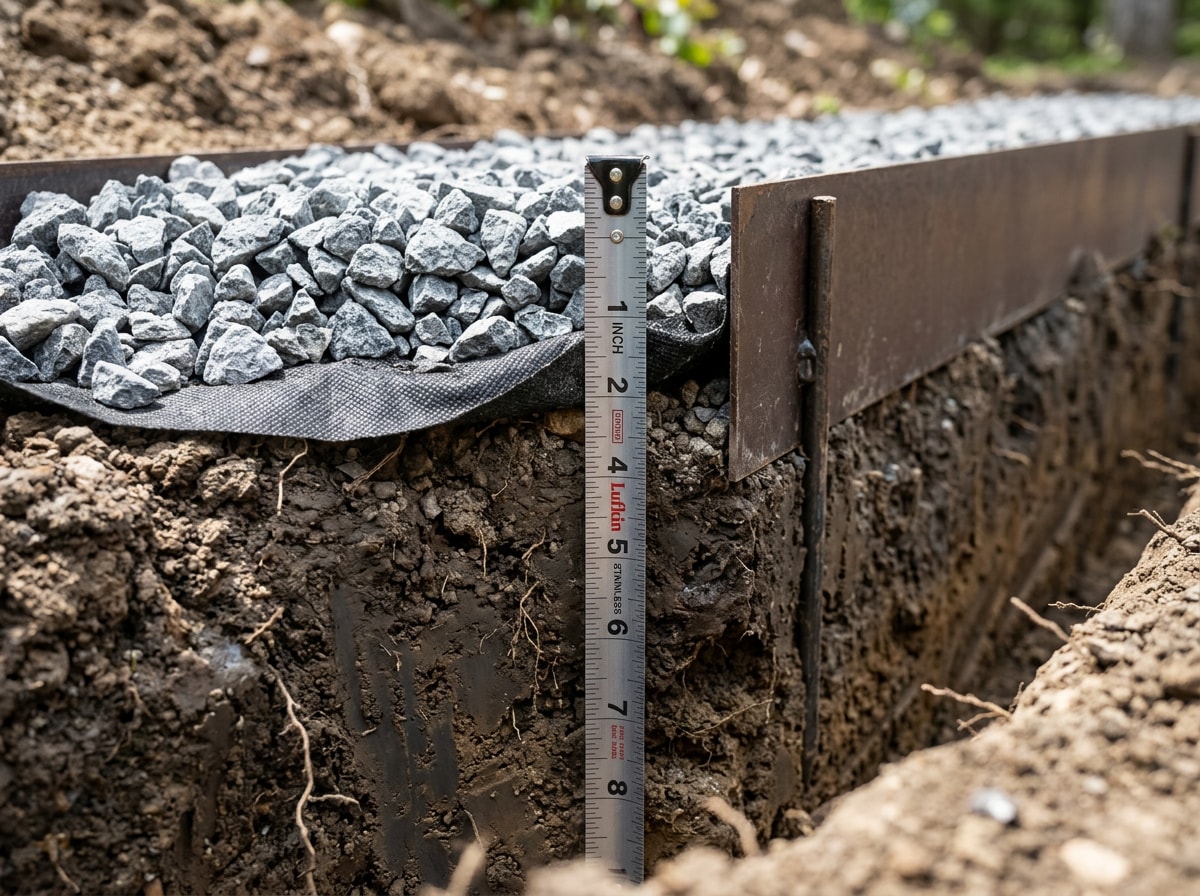
- Use fabric selectively. Weed barrier helps under paths and drives. Skip it over already poor draining soil where it traps water.
- Add bedding sand anywhere flagstone or pavers must sit flat.
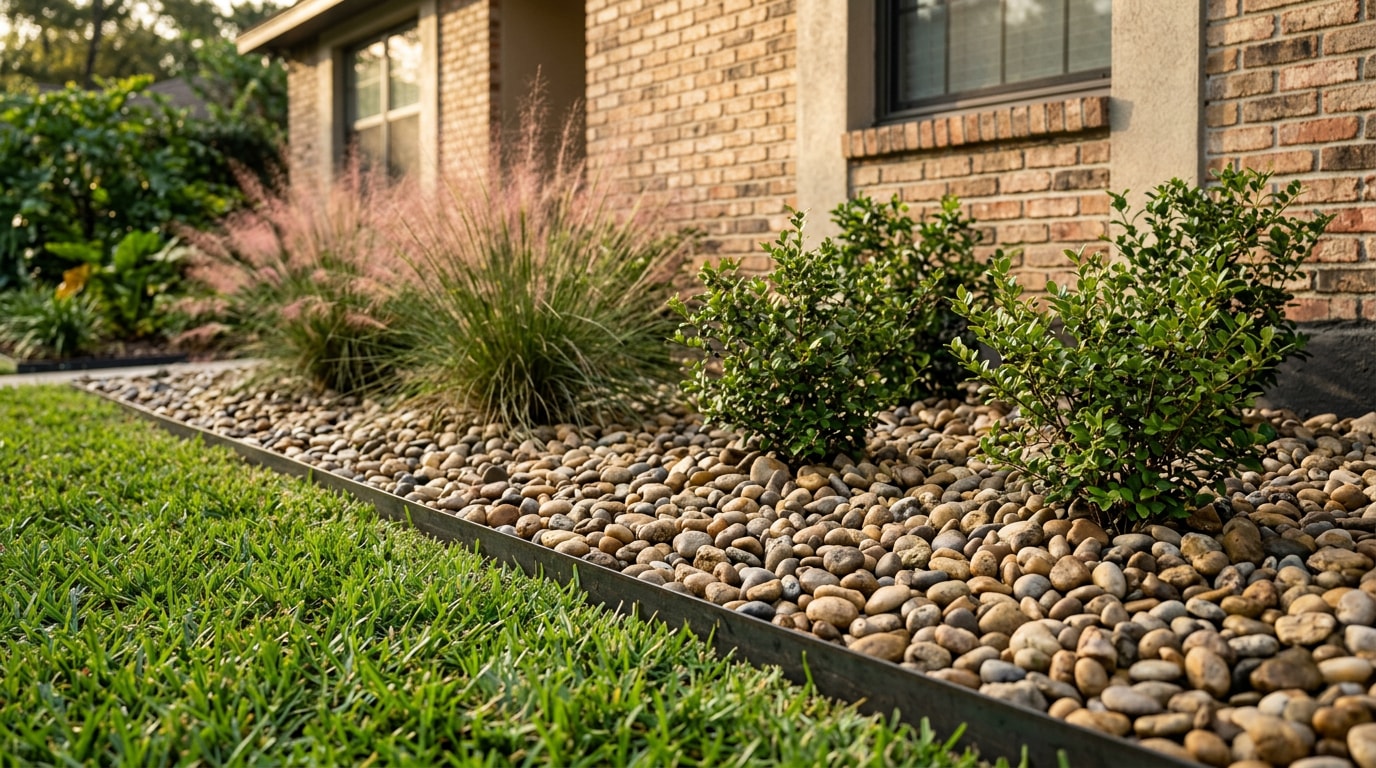
- Install edging. Steel, aluminum or paver edging keeps stone out of the lawn and off mower blades.
- Spread to depth and rake. Two to three inches in beds, deeper only in drainage channels.
Keep stone off plant crowns and tree flares. Buried trunks rot, and that is the single most common failure we repair on DIY rock beds.
Low Maintenance Rock Designs That Work Here
A rock garden built around two or three boulder accents gives structure with no irrigation. Gravel ground cover cuts weeds and speeds drainage in narrow side yards where turf never fills in anyway.
Pair stone with drought tolerant plants like muhly grass, yaupon or coontie. Keep stone color in the same family as the house.
The honest upkeep picture: pine straw and leaves settle into rock and need blowing or rinsing a few times a year, and most beds want topping up every five to eight years. Our landscaping and hardscaping crews handle both the install and the refresh, and you can see how stone fits a full plan on our landscape design page.
Checking whether we cover your address? See our Havana, FL service area.
FAQ
What is the cheapest rock for landscaping in Havana, FL?
Crushed limestone is usually the lowest delivered cost per ton, followed by pea gravel and crushed granite. Bagged stone from a big box store looks cheap per bag and costs far more per square foot once you cover a real bed.
Is landscape rock cheaper than mulch over time?
Rock costs more upfront and less over ten years, because you are not rebuying and rehauling material every spring. Mulch wins on upfront cost and on soil health.
What size rock is best for landscaping beds?
Half inch to one inch stone for general beds and borders. Two to three inch river rock for drainage runs and slopes, since smaller stone floats out during heavy rain.
Do you need landscape fabric under rock?
Under paths, drives and base layers, yes. In planting beds with poor drainage, fabric often traps water and clogs with silt, so we leave it out and rely on depth and edging instead.
Can landscaping rocks fix a drainage problem?
They help, with conditions. River rock and pea gravel pass water quickly, which suits dry creek beds and downspout splash zones. But drainage comes from grading and the soil profile underneath, so stone over compacted clay only hides standing water.
What stones work best for a Florida garden pathway?
Flagstone and angular crushed stone handle foot traffic without shifting. Pea gravel is the budget option and drains instantly. Avoid polished stone, which turns slick under algae film in humid months.
Does rock landscaping make a yard hotter?
Wide stone expanses do radiate heat, especially dark rock in full sun. Keep large rock areas away from west facing walls and heat sensitive plants, and use stone as an accent rather than wall to wall coverage.
How many tons of rock do I need?
Measure square footage, pick your depth, then use the coverage table above. Roughly 1.2 tons covers 100 square feet at 3 inches deep for most decorative stone.
---
Written by the design and install team at Talquin Landscaping FL, a licensed landscaping, hardscape and drainage contractor serving Havana, Gadsden County and the greater Tallahassee area. We set stone beds, dry creek beds and gravel drives across this region year round, and most of the rock work we get called to repair failed for the same reason: grading was skipped. Tell us what your yard does after a storm and we will spec the material around it. Request a free estimate.