
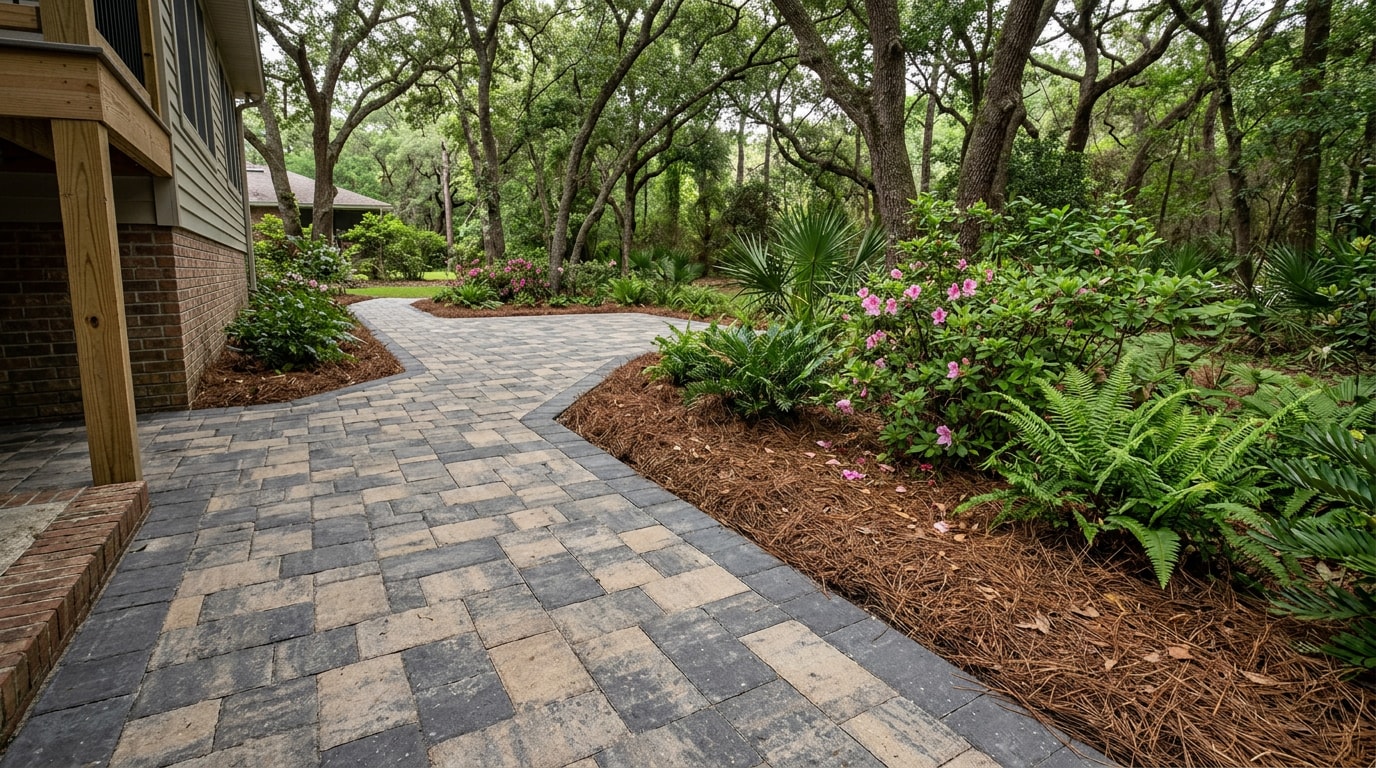
Garden paving in SouthWood, FL runs roughly $14 to $40 per square foot installed in 2026, and the spread comes down to material, base depth and how your lot drains. Most of the failures we get called out to fix are base and slope problems, not paver problems. Here is what the work costs, which material actually holds up under heavy canopy and clay subsoil, and the one approval step SouthWood homeowners keep forgetting.
Garden Paving Costs in SouthWood, FL (2026)
These are our own installed price bands, pulled from residential paving work across SouthWood and the wider Tallahassee area. They include excavation, base, bedding layer, pavers, edge restraint and joint sand.
| Paving type | Installed cost per sq ft (2026) | Typical 300 sq ft patio |
|---|---|---|
| Poured concrete slab | $8 to $15 | $2,400 to $4,500 |
| Concrete pavers | $14 to $22 | $4,200 to $6,600 |
| Clay brick pavers | $18 to $28 | $5,400 to $8,400 |
| Permeable pavers | $20 to $32 | $6,000 to $9,600 |
| Natural stone / flagstone | $22 to $40 | $6,600 to $12,000 |
Common adders that move a quote:
- Extra base depth over clay subsoil: $2 to $4 per sq ft
- Demolition and haul-off of an existing slab: $3 to $6 per sq ft
- Steps, seat walls or curved edges: priced per linear foot
- Tight rear-yard access with no gate wide enough for a skid steer: 10 to 20 percent labor premium
- Drain tie-in or French drain along the patio edge: priced separately
Small jobs cost more per square foot. A 60 square foot landing carries the same mobilization, excavation and compaction setup as a 400 square foot patio.
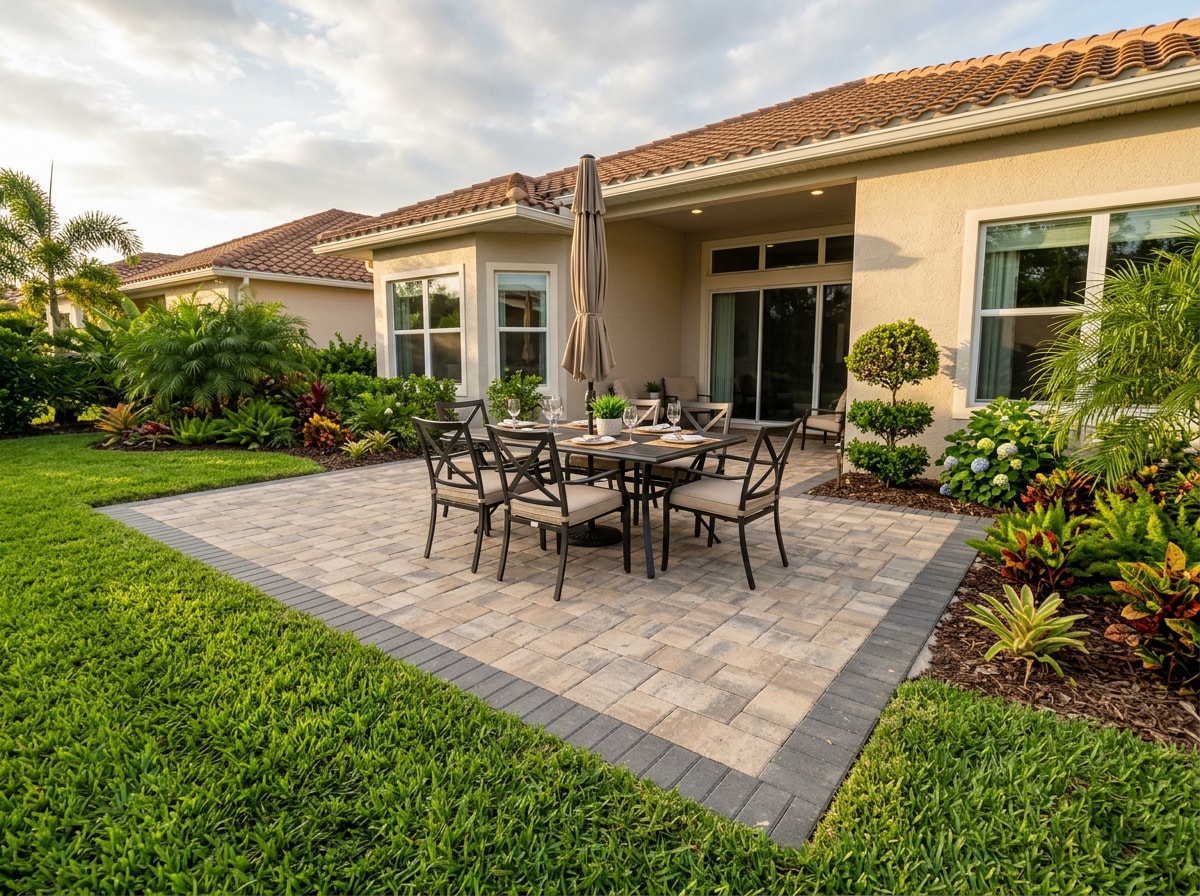
Want a number for your own yard rather than a band? Get a free estimate and we will measure on site.
Which Paving Material Fits a SouthWood Garden?
SouthWood rear lots tend to be small to mid sized, heavily shaded by canopy, and sitting over clay-heavy subsoil. That combination rules some materials out faster than budget does.
| Material | Cost | Heat and glare | Over clay subsoil | Wet slip resistance | Upkeep |
|---|---|---|---|---|---|
| Concrete pavers | Low to mid | Moderate to high in full sun | Good, units flex with minor movement | Good on textured faces | Low to moderate |
| Clay brick pavers | Mid to high | Moderate | Good with deeper base | Good | Moderate |
| Natural stone | High | Coolest underfoot in shade | Fair, thickness varies by piece | Varies sharply by finish | Moderate |
| Permeable pavers | Mid to high | Moderate | Strong where water already sits | Good | Higher, joints need cleaning |
| Poured concrete | Lowest | High when light colored | Cracks rather than flexes | Fair unless broom finished | Low until it cracks |
A note from the field: on a shaded SouthWood side garden last year, we talked a client out of a smooth-finish flagstone walkway after seeing green algae film on their existing slab eight months of the year. We laid textured concrete pavers instead. Smooth stone in deep shade here stays slick, and no sealer fixes that.
If you are weighing paving against loose material for garden beds and side yards, our guide to river rock landscaping in SouthWood covers where stone beats hard paving.
How a Garden Paving Install Actually Goes In
The surface is the last 10 percent of the job. Everything that determines whether the patio is flat in year seven happens below it.
- Layout and marking. Footprint staked, utilities located, bed lines and tree roots mapped.
- Excavation. Typically 7 to 12 inches below finished grade for a pedestrian patio, deeper over soft or clay-heavy subgrade.
- Subgrade compaction. Compacted in lifts. Skipping this is the single most common cause of the dips you see on cheap patios.
- Base aggregate. Crushed stone placed and compacted in lifts, usually 4 to 6 inches for garden patios and walkways over stable subgrade.
- Edge restraint. Installed before the perimeter pavers lock in, not after.
- Bedding layer. Washed concrete sand, screeded to a consistent thickness. Industry guidance from the Concrete Masonry and Hardscapes Association is explicit that stone dust and limestone screenings should not be used for bedding.
- Paver placement and cuts. Field laid first, perimeter cuts last, cut on a wet saw.
- Compaction and joint sand. Surface compacted, joints filled and compacted again, then swept and settled.
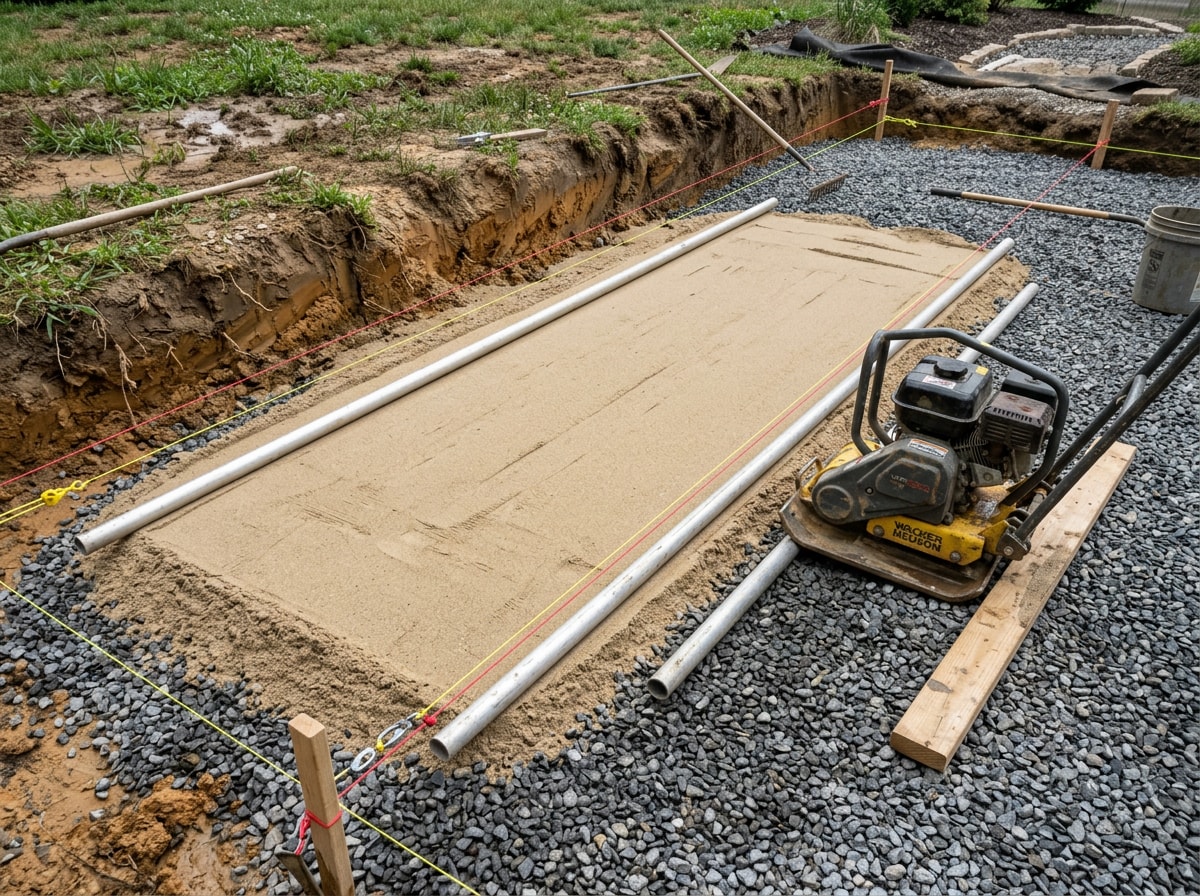
Typical schedule for a 300 to 400 square foot garden patio: one day of demo and excavation, one day of base work, one to two days of laying and finishing. Rain pushes everything. Saturated clay will not compact, so we stop rather than build on mud.
See how this plays out on finished jobs in our project gallery, or read the service details on paver installation.
Drainage Decides More Than Material Does
Every square foot of paving you add is a square foot that no longer absorbs rain. That water has to go somewhere, and in SouthWood it usually finds the lowest point in the yard or the foundation.
Three rules we build to:
- Slope away from the house. CMHA guidance puts the minimum at 1.5 percent for interlocking concrete pavement. We aim for 2 percent on garden patios so the surface still drains after minor settlement.
- Deeper base over clay. Clay holds water and moves with moisture. Sandier Leon County sites can get away with less base than SouthWood lots typically can.
- Where water already pools, change the system, not the grade. Permeable paving lets rain pass through the joints into an open-graded stone reservoir below. The EPA's permeable pavement guidance covers how the system works and what maintenance it needs. If infiltration is not realistic, a French drain along the patio edge moves the water instead.
If your yard already has standing water or a soggy low spot, fix the drainage before the paving goes in. Retrofitting a drain under a finished patio means pulling the patio apart.
Layout Rules That Make a Garden Path Work
- 36 inches minimum for a comfortable single-file walkway. 48 inches if two people walk side by side.
- Patio proportion: keep paving under roughly a third of a small rear garden or the yard reads as a parking pad.
- Tie the edge into existing beds rather than floating a rectangle in the middle of the lawn.
- Match or deliberately contrast the house masonry. Near-matching rarely looks intentional.
- Plan the transition to turf. A flush edge at mower height saves you trimming forever.
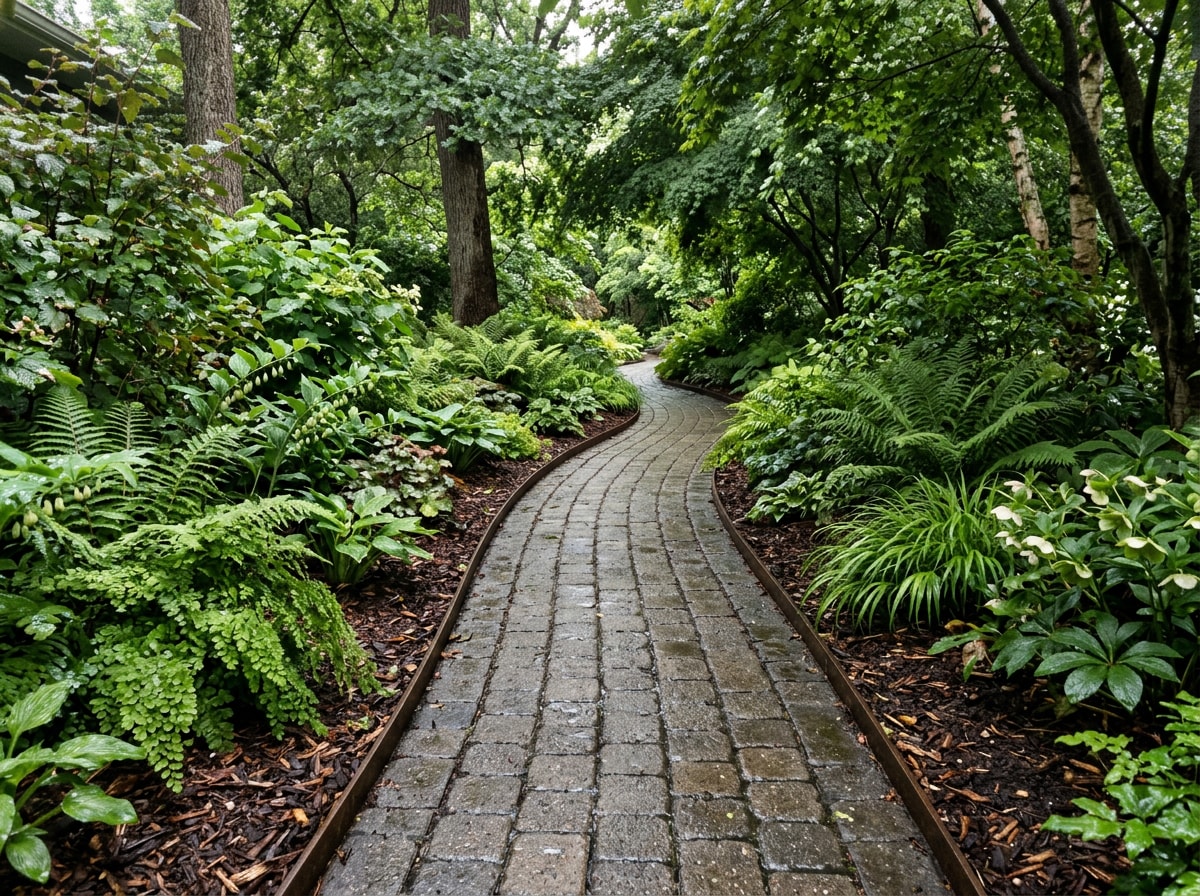
More layout options on our paver patios and paver walkways pages. Grade changes of more than about 18 inches usually need retaining walls rather than a steeper slope.
Sealing, Repairs and What Upkeep Really Takes
Sealing and repair are separate jobs and get confused constantly.
Sealing resists staining, holds colour and helps stabilise joint sand. It also helps manage efflorescence, the white haze that can surface on new concrete units. Reseal intervals depend on the product and exposure, so follow your sealer manufacturer's stated interval rather than a blanket number. Two to four years is common locally.
Repairs handle settlement, lifted units and washed-out joints. In SouthWood the usual causes are summer downpours and canopy leaf litter, which drives organic staining and joint-sand loss faster than most owners expect.
Realistic annual upkeep for a garden patio here:
- Sweep leaf litter off regularly, especially autumn through winter
- Wash the surface once a year
- Top up joint sand every one to two years
- Treat joint weeds as they appear, not once a year
- Reseal on the manufacturer's interval
That is maybe three to four hours a year on a mid-sized patio, which is still less than the planting bed next to it. Browse the full range of hardscaping services if you are planning more than paving.
The SouthWood Approval Step People Miss
SouthWood is a master-planned community with an active architectural and design review process. Exterior changes, including paving material, colour and footprint, commonly require association approval before work starts. Build first and you risk being asked to tear it out.
Separately, work in unincorporated Leon County that changes grading, paving or stormwater flow can trigger an environmental permit. The county's Development Support and Environmental Management department handles that review and has a service advisor who will tell you whether your project needs one.
We prepare the association submittal with clients as part of the design stage, including material samples and a dimensioned layout. It usually adds two to four weeks to the front of the schedule, so plan around it.
Why SouthWood Homeowners Hire Us
- Licensed and insured for work in Leon County
- Documented base specification on every job, not an eyeballed depth
- Written workmanship warranty on installations
- HOA design review submittals prepared with you
- Drainage designed in, not added later
Check coverage on our SouthWood service area page or start at the Talquin Landscaping homepage for the full service list. When you are ready for numbers, book a site walkthrough and we will price the real conditions in your yard.
FAQ
How much does garden paving cost in SouthWood, FL?
Expect $14 to $40 per square foot installed in 2026 depending on material. Concrete pavers sit at the low end, natural stone at the high end. A 300 square foot patio typically lands between $4,200 and $12,000.
What is the cheapest paving option for a garden?
A poured concrete slab, at roughly $8 to $15 per square foot. It is cheapest up front but cracks rather than flexing, and a cracked slab is harder to repair invisibly than a paver field.
What is the best paving material for a shaded SouthWood garden?
Textured concrete pavers. They hold grip when algae film builds up in deep shade, cost less than stone, and individual units can be lifted and reset if something settles.
How deep should the base be under garden pavers?
For pedestrian patios and walkways, 4 to 6 inches of compacted crushed stone over compacted subgrade is typical. Clay-heavy or soft subgrade needs more. Total excavation usually runs 7 to 12 inches below finished grade.
Do I need a permit or HOA approval for a paver patio in SouthWood?
Association design review is commonly required for exterior changes including paving. A county environmental permit may also apply if the work changes grading or stormwater flow. Confirm both before ordering material.
How long does a garden paving project take?
Three to four working days of construction for a typical 300 to 400 square foot patio. Add two to four weeks up front for design review approval, and expect weather delays, since saturated clay cannot be compacted.
Do garden pavers need sealing?
Not structurally, but sealing resists staining, holds colour and helps lock joint sand in place. Follow the interval your sealer manufacturer specifies. Two to four years is common in this climate.
How do I stop weeds growing between pavers?
Keep joints fully filled with sand and top them up every one to two years. Weeds germinate in organic debris that collects in low joints, so regular sweeping matters more than herbicide.
Can pavers be laid over an existing concrete slab?
Sometimes, if the slab is sound, drains properly and the added height does not block a door threshold. A cracked or settling slab should come out, because the movement below will telegraph straight through the new surface.
Written by the Talquin Landscaping hardscape team, licensed and insured paver and drainage installers working across SouthWood, Tallahassee and Leon County. Questions about your own yard? Reach us through our contact page.

