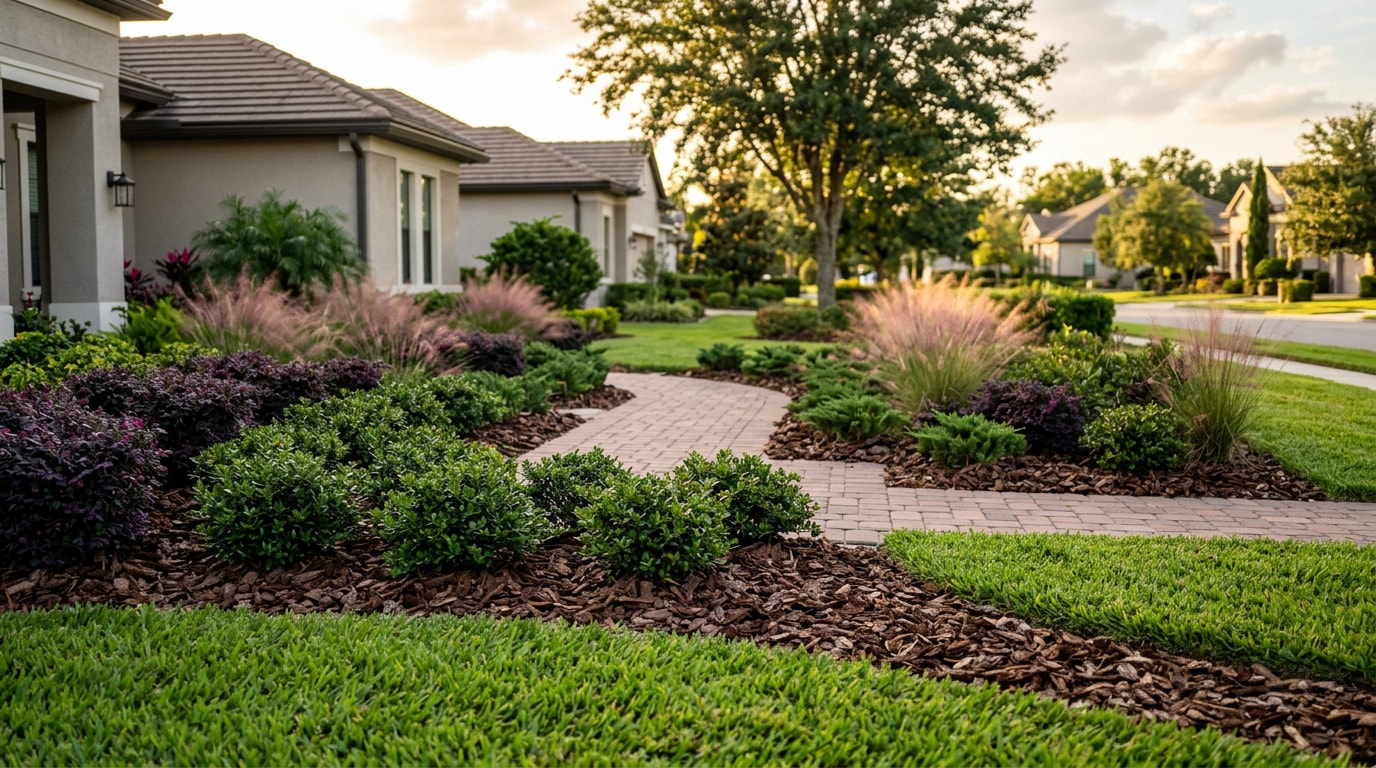
Hardscape landscaping in Tallahassee, FL turns an unusable slope or a soggy back corner into the part of the property you actually use. Done badly, it settles, shifts, and sends water toward your foundation. Below are the 2026 price ranges we quote, the permits Leon County actually enforces, and the build order that keeps a patio flat for twenty years.
What Hardscaping Costs in Tallahassee in 2026
Price is the first question on nearly every estimate, so here it is first.
The ranges below are what our crews quote across Tallahassee and Leon County in 2026. They are installed prices, including excavation, base, and labor. Site access, demolition of an existing slab, and long material hauls push jobs toward the top of each range.
| Hardscape element | Typical installed range | Main cost driver |
|---|---|---|
| Paver patio | $18 to $30 per sq ft | Paver style, cuts, curves |
| Paver walkway | $20 to $32 per sq ft | Width, edge cuts, steps |
| Paver driveway | $22 to $38 per sq ft | Thicker units, deeper base |
| Poured concrete patio, broom finish | $10 to $16 per sq ft | Slab thickness, finish |
| Block retaining wall under 4 ft | $35 to $60 per face sq ft | Block type, drainage stone |
| Engineered wall with geogrid | $60 to $110 per face sq ft | Engineering, excavation depth |
| Fire pit, built in | $2,500 to $6,000 | Size, veneer, gas line |
| Outdoor kitchen | $9,000 to $30,000 | Appliances, counters, utilities |
| French drain or drain tie in | $25 to $55 per linear ft | Depth, outfall distance |
Two cost notes most quotes do not spell out.
First, the base is roughly a third of a paver job and you never see it. Cheap bids usually cut base depth or skip compaction in lifts, and that is exactly where failures start.
Second, demolition is its own line item. Removing and hauling an old concrete slab often adds $3 to $6 per square foot before the new work even begins.
If you want the wider picture on yard budgets, our Tallahassee landscaping cost guide breaks down softscape and maintenance pricing alongside hardscape.
The Hardscape Services Tallahassee Homeowners Request Most
Very few projects are a single feature. A patio usually arrives with a seat wall, a grill counter, or a walkway tying it back to the drive. Planning those together avoids cutting into finished work later.
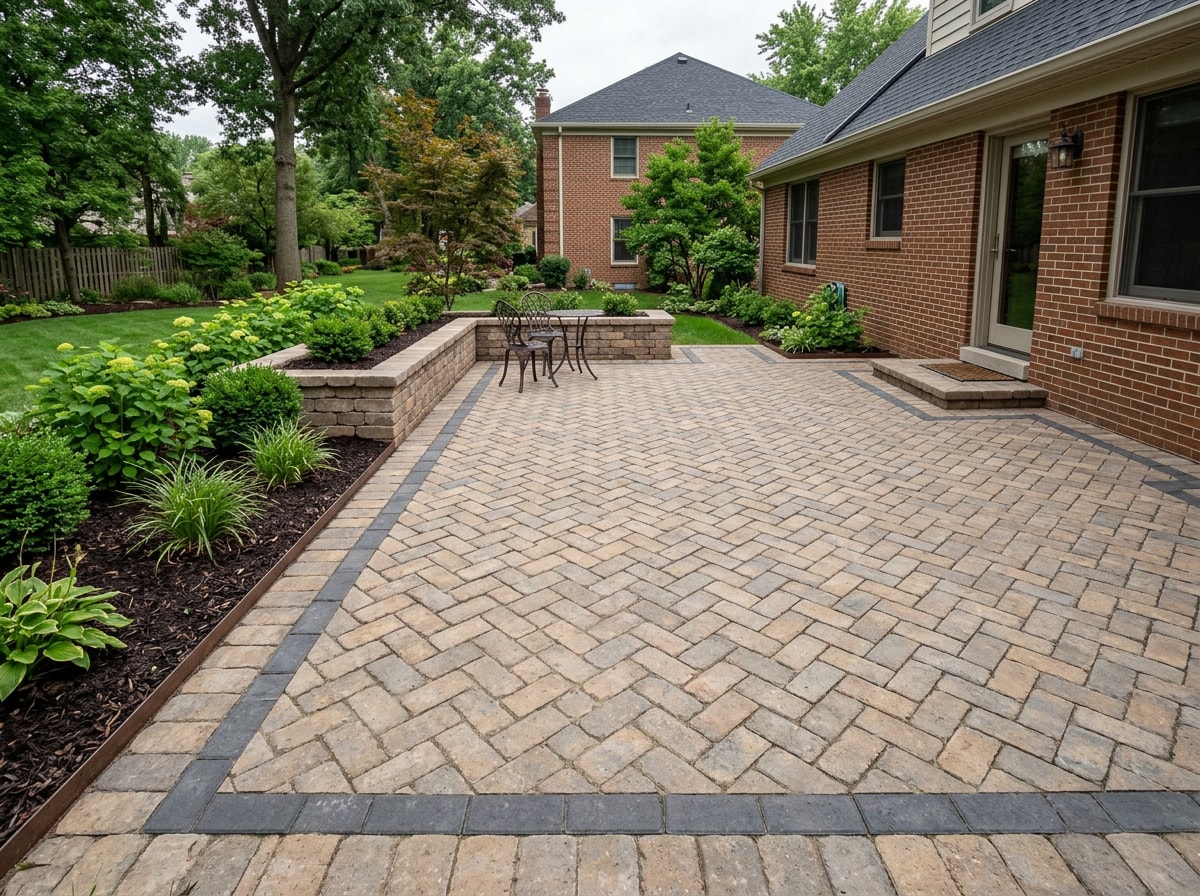
Paver Patios, Walkways and Driveways
Patios and walkways make up most of our paver installation work, with pool decks close behind.
A paver patio can use almost any unit format. A paver driveway is a different animal, because vehicle loading calls for thicker units and a deeper compacted base.
You will make real choices here. Texture, color, unit size, and laying pattern all change how the finished surface reads.
- Tumbled brick pavers suit traditional Betton Hills and Midtown homes.
- Large format smooth units read contemporary and show fewer joints.
- Permeable pavers are worth pricing where lot coverage or runoff is a concern.
Retaining Walls and Terracing
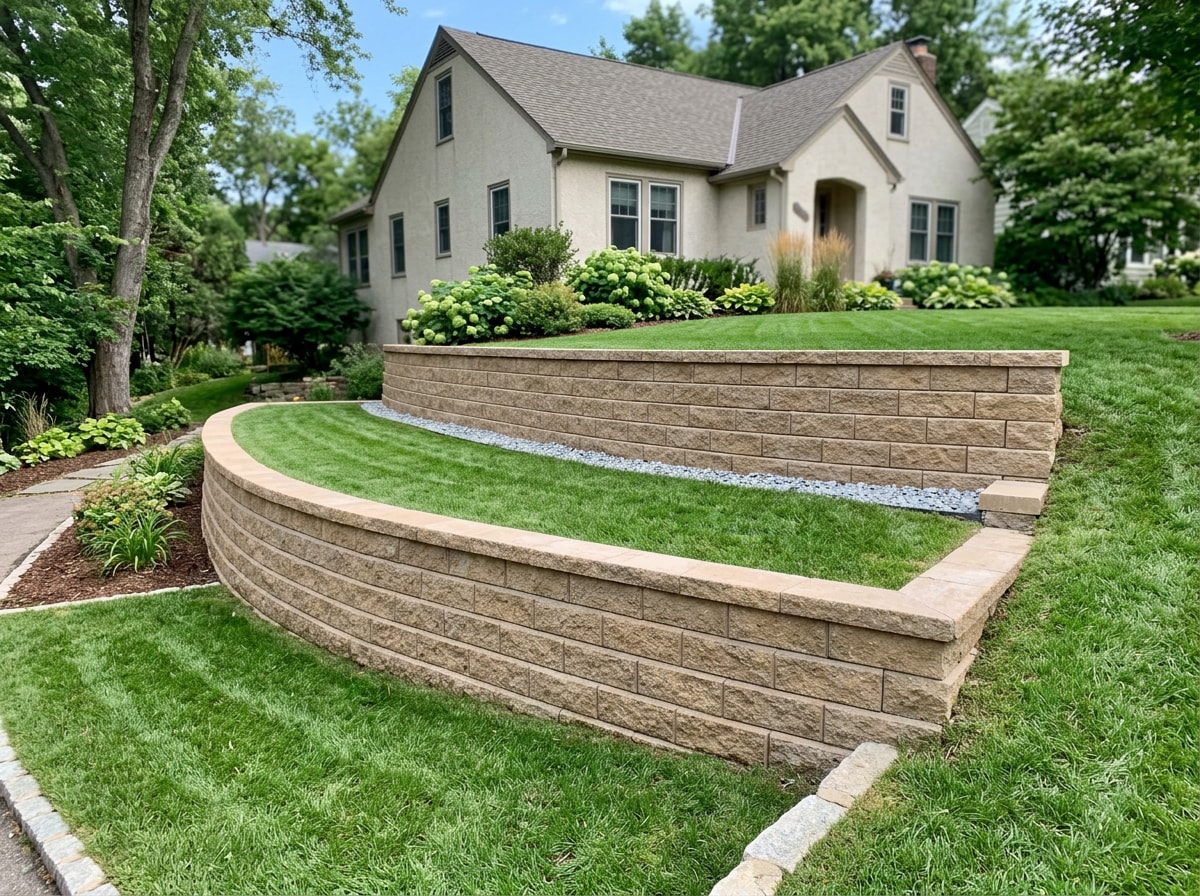
A retaining wall does two jobs. It holds back soil on a grade, and it carves a sloped yard into level, usable terraces.
On banks that wash every storm season, it also stops erosion before it reaches the lawn.
There is a real difference between a low seat wall and a structural wall. A seat wall or raised bed border is mostly a finish decision. A structural wall involves geogrid, drainage stone, and load calculations, which changes both cost and timeline.
Height and surcharge decide which one you have. If a driveway, pool deck, or structure sits above the wall, treat it as structural regardless of height.
Outdoor Kitchens, Fire Pits and Seat Walls
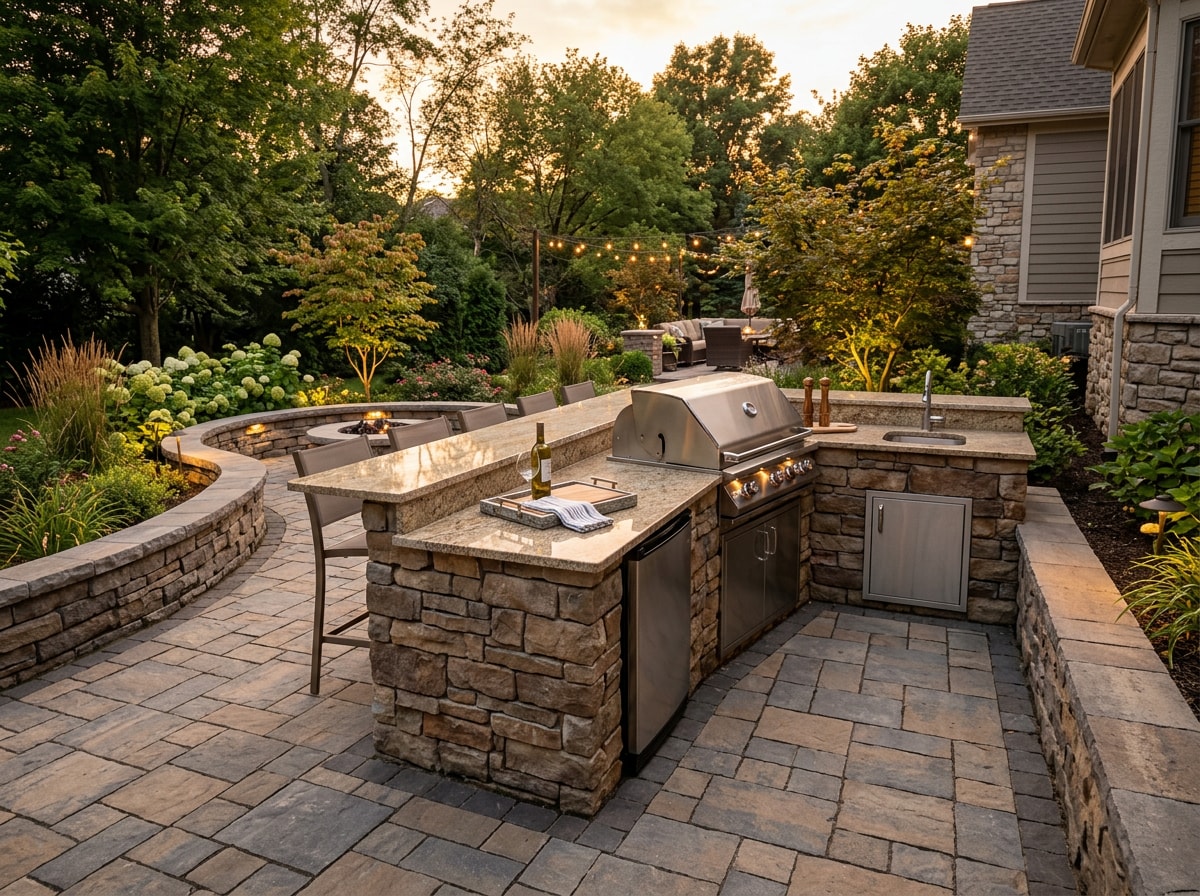
An outdoor kitchen, a built in grill run, a fire pit, or a full fireplace are the destination features that sit on top of a patio build.
One dependency homeowners rarely anticipate: gas, electric, and water rough ins plus manufacturer clearances have to be located before pavers go down. Retrofitting means cutting a finished surface apart.
Concrete Driveways and Slabs
Poured concrete still wins on price for large utility surfaces. Our concrete driveway installation work covers tear out, forming, reinforcement, and finish.
The tradeoff is repairability. A cracked slab gets patched or replaced, while a settled paver field can be lifted, re-based, and reset using the same units.
Hardscape vs Softscape
Hardscape is the non living, hard material portion of a landscape: patios, driveways, walkways, retaining walls, steps, and fire features.
Softscape is everything alive: turf, shrubs, trees, and planting beds.
A good design uses hardscape for structure and circulation, and softscape for shade, screening, and seasonal color. Our landscape design team plans both on one drawing so irrigation heads and root zones do not end up under a patio.
How a Paver Job Actually Goes In
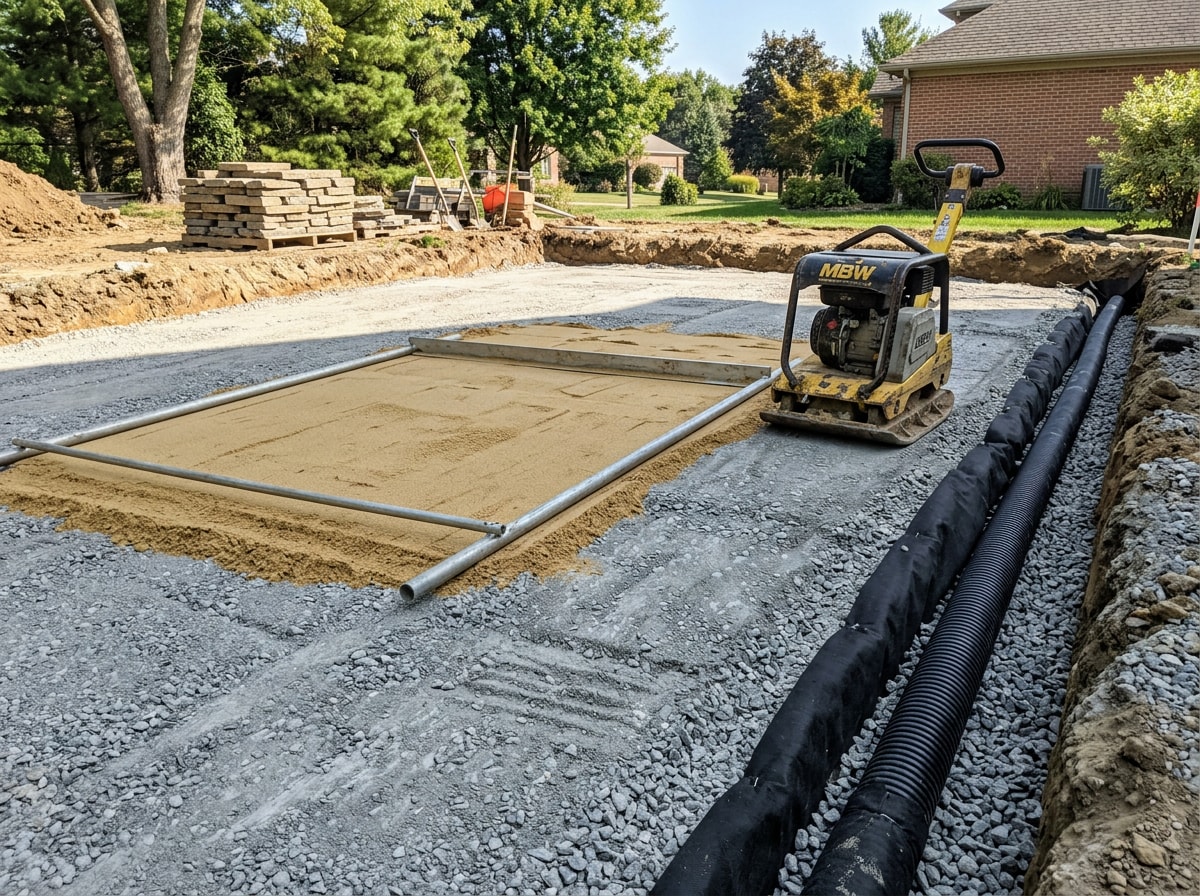
Every job starts with a site visit and a layout marked on the ground. From there the sequence is consistent:
- Excavate to depth, allowing for base, bedding, and paver thickness.
- Compact the subgrade and check it against the finished grade plan.
- Install the aggregate base in lifts, compacting each lift separately.
- Screed a bedding layer to a uniform thickness.
- Lay the field pattern, then cut borders and curves.
- Set edge restraint, sweep in joint sand, and compact the surface.
Base depth and bedding spec shift with the paver system, the traffic load, and whatever the soil turns out to be. Industry construction guidance from the Concrete Masonry and Hardscapes Association covers the same stages, and compaction of the base is critical to minimizing settlement of interlocking concrete pavements .
Drainage and Grading Come First
Drainage decides whether a patio lasts twenty years or fails in two.
Tallahassee is wet. The National Weather Service office in Tallahassee publishes local normals based on 1991 to 2020 climatology , and the annual rainfall total sits near 59 inches, much of it from intense summer convective storms. A new impervious surface has to send that volume somewhere deliberate.
Leon County soils complicate it. Sandy pockets drain fast. Clay heavy areas hold water and heave.
So we plan grading first, then base drainage, then a French drain or sub surface tie in to a real outfall where the site needs one.
| Standard pavers | Permeable pavers | |
|---|---|---|
| Base | Compacted dense graded aggregate | Deeper open graded stone reservoir |
| Water | Sheds across the surface | Infiltrates through the joints |
| Best for | Patios, drives, walkways | Runoff limits, flat sandy sites |
| Maintenance | Joint sand top ups | Periodic vacuuming of joint stone |
Permeable systems work, but only if they are maintained. EPA classifies permeable pavements as a stormwater control that moves water through the pavement to the ground below, suitable for traffic while reducing runoff , and keeping them permeable means annual sweeping or vacuuming of sediment plus occasional replenishment of joint stone . More detail sits on the EPA's green infrastructure resource page.
Here is the field version. On a Killearn rebuild last year, the original patio sloped a half inch back toward the slab across a 16 foot run. The pavers themselves were fine. Re-grading the base and adding a drain tie in ended four years of water standing against the house, and we reused roughly 80 percent of the original units.
Permits: What Tallahassee and Leon County Actually Require
This is the part most hardscape pages skip, and it is where projects stall.
The City of Tallahassee Building Inspection Division issues a specific Retaining Wall Permit alongside its residential, pool, and demolition permits , so a wall is not automatically a no permit landscape item here.
There is also a cost trigger. A City of Tallahassee permit is required for any new construction, addition, alteration, or repair with an estimated labor and material cost above $2,500, or for work that is structural . Plenty of patio budgets clear that number.
A few practical rules of thumb:
- Flat, at grade patios and walkways often do not need a building permit, but may still face environmental or stormwater review.
- Retaining walls above the local height threshold, or any wall carrying a surcharge, need a permit and engineered plans.
- Roofed structures, pergolas with footings, and outdoor kitchens with gas or electric rough ins trigger separate trade permits.
- Work that changes drainage or adds impervious area can require environmental review.
Confirm scope with the City of Tallahassee Growth Management Building Inspection Division before you break ground. We normally pull permits for our clients as part of the contract.
What Holds Up in North Florida
Humidity, shade, and pollen are the three forces that age hardscape here.
- Concrete pavers hold color well and can be lifted and reset. The best all round choice for patios and drives.
- Clay brick keeps its color almost indefinitely and suits older neighborhoods.
- Natural stone looks excellent on steps and accents, but costs more and needs careful setting.
- Poured concrete is the budget surface. Expect control joints and eventual hairline cracking.
- Pressure treated wood for pergolas and decks needs a maintenance schedule, not a one time seal.
Shade is the quiet variable. Under a dense live oak canopy, any surface grows algae. Light colored, smooth pavers show it fastest, so we steer shaded patios toward textured mid tone units and plan a cleaning interval into the handover.
Build Order and Realistic Timeline
Sequence matters more than any single material choice. The order we follow on full yard projects:
- Design and layout, including utility locates.
- Permits where required.
- Demolition and excavation.
- Drainage, sleeves, and utility rough ins.
- Retaining walls and structural grading.
- Patios, walkways, and driveways.
- Irrigation adjustments and sod or planting beds.
- Lighting, furniture, and final cleanup.
Typical durations once a crew mobilizes:
- 400 sq ft paver patio: 4 to 7 working days
- Paver driveway: 1 to 2 weeks
- Segmental retaining wall under 4 ft: 3 to 6 days
- Outdoor kitchen on an existing slab: 2 to 4 weeks including counters
Summer afternoon storms are the main schedule risk. We build weather days into every hardscape contract between June and September rather than pretending they will not happen.
Working With Our Crew
We are a licensed and insured hardscape contractor working across Leon County, and the same crew carries a project from layout through final compaction. There is no subcontractor handoff halfway through.
Because we also handle drainage, grading, planting, and landscaping and hardscaping together, those systems get coordinated instead of colliding on site.
You can see finished work on our projects page or start from our homepage to browse services.
We serve Tallahassee and the surrounding communities, including Bradfordville, Betton Hills, Southwood, Golden Eagle, Havana, Monticello, Quincy, Woodville, and the rest of Leon County.
Ready for numbers on your own yard? Get a free estimate and we will walk the site with you, check where water goes, and price the work in writing.
FAQ
How much does hardscaping cost in Tallahassee, FL?
Most residential hardscape projects here land between $18 and $38 per square foot installed for paver surfaces, and $35 to $110 per face square foot for retaining walls depending on whether engineering is required. Small standalone features like a fire pit start around $2,500. Full backyard builds with a patio, wall, and kitchen commonly run $25,000 and up.
Is hardscaping cheaper than softscape?
No. Hardscape costs more per square foot up front than turf or planting beds. It also lasts far longer and needs almost no recurring input, so the ten year cost often favors hardscape on areas that are hard to mow or irrigate anyway.
Do I need a permit for hardscape construction in Tallahassee?
It depends on scope. The City requires a permit for work with estimated labor and material cost over $2,500 or for anything structural , and it issues a dedicated retaining wall permit . Flat patios and walkways often clear without a building permit but can still face environmental or stormwater review. Confirm with the City or Leon County first. We normally pull permits for you.
How long do pavers last?
A properly based paver surface commonly lasts 25 to 30 years or more, because individual units can be lifted and reset. Failures are almost always base or drainage failures, not paver failures.
How does drainage affect a paver installation?
Drainage drives base design, surface slope, and whether a permeable system makes sense. Poor drainage is the leading cause of settling, shifting pavers, and joint sand washout. Correcting water movement before excavation costs a fraction of correcting it after the surface is finished.
When should pavers be sealed?
Seal once the surface is clean, fully dry, and any efflorescence has finished working its way out. Timing varies by material and install conditions, so it is not a fixed date. In a humid climate, sealing adds stain resistance, stabilizes joint sand, and slows color fade. Treat it as recurring maintenance, usually every three to five years.
What is the most popular hardscape material here?
Concrete pavers, by a wide margin. They handle heat and humidity, come in formats that suit both traditional and modern homes, and they can be repaired without replacing the whole surface.
How long does a hardscape project take?
A 400 square foot patio usually takes 4 to 7 working days on site. Driveways run 1 to 2 weeks. Add permitting and material lead time to the front end, and allow for summer storm days between June and September.
Can you build a retaining wall on a steep Tallahassee lot?
Yes, usually as a tiered system rather than one tall wall. Tiering reduces the load on each course and keeps most walls within standard block design limits. If a driveway, pool, or structure sits above the wall, it needs engineered plans regardless of height.
Which areas do you serve?
Tallahassee, Bradfordville, Betton Hills, Southwood, Golden Eagle, Centerville, Havana, Midway, Monticello, Quincy, Woodville, and the rest of Leon County. If your property sits just outside that radius, contact us anyway and we will tell you honestly whether we can get a crew there.
Written by the hardscape installation team at Talquin Landscaping LLC, a licensed and insured landscaping, retaining wall and concrete contractor based in Tallahassee, FL. Questions about a specific site? Reach the crew through our contact page.