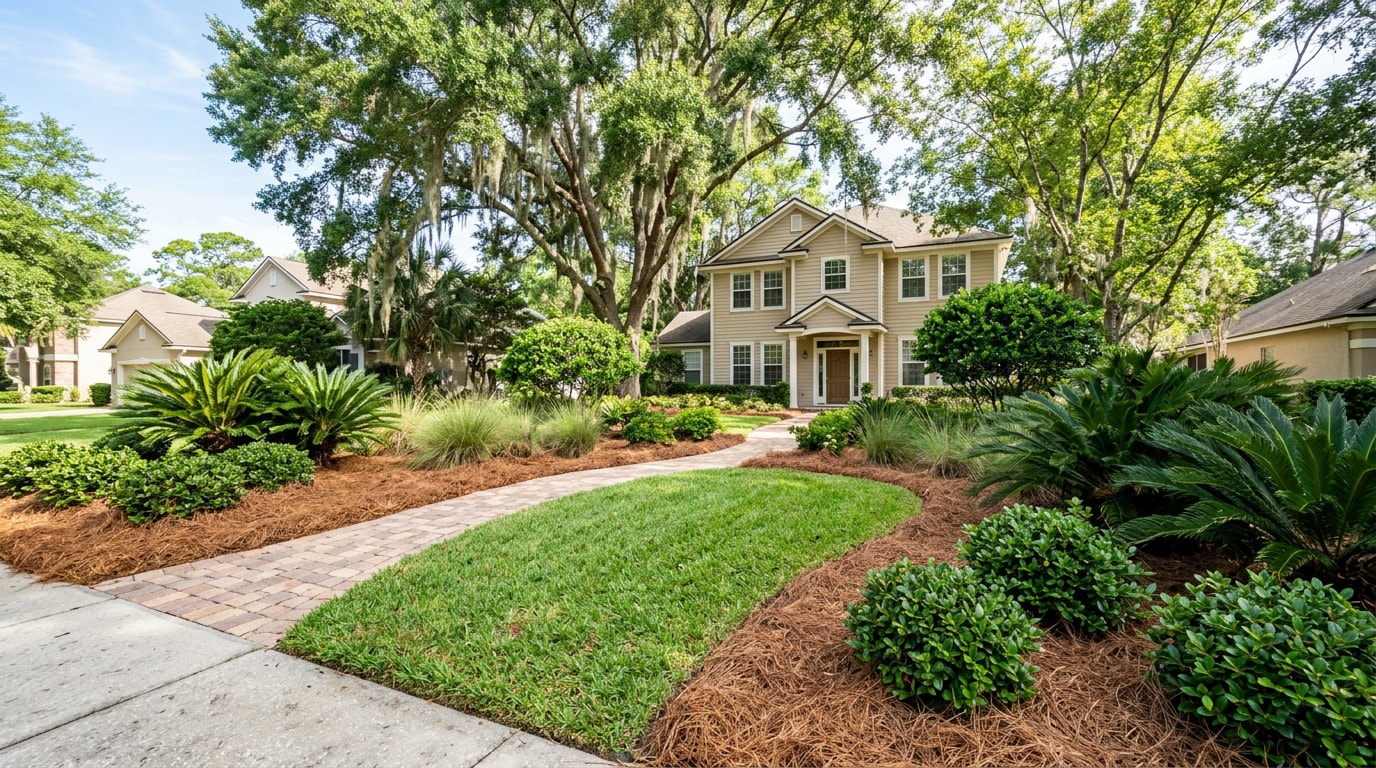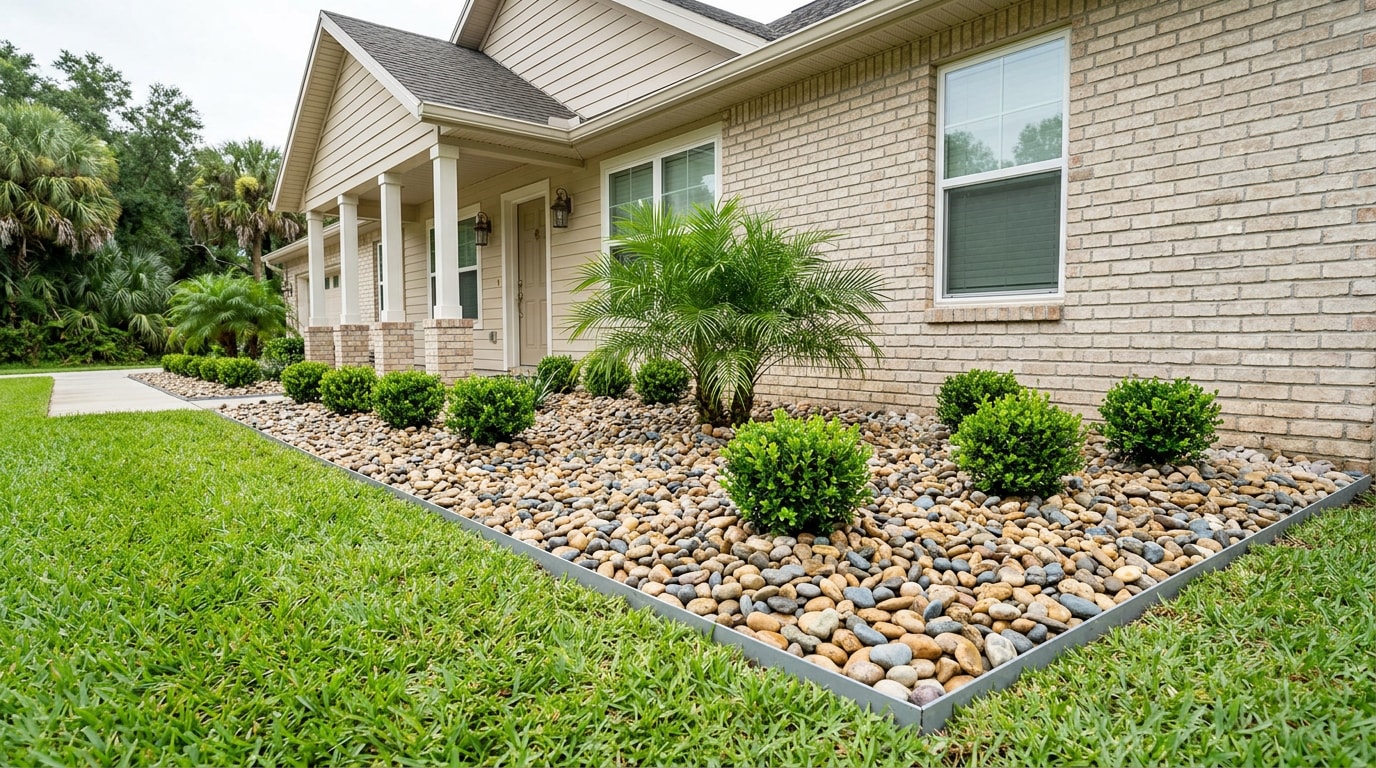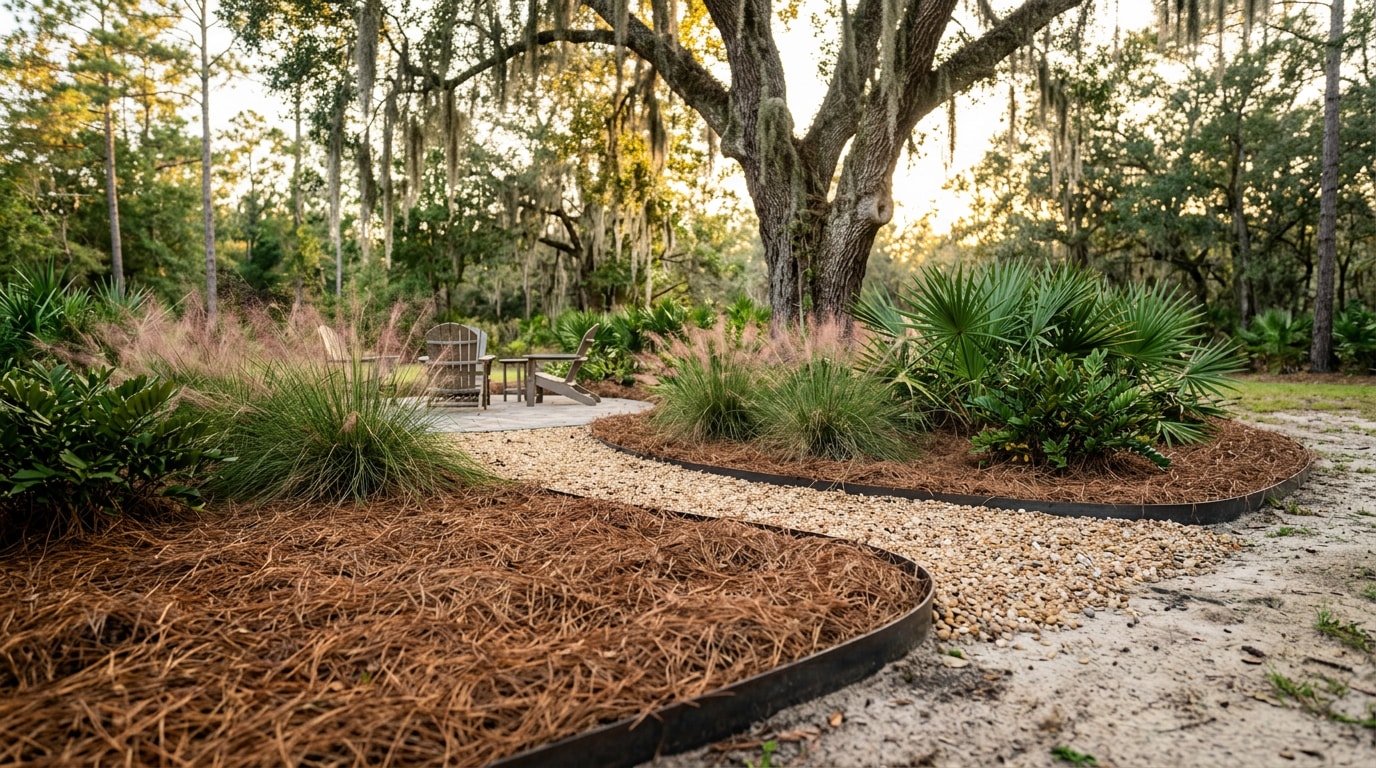
The simple backyard landscaping ideas that last in Woodville, FL are the ones built for sandy, fast draining soil, sheeting summer rain and the hard freeze that shows up every few winters. Fussy tropical planting fails here. Tough plants, defined beds and hardscape you install once will keep looking good with almost no help from you, and most of it is weekend work rather than a construction project.
Simple Backyard Landscaping Ideas for Woodville, FL at a Glance
Start with the move that fits the time and budget you actually have. Relative cost is shown as $ (materials only), $$ (materials plus a tool rental), and $$$ (usually a contractor job).
| Idea | Effort | Relative cost | Biggest payoff |
|---|---|---|---|
| Mulched native plant beds | 1 weekend | $ | Less mowing and watering |
| Pine straw refresh plus crisp edging | Half a day | $ | Instant tidy look |
| Gravel or stepping stone path | 1 to 2 weekends | $$ | Keeps foot traffic off soggy turf |
| Paver patio | Usually pro install | $$$ | A real outdoor room |
| Layered privacy screen | 1 weekend, then one watering season | $$ | Shade plus screening in one planting |
| Pergola over the seating area | 1 to 2 weekends or pro | $$$ | Makes the patio usable in August |
| Pollinator bed, 4 ft by 8 ft | Half a day | $ | Color from March to October |
| Low voltage lighting | 1 evening to a weekend | $$ | Yard stays usable after dark |
Pick two from the list, finish them, then move on. Half finished projects are what make a yard look worse than when you started.
1. Start With Florida-Friendly Plant Beds
Plant choice decides how much work the yard creates for the next ten years. Get it right and paths, shade and lighting fall into place around it.
The best plants for a Woodville backyard are tough natives that tolerate sandy, acidic soil and the occasional hard freeze.
| Plant | Sun | Mature size | Water need | Freeze tolerance |
|---|---|---|---|---|
| Coontie | Sun to part shade | 2 to 3 ft | Low | High |
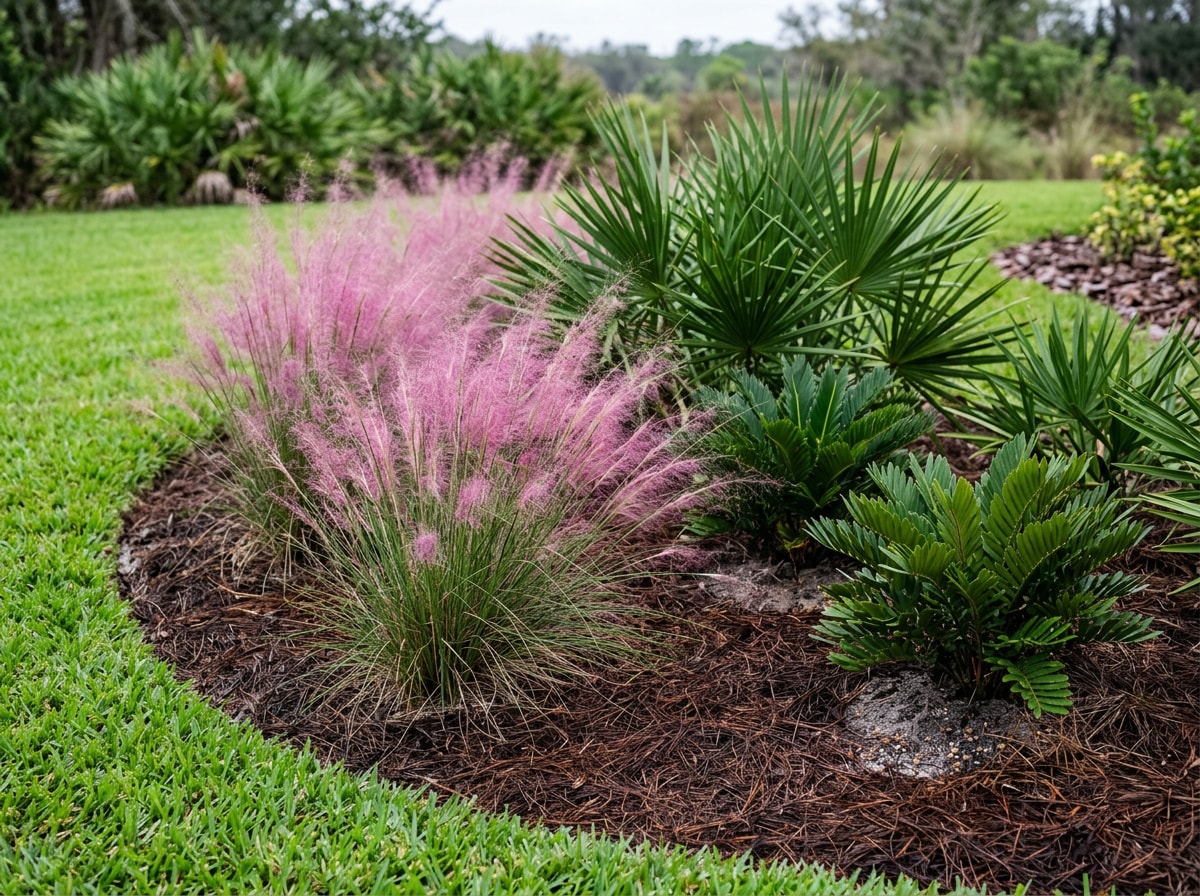
| Muhly grass | Full sun | 3 to 4 ft | Low | High |
| Beautyberry | Part shade | 4 to 6 ft | Low to medium | High |
| Saw palmetto | Sun to part shade | 4 to 6 ft | Very low | High |
| Yaupon holly | Sun to part shade | 10 to 20 ft | Low | High |
| Walter's viburnum | Sun to part shade | 6 to 12 ft | Low to medium | High |
| Sabal palm | Full sun | 20 to 40 ft | Very low | High |
Here is the trap most Florida landscaping articles set. Hibiscus, bougainvillea and croton photograph beautifully in Miami and get burned back by Woodville winters. Treat them as containers or seasonal color, never as foundation planting.
Two free references are worth ten minutes before you buy anything. The USDA updated its Plant Hardiness Zone Map in November 2023, the first revision since 2012, and the interactive version is searchable by location , so check the USDA Plant Hardiness Zone Map for your exact ZIP rather than trusting a tag written for the whole Southeast. Then read the UF/IFAS Florida-Friendly Landscaping nine principles, which open with right plant, right place: pick low maintenance plants suited to the site so they need minimal irrigation, fertilization or pest control once established .
For bed layout, soil prep and installation, see our garden installation service.
The 20 Minute Drain Test Before You Plant
Woodville sits on the Woodville Karst Plain, and lot conditions change within a single block. One side of a yard can be pure sugar sand while a low corner holds water for days after a storm. Our crews run the same check on every Woodville walkthrough, and you can do it yourself before you spend a dollar on plants.
- Dig a hole roughly 12 inches deep and 8 inches wide in the spot you want to plant.
- Fill it with water and let it drain completely once. This saturates the surrounding soil.
- Fill it a second time and note the water level every 30 minutes.
How to read it:
- Drains in under an hour: classic Woodville sand. Great for muhly grass, coontie, saw palmetto and gravel paths. Plan for extra mulch to hold moisture during establishment.
- Drains in 1 to 4 hours: the easy middle. Almost anything on the table above will work.
- Still holding water after 4 hours, or you hit wet soil while digging: do not plant a shrub row there. That is a drainage fix first, or a spot for a rain garden with Walter's viburnum and native grasses.
That last case is common on flat Woodville lots in the wet season. If a low spot stays soggy, a regrade or a French drain solves it permanently, and our drainage services cover both.
2. Put In a Simple Walkway
Hardscape is the do it once move. A path never needs mowing, watering, pruning or replanting, so every square foot you convert comes off your weekend list for good.
For a DIY path in sandy soil:
- Pea gravel is usually the cheapest per square foot and drains instantly.
- Concrete pavers cost more and last longest.
- Stepping stones set into groundcover land in the middle. Low cost, low effort, easy to reposition later.
- Crushed shell is the regional favorite. It drains beautifully and suits the Woodville look, though it tracks indoors more than gravel.
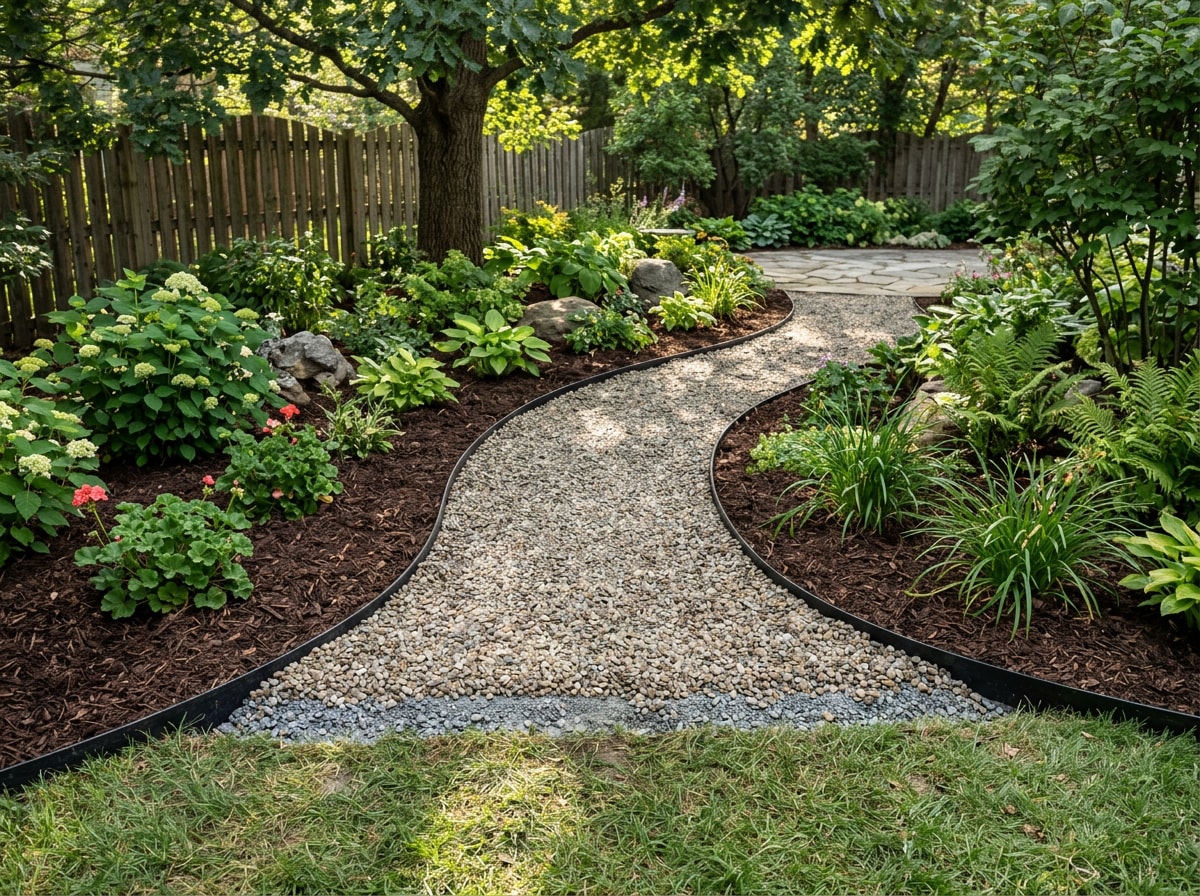
Base Prep and Edging: The Step Most Guides Skip
Sandy soil moves. An unedged gravel path in Woodville sand migrates into the lawn within a single rainy season, and we have been called out to rebuild more than one of them.
Do it this way instead:
- Excavate a few inches below finished grade.
- Lay and compact a crushed stone base.
- Install steel, aluminum or heavy duty plastic edging on both sides.
- For pavers, add a leveling layer of sand over the compacted base.
Skip the edging and you are buying the same gravel twice. For larger runs, see our paver walkways and hardscaping pages.
3. Create Shade and Privacy With Layered Planting
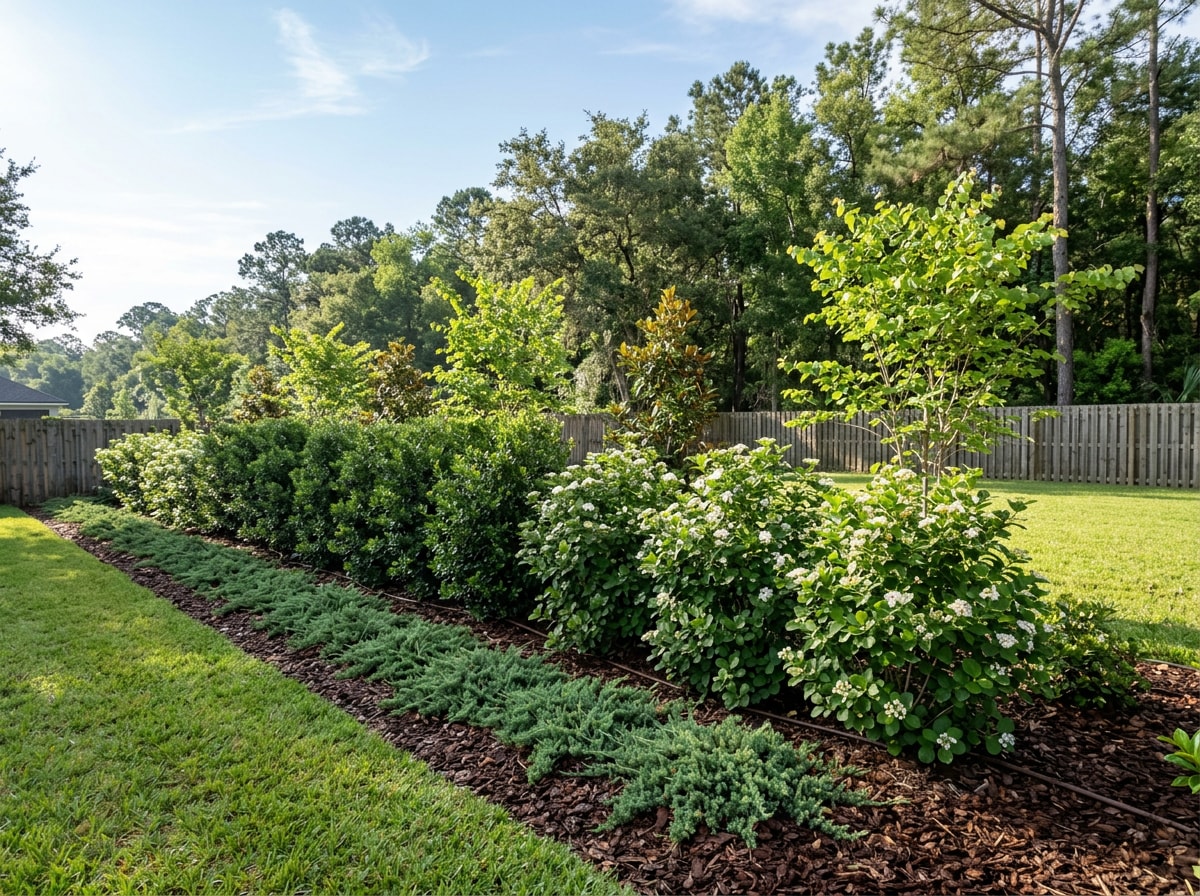
One planting can solve two problems. A tree line on the west side cuts August heat on the house and blocks the neighbor's view at the same time.
The cheapest privacy screen is not a fence. It is layered planting: groundcover in front, a shrub row behind it, understory trees at the back. Three staggered heights read as solid green far sooner than a single row of expensive specimens, and if one plant fails the gap barely shows.
Placement rules matter more than species choice here:
- Check mature canopy spread against your roofline before you dig.
- Keep trees well clear of overhead utility lines.
- Give the septic drainfield a wide berth. Plenty of Woodville lots are unsewered, and roots will find the field.
- Lean toward wind resistant shade trees such as live oak, southern magnolia and sabal palm over brittle species like laurel oak and water oak. The Panhandle gets real hurricane exposure.
Our trees and shrubs crew handles the larger stock that would otherwise need a trailer and three friends.
4. Add a Pergola With a Purpose
A standard kit pergola covers roughly a 10 by 12 or 12 by 16 seating area. That is a table and chairs, not a whole patio. Orient the rafters to block afternoon sun from the west, which is where the heat actually comes from.
Anchoring is not optional. Posts belong in concrete footings or bolted to engineered anchors, because an unsecured backyard shade structure becomes a sail in a tropical storm.
Climbing vines soften the frame and add real shade within a season or two. Coral honeysuckle and Confederate jasmine both perform in North Florida. The South Florida vines you see in national roundups often will not survive a freeze here.
Permanent attached structures may require a county building permit depending on size and type. Woodville is unincorporated, so check with Leon County Development Support and Environmental Management before you order materials. All building and environmental permit applications are submitted through the county's online permit portal . If you would rather hand off the build, see fences, decks and pergolas.
5. Plant a Pollinator Bed for Low Work Color
Color does not have to mean a high maintenance flower bed. Choose perennials over seasonal annuals and stagger bloom times so something is flowering from March through October. Three or four reliable species repeated in drifts look better than a dozen one offs.
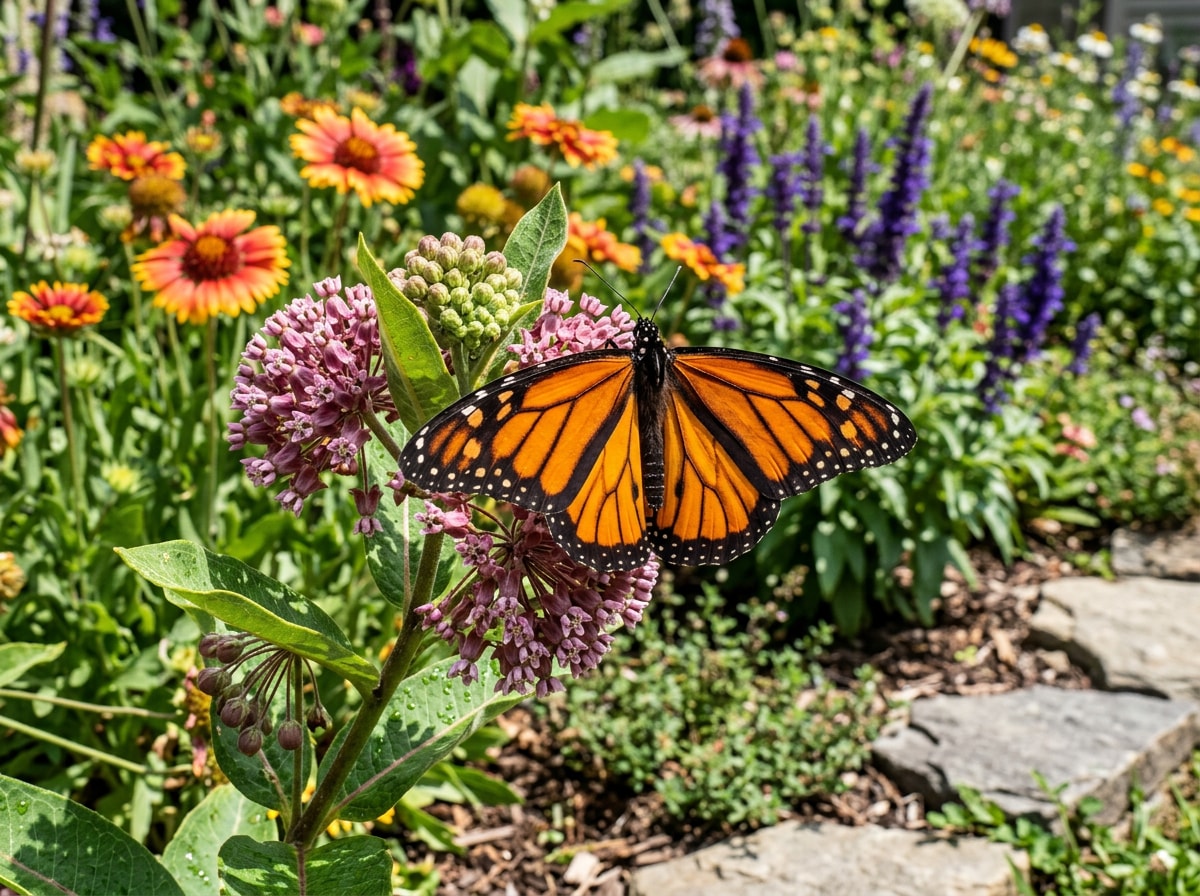
A butterfly bed is the easiest high impact planting a homeowner can do. Firebush, blue porterweed, native milkweed, blanket flower and salvia all handle full sun and sandy soil with almost no supplemental water once rooted.
Start with a sunny 4 ft by 8 ft bed:
- Group plants in threes so the color reads from the house.
- Tuck a few flat stones at the front for basking.
- Set a shallow dish of water with pebbles in it so pollinators can drink without drowning.
One detail most articles miss: ask the nursery for native milkweed species rather than tropical milkweed. Florida Extension horticulturists generally discourage tropical milkweed because it does not die back in our mild winters, which can keep monarchs lingering and allows a protozoan parasite to build up on foliage that never resets.
6. The Cheapest Way to Make a Backyard Look Finished
A weekend and a pickup truck go further than people expect.
Lowest budget, biggest visual change:
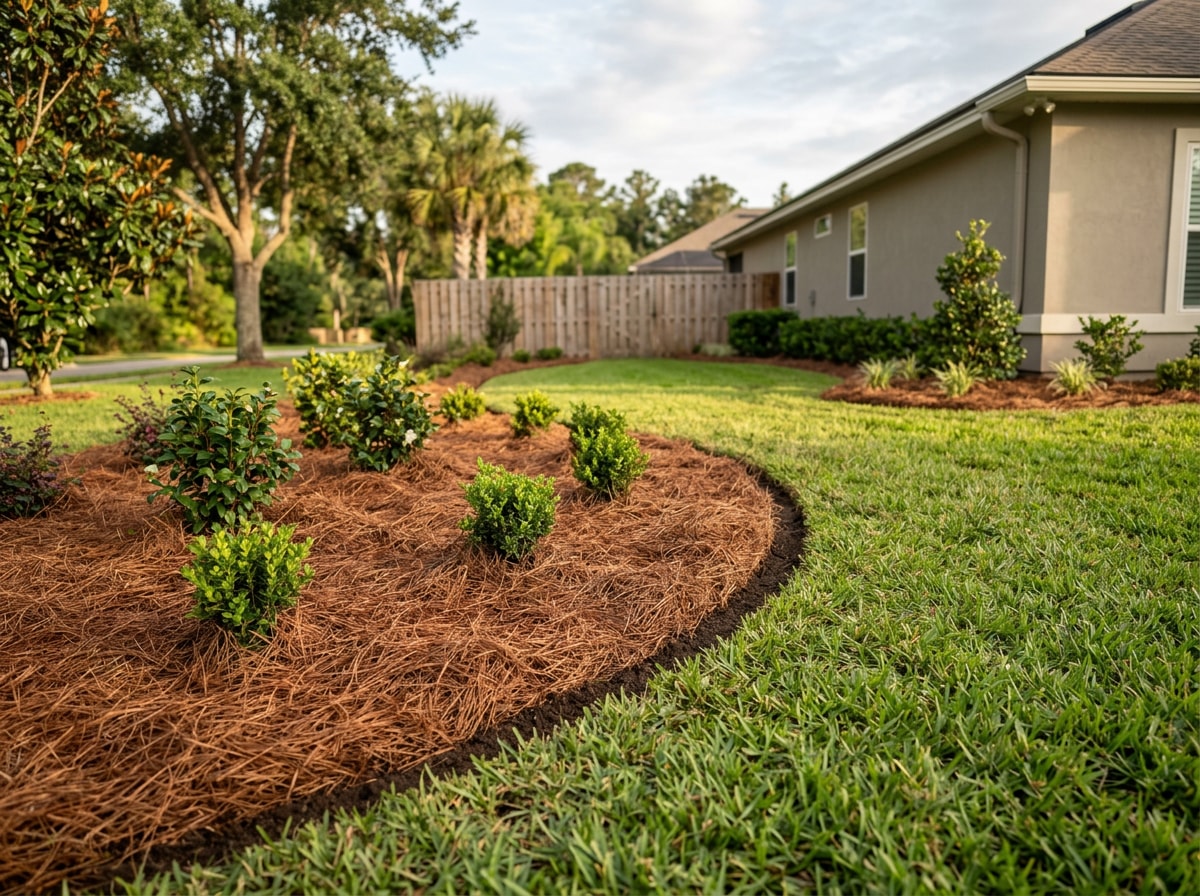
- Pine straw mulch, the classic North Florida choice, cheap, locally available and a good match for acidic soil.
- Crisp bed edging, cut by hand or with a rented edger.
- Perennials divided from plants you already own.
Mid range adds crushed shell or gravel for a path, a few larger container grown shrubs, and soil amendments worked into the beds.
Two things worth knowing before you buy:
- Skip landscape fabric under planting beds. It degrades, and weeds eventually root in the mulch sitting on top of it. Save fabric for under gravel.
- Pricing moves with fuel and supply costs. Treat any figure you read online as a range and confirm current numbers with a local supplier.
There is a recurring saving too, not just a one time look. Outdoor water use accounts for about 30 percent of average household water use nationwide , and EPA WaterSense notes that a household with an automatic irrigation system that is not properly maintained and operated can waste up to 25,000 gallons of water a year . Swapping thirsty turf for mulched native beds shrinks that line on your bill every month. If you already have a system, a tune up through our irrigation services usually pays for itself faster than a new plant order.
Homeowners in our Woodville service area can request a walkthrough, and if your lawn is the weak point, our guide on how to reseed a lawn in Woodville covers timing for North Florida yards.
7. Finish With Outdoor Lighting
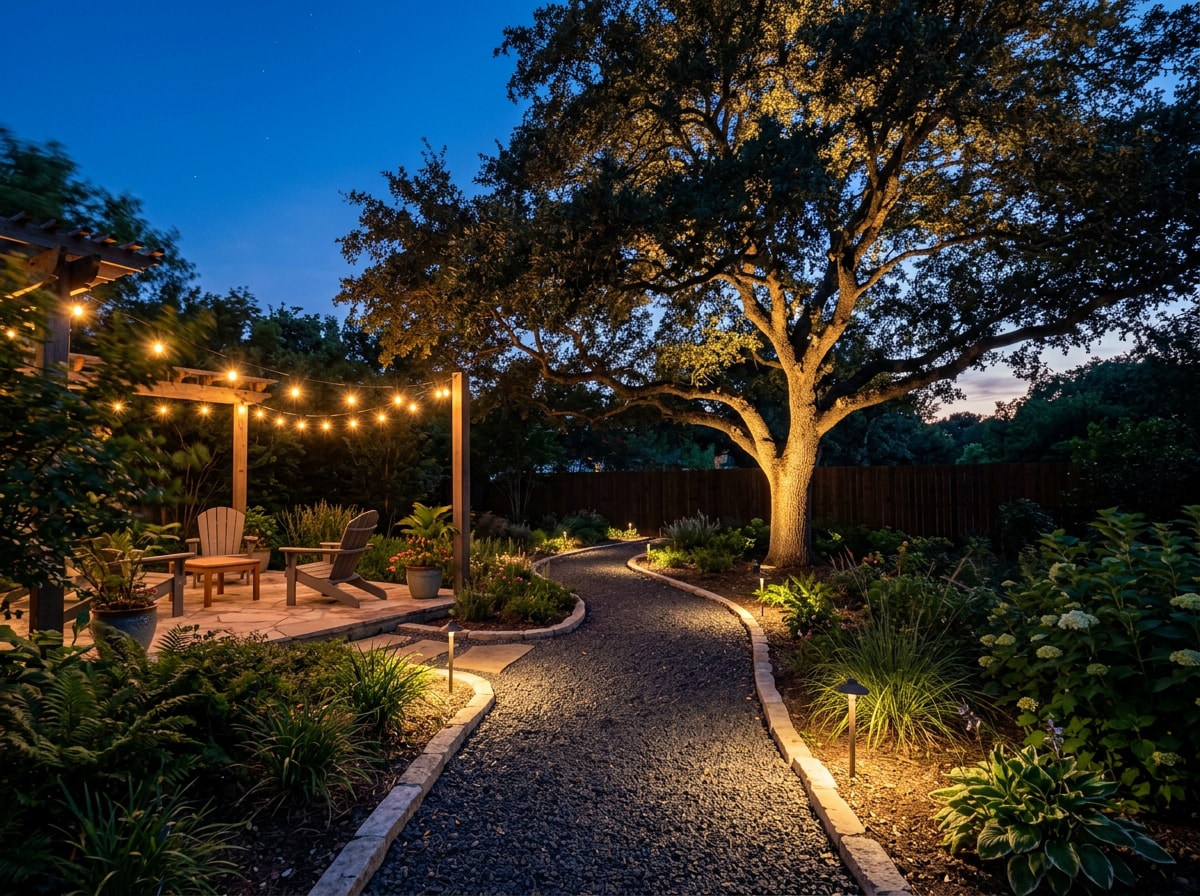
Three techniques do almost all the work:
- Path lights to mark the walkway.
- A single uplight aimed at a live oak or sabal palm for depth after dark.
- String lights over the seating area to turn a patio into a room.
Solar stake lights are cheapest and genuinely plug free. Low voltage LED costs more and requires running cable, but it is brighter and far more reliable. The decision rule: if the fixture sits under tree canopy, or you need it to work every single night, go low voltage, because solar needs direct sun to charge.
Check that every fixture is rated for wet locations. Humidity and driving rain kill cheap housings in a season or two.
A Three Weekend Woodville Backyard Plan
If you want a sequence rather than a menu, this order avoids rework:
- Weekend one. Run the drain test, clean up, kill or strip turf where beds will go, and define bed shapes with a hose before you cut edges.
- Weekend two. Plant. Water in deeply, then mulch 2 to 3 inches deep, keeping mulch off trunks and stems.
- Weekend three. Install the path and edging, then add lighting last so fixtures sit where people actually walk.
Hold off on a patio or pergola until the planting has gone through one summer. You will know by then where you actually want to sit.
Want the plan drawn before you dig? Our landscape design service covers layout, plant selection and phasing, and Talquin Landscaping handles installation and ongoing landscape maintenance across Leon County. Get a free estimate and we will walk the yard with you.
FAQ
What plants are best for low maintenance landscaping in Florida?
In North Florida, stick with drought tolerant natives that handle sandy soil and winter cold: coontie, muhly grass, saw palmetto, beautyberry, yaupon holly and Walter's viburnum. They need little water once established and no regular fertilizing. Save tropicals like croton and hibiscus for containers.
What is the cheapest way to landscape a backyard?
Defined mulch beds. Pine straw or bark over clearly edged planting areas, filled with perennials divided from plants you already own. The trade off is time, since small plants take about two seasons to fill in.
How much should I budget for backyard landscape design?
A common industry rule of thumb puts a full landscape investment at roughly 5 to 10 percent of a home's value, though that spans everything from planting to patios. A DIY plant and mulch refresh costs a fraction of an installed design. Get two current quotes, since material pricing shifts year to year.
How do I landscape a yard with sandy soil?
Work compost into planting holes and the surrounding bed, not just the hole itself. Mulch 2 to 3 inches deep to slow evaporation. Then choose plants that want sharp drainage, so you are not fighting the soil every summer.
When is the best time to plant in Woodville, FL?
Fall is the best window for trees and shrubs in North Florida. Roots establish through the cool season before summer heat arrives. Early spring is the second best option. Avoid planting in the middle of July unless you can commit to hand watering.
Do I need a permit for a backyard patio or pergola in Leon County?
A ground level patio often does not, while permanent and attached structures frequently do, depending on size and construction. Woodville is unincorporated Leon County, so confirm with the county's permitting department before you buy materials.
What are the benefits of low maintenance landscaping in Florida?
Lower water use, since established natives rarely need irrigation. Less time and fewer inputs, because tough plants need minimal pruning, feeding or spraying. Better storm resilience, as wind resistant trees and deep rooted natives come through hurricane season with less damage.
How long before a new backyard looks finished?
Mulch and edging look finished the same day. Shrubs usually read as a real planting in the second growing season, and a privacy screen takes two to three years to close up. Buying larger stock shortens that, at a higher cost per plant.
Can I landscape over a septic drainfield?
Keep trees and large shrubs well away from the field and its lines. Shallow rooted grasses and small perennials are the safer choice over that area. Never pave or build a permanent structure on top of it.