Hardscaping in Tallahassee, FL solves the things grass never will: shade-thinned turf under live oaks, red clay slopes that wash out, and summer storms that dump water where you do not want it. Most homeowners here start with a cost question and end up with a drainage question. Here is what these projects really run, how they are built, and what to ask before you sign anything.
What Hardscaping Costs in Tallahassee
Every yard prices differently, but these are the ranges we quote most often on Leon County properties. They include excavation, base, material and labor.
| Project | Typical size | Common installed range |
|---|---|---|
| Paver walkway | 60 to 150 sq ft | $2,000 to $5,500 |
| Paver patio | 300 to 600 sq ft | $6,000 to $20,000 |
| Paver driveway | 600 to 1,000 sq ft | $12,000 to $30,000 |
| Segmental retaining wall | 40 to 120 face ft | $5,000 to $25,000+ |
| Fire pit (built in place) | 4 to 6 ft diameter | $2,500 to $7,000 |
| Outdoor kitchen | 8 to 16 linear ft | $12,000 to $40,000+ |
What moves the number most is rarely the paver itself. It is access for equipment, how much clay has to come out, whether demolition is involved, and how far the site is from level. A backyard reachable only through a 36-inch gate can add days of wheelbarrow labor.
Get a site-specific figure before you budget. Request a free estimate and we will measure, check grade and price the real conditions.
Hardscape Services for Tallahassee Homes
Most projects here combine two or three elements. A patio needs a walkway to reach it. A sloped yard needs a wall before it can hold a patio at all. We scope the whole picture through our hardscape contractor services, then phase the build if budget calls for it.
Paver Patios, Walkways and Driveways
Paver installation covers patios, walkways, driveways and pool decks. Material follows budget and the style of the house.
| Material | Cost tier | Heat underfoot | Wet grip | Single-unit repair |
|---|---|---|---|---|
| Concrete pavers | $$ | Moderate | Good | Easy |
| Brick | $$ | Moderate | Good | Easy |
| Flagstone / natural stone | $$$$ | Warm | Varies | Moderate |
| Travertine | $$$ | Coolest | Excellent | Easy |
| Poured / exposed-aggregate concrete | $ | Hot | Fair | Slab replacement |
For pool decks, travertine's low heat retention is hard to beat in July.
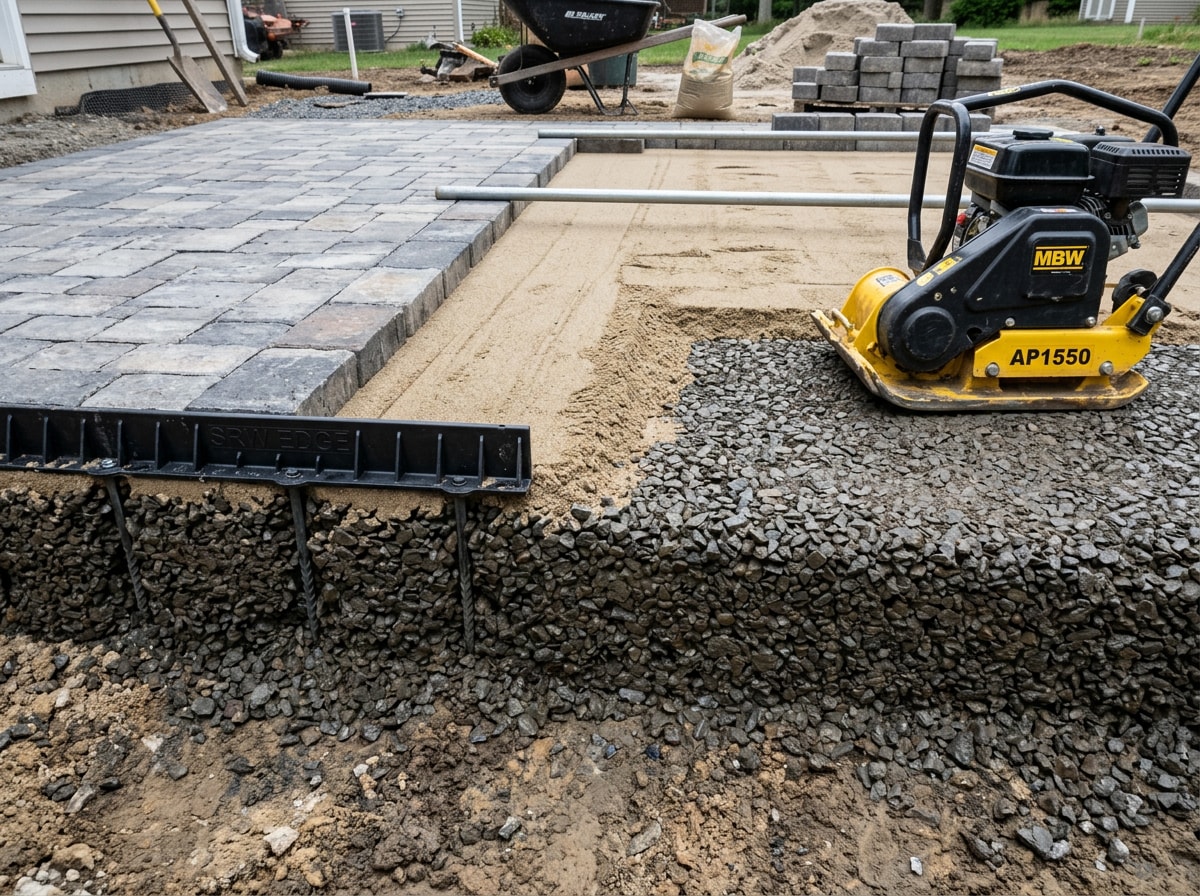
Installs rarely fail because of the paver. They fail because of a thin base, poor compaction or a missing edge restraint. Base aggregate gets compacted in lifts, not dumped and screeded in one pass, and the depth scales with the traffic load the surface will carry.
If you want a poured surface instead, see concrete installation.
Retaining Wall Construction
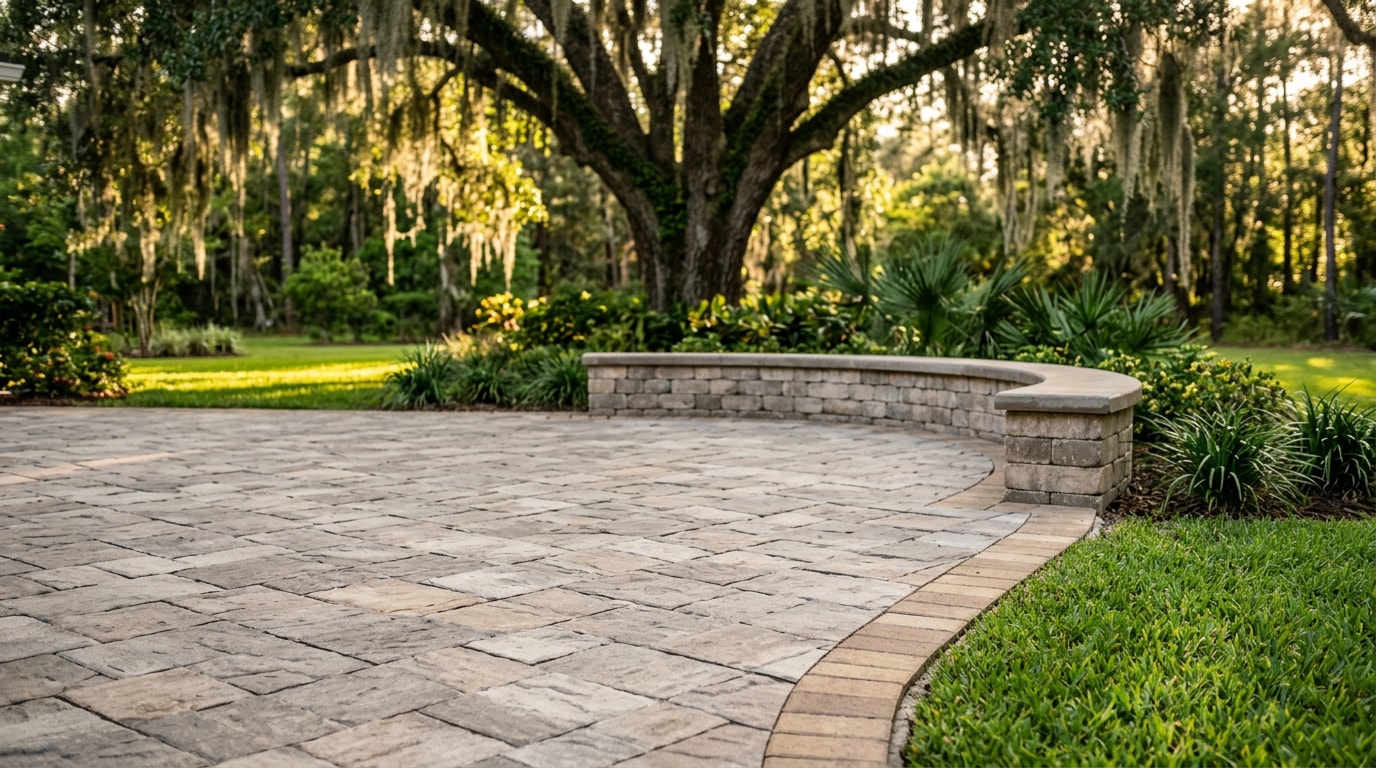
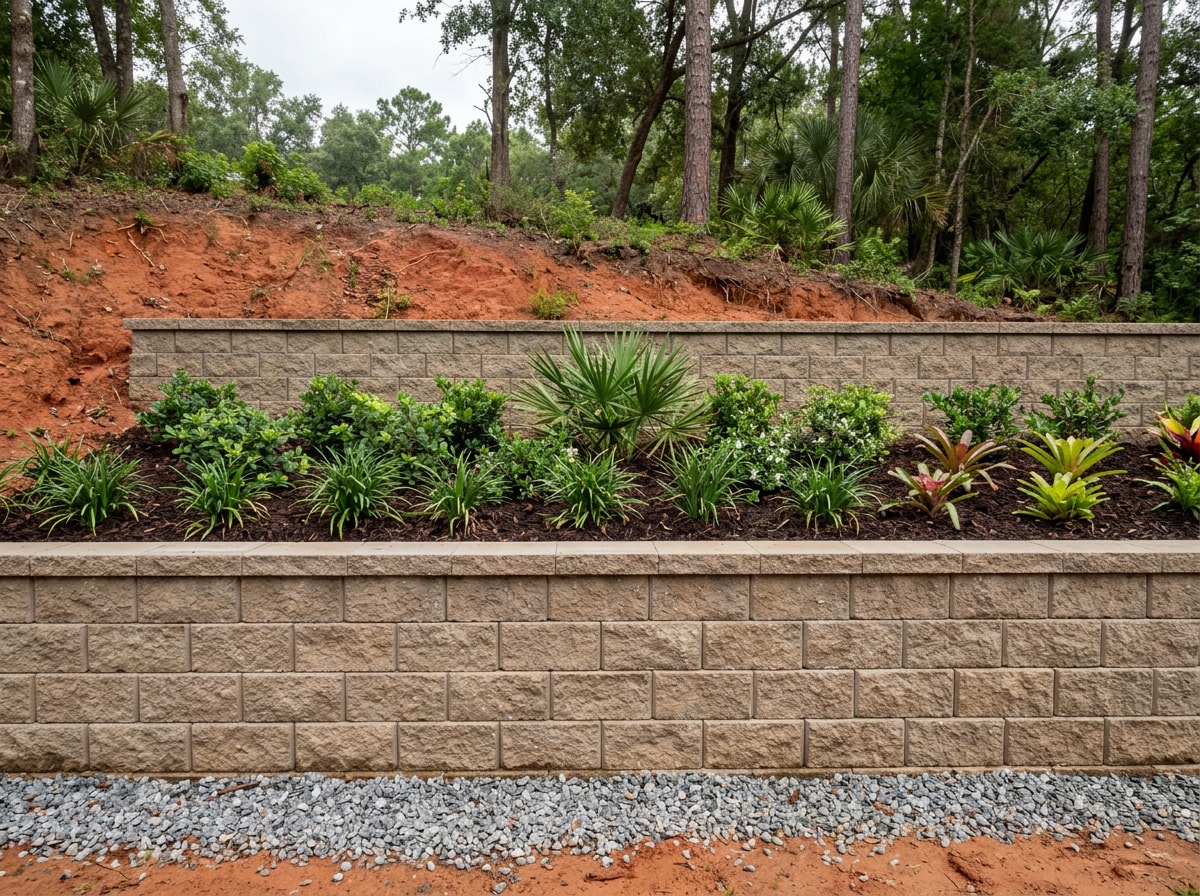
Elevation change defines yards across Betton Hills, Centerville and Killearn. A retaining wall does two jobs at once: it stops erosion on a slope, and it creates flat, usable ground where there was none.
Walls can also earn their keep as raised beds, seating or a backdrop for a water feature.
Height, drainage backfill and geogrid reinforcement are engineering calls, not style calls. Free-draining gravel fill behind the units removes incidental groundwater and keeps hydrostatic pressure from building, and a geotextile filter is often installed between that gravel and the soil so the drainage layer does not clog. Taller reinforced walls follow the design guidelines for segmental retaining walls built as gravity structures and as geosynthetically reinforced soil walls published by the Concrete Masonry and Hardscapes Association.
Permitting depends on height and on whether anything sits above the wall pushing against it. The City of Tallahassee issues retaining wall permits through Growth Management, and unincorporated Leon County work runs through the shared permit hub. We confirm the requirement before design, not after.
Outdoor Kitchens, Fire Pits and Seating Walls
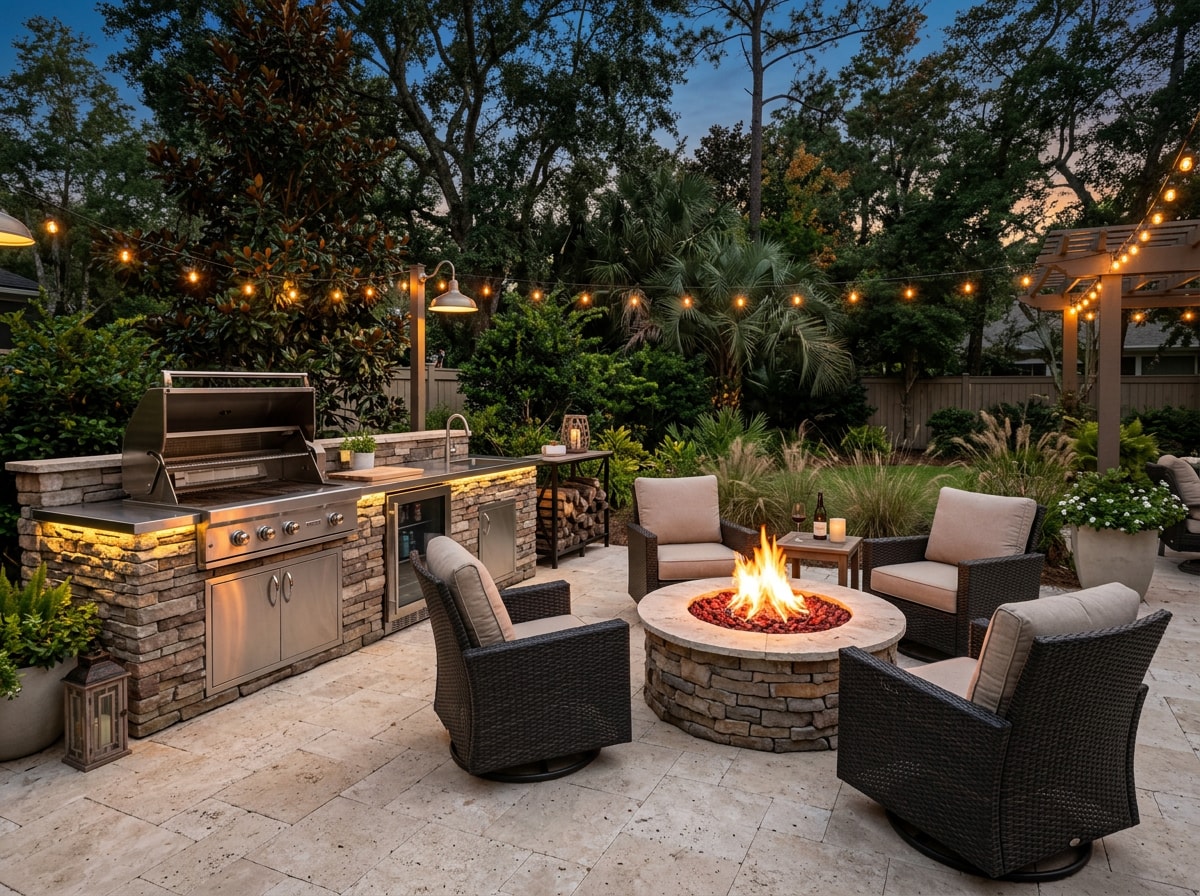
A fire pit, outdoor fireplace or full kitchen turns a patio into a room you use from October through May.
These features need sequencing. Gas, electric and water rough-ins have to be trenched and sleeved before pavers are set. Retrofitting later means cutting into finished work and patching joints that will never quite match.
Our hardscape installation crews coordinate those trades into one schedule.
The Detail Most Tallahassee Quotes Leave Out: Joint Sand
Here is the piece almost no local hardscape page mentions, and it is the one we get called back about.
Polymeric sand is the default joint filler on most Tallahassee paver jobs. It locks units together and blocks weeds. It is also not porous, so water cannot soak through it, which works against the Florida-Friendly Landscaping principle of reducing stormwater runoff.
On a flat patio draining to open lawn, that is fine. On a wide driveway or a patio hemmed in by the house and a wall, a sealed joint sends every drop of a summer downpour somewhere else, usually toward a foundation. Permeable paver sand is designed to let water drain while still stabilizing the pavers, which conserves water and is more sustainable than polymeric sand.
We pick the joint material based on where the water has to go, and on steep or heavy-runoff lots we pair it with a real drainage solution rather than hoping the joints handle it.
That decision costs nothing extra at bid time. It costs a lot to fix afterward.
Why Tallahassee Sites Build Differently
Three local conditions change how a job gets built here.
- Red clay subgrade. Clay holds water and moves. Undercutting and replacing it with compacted aggregate is often cheaper than repairing a heaved patio in year three.
- Canopy and root systems. Live oak roots do not negotiate. Layouts get adjusted around them, and surfaces near mature trees are better served by permeable assemblies.
- Summer rainfall pattern. Afternoon storms stack up from June through September, which affects both scheduling and how much water your new surface has to shed.
Proper excavation and grading happens before a single paver lands. Permeable pavers in high-traffic areas help distribute weight while still letting water filter through , which is a useful tool on compacted clay lots.
Our Design and Build Process
Function comes first. We ask how each area gets used, for dining, lounging, parking or traffic flow, then settle size, shape, materials and features around those answers through hardscape design.
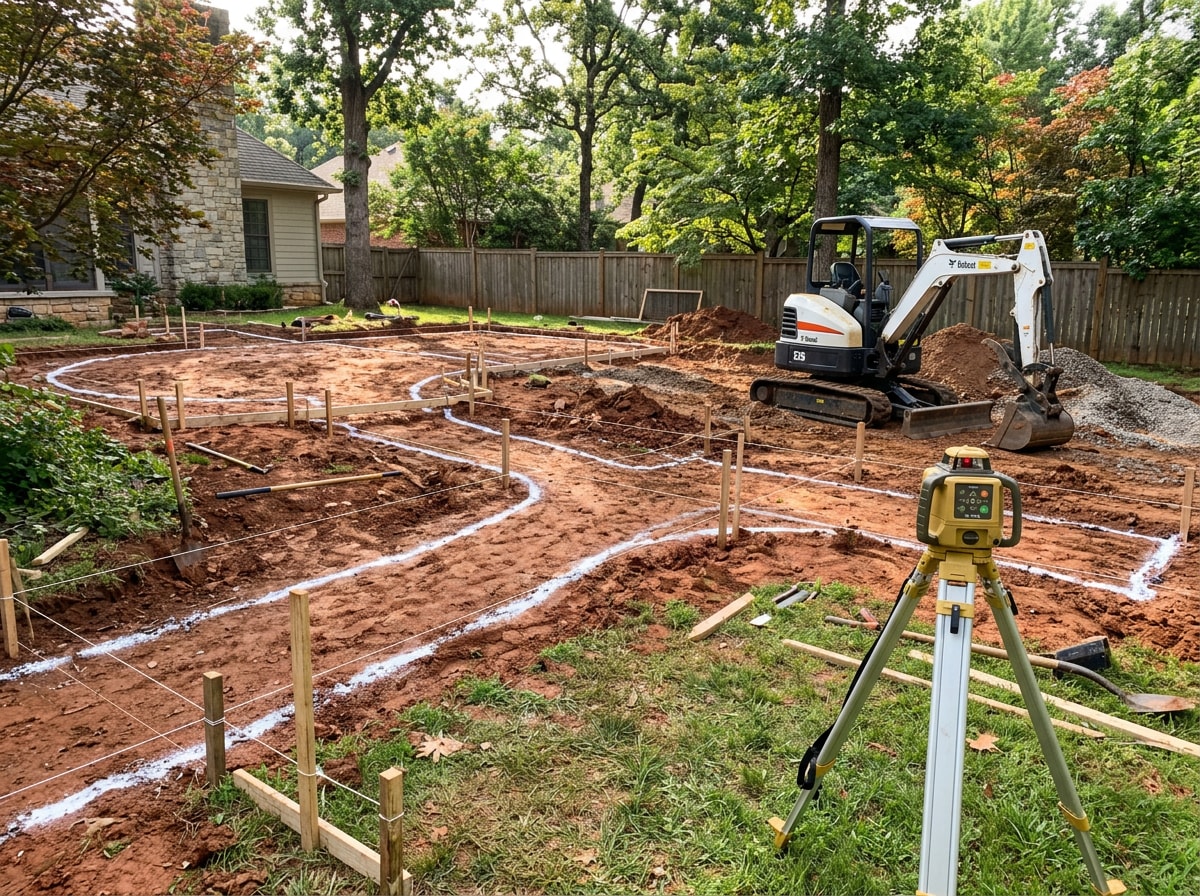
Next we lay the footprint out on the ground with paint and string.
Seeing the real size is when most homeowners widen a patio or soften a curve, and changing it at that stage costs nothing. Changing it after excavation costs money.
Then the schedule and budget lock, and site prep begins.
- Layout and staking
- Demolition and excavation
- Base placement and compaction in lifts
- Utility sleeves for gas, electric and water
- Paver or block installation
- Edge restraint, joint sand and final grade
You can see finished examples on our projects page.
Design Tips Worth Following
- Match paver color and texture to the home's brick, siding or trim.
- Use curves and rounded edges. They read more natural than hard rectangles.
- Give the space one focal point: a fireplace, fountain or specimen tree.
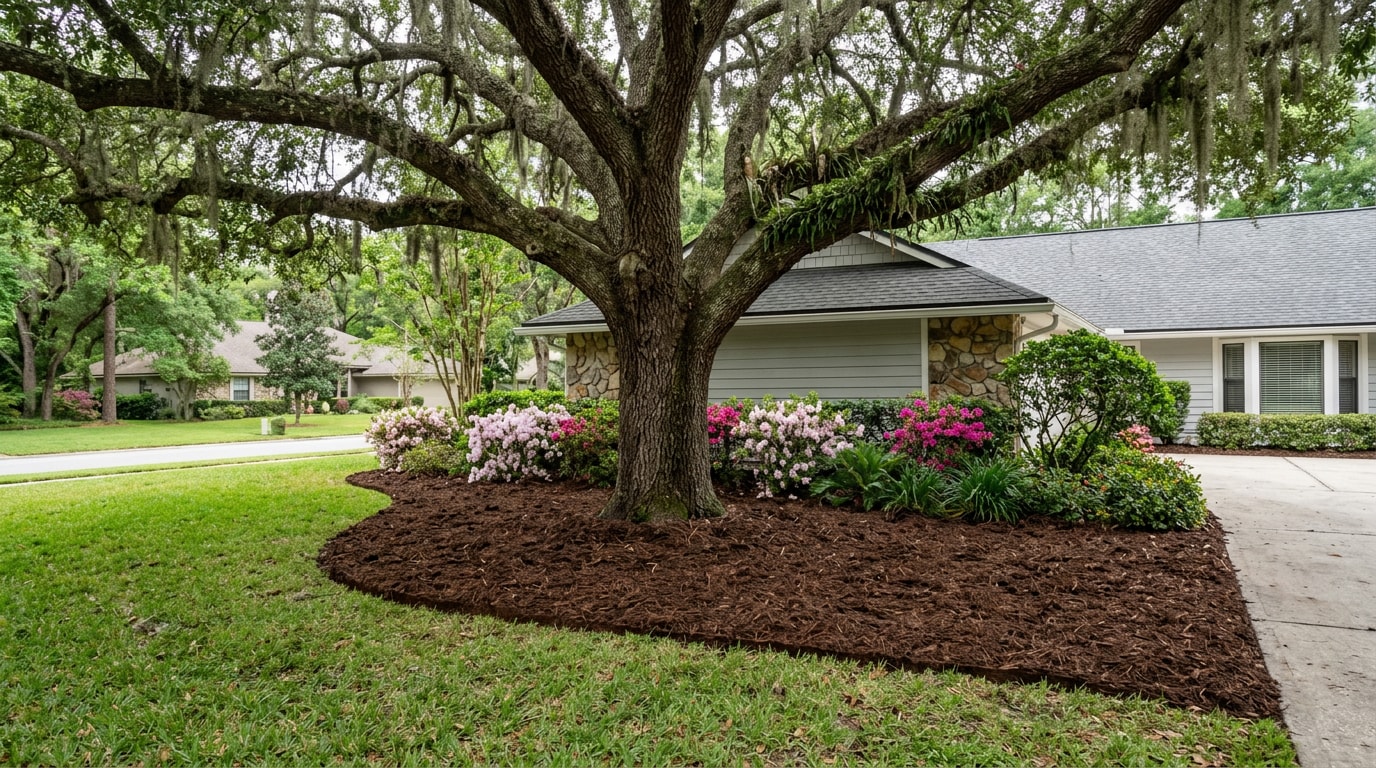
- Keep softscape in the plan so the yard does not feel paved over. Planting beds and a clean mulch installation) do that cheaply.
- Ask where water goes after every new surface is added.
Pairing hardscape with landscape design keeps both halves working together instead of competing.
Working With Us
We are a licensed and insured hardscape and landscape contractor building custom solutions for each property, not template patios. Craftsmanship and warranty terms are written into every estimate.
We build across Tallahassee, Southwood, Betton Hills, Golden Eagle, Centerville, Havana and Woodville. Start at our home page or book a free estimate and we will walk the site with you.
FAQ
How much does hardscaping cost in Tallahassee?
Walkways typically land in the low thousands, paver patios in the $6,000 to $20,000 range, driveways and retaining walls higher, and outdoor kitchens higher still. Access, demolition, excavation depth and grading move the number more than the paver you pick.
Do I need a permit for a retaining wall in Tallahassee?
Often yes. The City of Tallahassee issues retaining wall permits through Growth Management, and the requirement depends on wall height and whether the wall is surcharged by a slope, driveway or structure above it. Unincorporated Leon County projects go through the joint city and county permit portal. Confirm before design.
How long does a hardscape project take?
A few days for a walkway, one to three weeks for most patios and walls. Utilities, pools and deep excavation extend the schedule, and North Florida's summer storm pattern can add rain days to any paver installation.
What materials are used for hardscaping?
Concrete pavers, clay brick, natural stone, travertine, poured and exposed-aggregate concrete, gravel and segmental wall block. The comparison table above sorts the paving options by cost tier, surface heat and repairability.
What is the difference between hardscaping and landscaping?
Landscaping is the whole outdoor discipline. Hardscaping is its non-living structural half: pavers, concrete, stone and walls. Plants, turf and mulch are the softscape. Hardscape costs more upfront and needs professional installation, but it demands far less ongoing maintenance.
Which paver stays coolest for a Tallahassee pool deck?
Travertine. It absorbs and holds less heat than concrete or dark brick and keeps good grip when wet, which is why it is the common pick for pool surrounds here.
Do paver patios sink over time?
Not when the base is right. Settling almost always traces back to insufficient base depth, poor compaction, missing edge restraint or water undermining the assembly. Individual pavers can be lifted and reset, which is a real advantage over replacing a cracked concrete slab.
Is permeable paving worth it here?
On clay lots and near mature trees, often yes. Permeable surfaces let stormwater infiltrate through the surface into the soil instead of running off like asphalt or solid concrete does , which reduces the volume you have to redirect with pipe and inlets.