Most lawn repair in Havana, FL fails for one reason: the patch gets replaced before anyone figures out what killed it. Oak shade, sand-to-clay soil swings across a single lot, and a summer rainy season that feeds root disease all leave damage that looks identical from the driveway. This guide shows how to tell those causes apart, what each repair costs to drive, and the months when new turf actually takes.
Start by Diagnosing the Patch, Not Replacing It
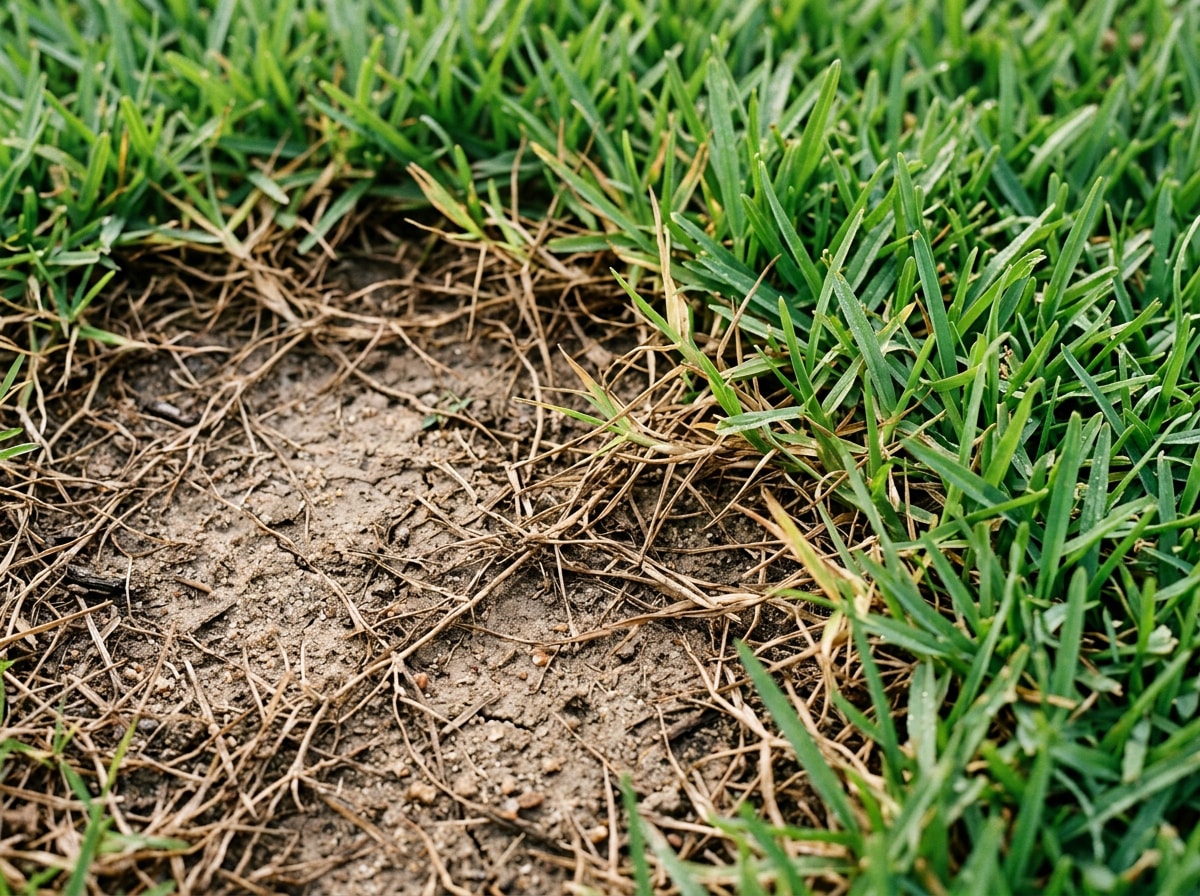
Pull a handful of grass at the edge of the dead area, where green meets brown.
- Roots white and firm, blades chewed or yellowing in sun-baked edges: insect or drought stress.
- Roots short, dark and rotted, stolons pulling up with almost no resistance: likely take-all root rot.
- Roots fine but soil hard as a parking lot: compaction.
- Soil still soggy two days after rain: drainage, not turf.
That third and fourth check matter most around here. High rainfall and stressed turfgrass trigger take-all root rot, and by the time aboveground symptoms appear the pathogen has been active on the roots for weeks or longer. That is the single most expensive mistake we see on Gadsden County callbacks. New sod laid over an untreated take-all area dies on the same footprint within a season, because the fungus lives in the soil, not in the grass you hauled off.
UF/IFAS notes the southern chinch bug as the major insect pest of St. Augustinegrass, along with diseases including gray leaf spot, large patch and take-all root rot. You can read the full breakdown in the UF/IFAS St. Augustinegrass publication before you spend a dollar on sod.
If the soggy test is what flagged your yard, the fix is grading and drainage work first. Turf laid on a wet low spot is a receipt, not a repair.
Sod, Plugs or Seed: What Actually Works on North Florida Grass
Here is the part most national lawn-repair pages get wrong for this market. St. Augustinegrass is established vegetatively, from sod, plugs or sprigs, rather than by seed. So if your lawn is St. Augustine, which most Havana yards are, no bag of seed will fill those bare spots. Seeding is a real option only on Bahia lawns or for a temporary winter overseed.
| Repair method | Works on | Fill time | Relative cost | Main failure risk |
|---|---|---|---|---|
| Patch sod | St. Augustine, Zoysia, Bahia, Centipede | About 2 to 3 weeks to root | Low on small areas | Color or texture mismatch with existing turf |
| Plugs | St. Augustine, Zoysia | One full season to knit | Lowest material cost | Weeds colonize the gaps while it fills |
| Overseeding | Bahia, ryegrass overseed only | 4 to 8 weeks | Lowest per square foot | Wasted entirely if watering slips |
| Full re-sod | All | Instant cover | Highest upfront | Poor soil prep under new sod |
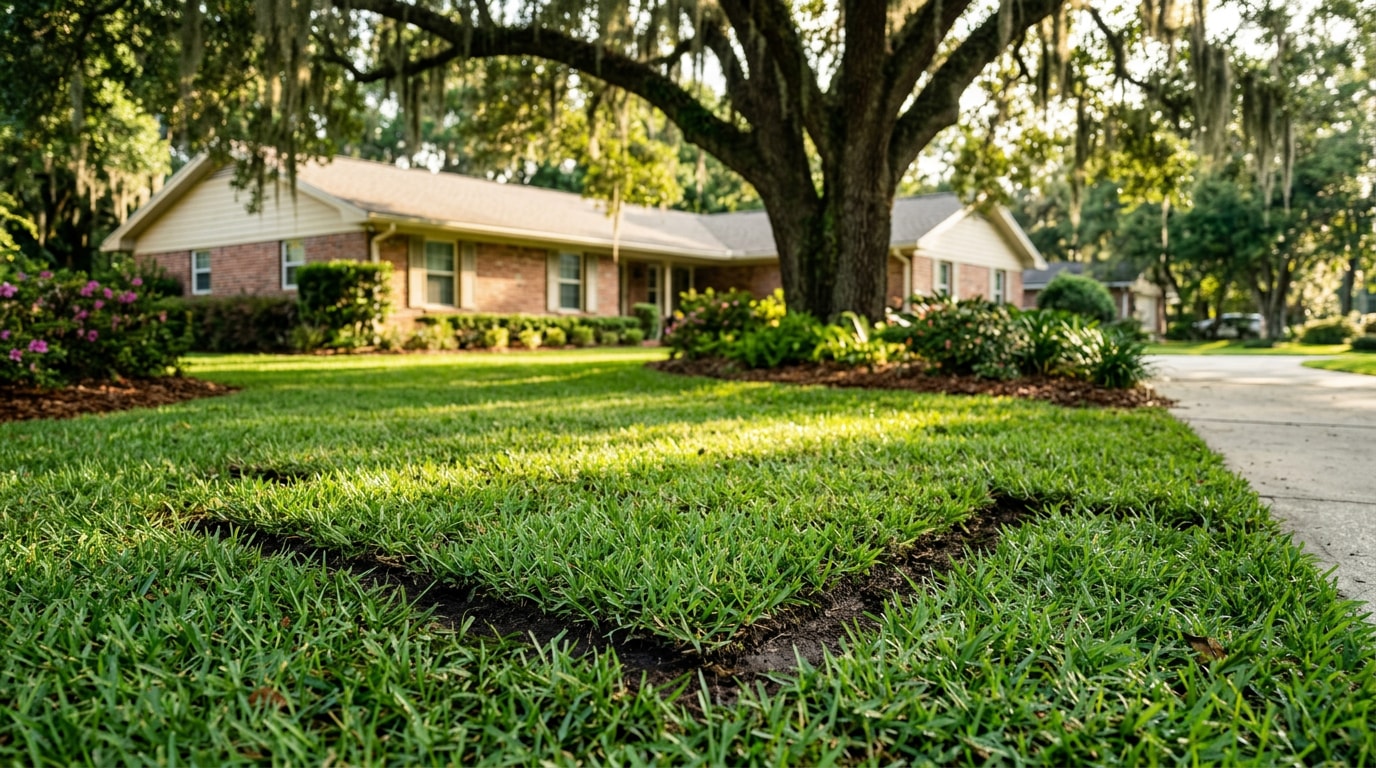
Sod is the honest answer when turf is dead, compacted, dog-damaged, or shaded to the point it never established. If roots are alive and the lawn is only thin, feeding and cultural fixes usually recover it for far less. Our sod installation and lawn seeding or sod crews confirm which one you need on site before quoting.
For variety selection: St. Augustine handles filtered shade, Zoysia takes foot traffic, Bahia tolerates dry full sun, and Centipede suits low-input yards. Planting timing matters as much as the variety. UF/IFAS advises planting during active growth periods and avoiding temperature extremes, with North and central Florida best planted outside the cold winter or hot, dry summer months.
If you are on a Bahia lawn and considering seed, our guide to renting a lawn overseeder in Havana covers timing and technique.
What Drives Lawn Repair Pricing in Havana
Nobody can quote a Havana lawn from a web form, and anyone who does is pricing the risk into the number. These are the factors that move a real estimate:
- Damage square footage, not total yard size. A 200 square foot patch in a half-acre yard is a small job.
- Sod vs. plugs vs. seed. Sod is the material-heavy option. A pallet typically covers roughly 400 to 500 square feet, though coverage varies by supplier, so confirm before you budget.
- Haul-off. Removing dead turf and old roots adds labor and disposal.
- Equipment access. Narrow gates and backyard-only access mean wheelbarrows instead of a skid steer.
- Soil prep. Grading, topdressing and amendment work after a soil test.
- Season. Sod availability and pricing shift through the year.
- Underlying cause. Drainage correction or irrigation repair is a separate line item from the turf itself.
Ask any contractor to price soil prep and haul-off as separate lines. A quote that bundles everything into one square-foot rate usually means corners get cut below the sod. You can see finished work on our projects page, then get a free estimate and we will measure the damage on site.
Fertilizer and Weed Control: The Legal and Practical Limits
Weeds colonize bare spots first, which is exactly how a finished repair unravels. Pairing weed control with correct feeding is what makes the fix hold.
Rates should follow a soil test, not a guess, and Florida regulates what goes on a lawn. Labeling and application limits for lawn fertilizer are set by Florida Rule 5E-1.003, the state's urban turf fertilizer rule. Under that rule, nitrogen may not be applied at a rate greater than 0.7 pounds of readily available nitrogen per 1,000 square feet at any one time, based on the soluble fraction of the fertilizer.
For St. Augustinegrass, UF/IFAS puts North Florida annual nitrogen at 2 to 4 pounds per 1,000 square feet per year.
Two practical notes for repaired areas:
New lawns should not be fertilized until 30 to 60 days after planting.
- Over-feeding a stressed lawn makes disease and chinch bug pressure worse, not better. Slow-release nitrogen with potassium is the safer route on patched turf.
Watering New Sod Without Drowning It
Watering is where homeowners go wrong in both directions. New sod needs frequent, short cycles until it roots, then that schedule has to change or you trade one problem for another.
EPA's WaterSense guidance warns that watering until it pools invites weed growth, disease and fungus, and that watering too frequently can drown plants or produce shallow roots. Check what your system actually delivers using the EPA watering tips catch-can method before you set a controller.
A simple sequence that works on Havana jobs:
- First 7 to 10 days: multiple short cycles daily, keeping soil beneath the sod moist.
- Weeks 2 to 3: taper to every other day, longer runs.
- After rooting: deep and infrequent, as needed, following local restrictions.
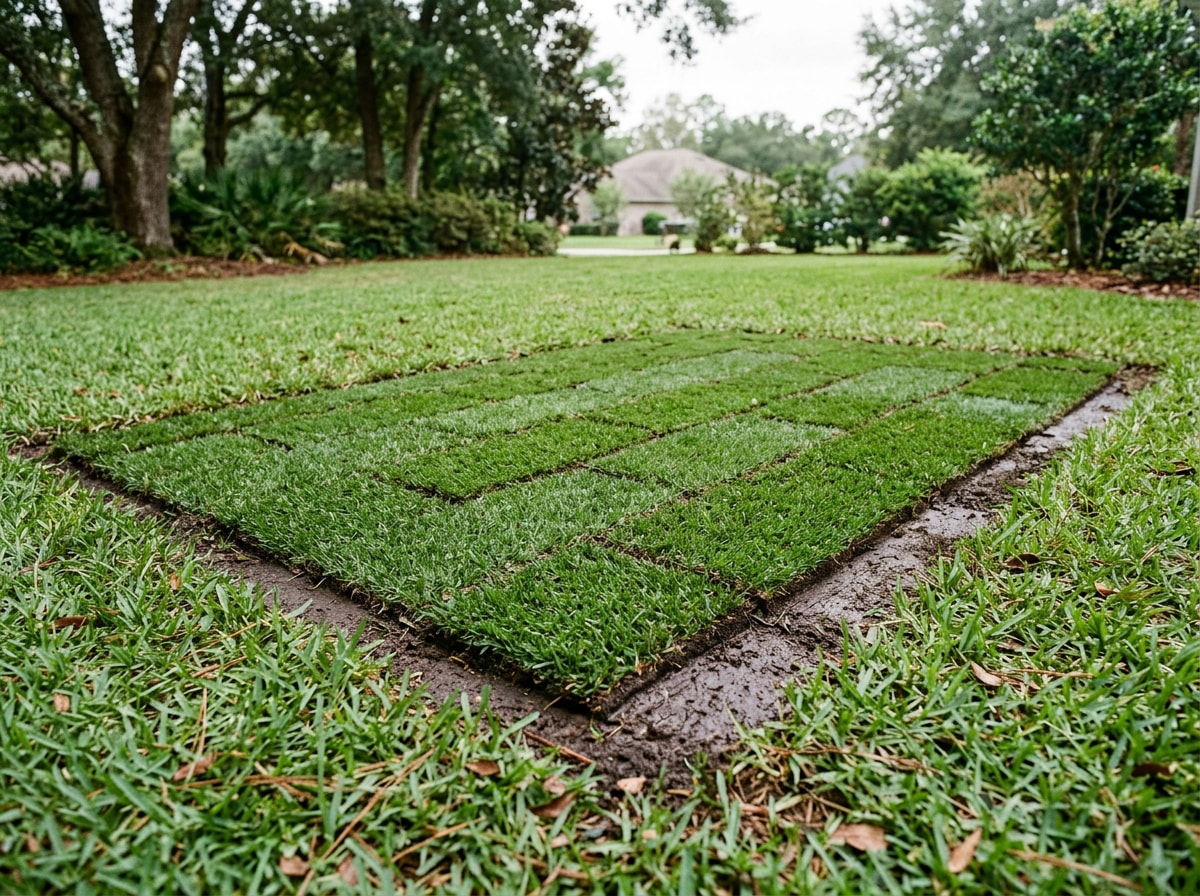
- Mow only once the sod resists a gentle tug.
Protecting the Repair: Mowing, Cleanups and Schedule
Scalping is a leading cause of repeat bare patches. UF/IFAS advises removing no more than one third of the leaf blade at any mowing, with standard St. Augustine cultivars cut at 3.5 to 4 inches and dwarf cultivars at 2 to 2.5 inches. Raise the deck on newly sodded areas until they establish.
Through the North Florida growing season, roughly April through October, most lawns need mowing every 5 to 7 days. In dormant months, every two to four weeks is usually enough. Recurring landscape maintenance is what keeps a new patch from thinning back out.
A leaf mat left over winter smothers turf and creates the exact patches people start searching about in March. Our clean up work covers leaf and storm debris removal, brush clearing and overgrown yard resets, which has to happen before any sod or seed goes down.
FAQ
How much does lawn repair cost in Havana, FL?
It depends on damaged square footage, sod vs. plugs vs. seed, haul-off, equipment access and whether drainage or irrigation needs correcting first. Estimates are free and priced on site after we measure the damage.
Can you fix bare spots in St. Augustine grass with seed?
No. St. Augustinegrass is established from sod, plugs or sprigs, not seed. Any product sold as St. Augustine seed will not fill your patches.
When is the best time to repair a lawn in North Florida?
During active growth, avoiding the coldest winter weeks and the hottest, driest stretch of summer. Spring through early fall covers most repair work here, with sod rooting fastest when soil is warm and rainfall is steady.
Why does grass keep dying in the same spot?
Because the cause was never removed. Repeat failure in one footprint usually points to drainage, deep shade, compaction, irrigation coverage gaps, or a soilborne disease like take-all root rot. Take-all root rot can kill relatively large areas of a lawn down to bare ground.
How long does new sod take to root?
Figure roughly two to three weeks before it resists a tug, and a full season before it behaves like established turf. Watering discipline in the first two weeks decides the outcome.
Do you offer sod installation or just mowing?
Both. Sod installation, plugging, aeration, weed control, drainage and cleanups all run through one local crew, so nobody gets handed off mid-project.
Do you do one-time jobs, or only regular service?
One-time lawn repair is welcome and no contract is required. Recurring service usually protects the investment, since mowing height and feeding are what keep a new patch alive.
Are you insured?
Yes. We operate as a licensed and insured Havana lawn company and carry general liability coverage. Proof is available on request before work starts.
Service Area
We work in Havana, FL and across Gadsden and Leon County, including Quincy, Tallahassee and Monticello. Scheduling in the outer parts of the service area depends on route availability that week.
Walk your yard, do the root tug test described above, then request a free on-site estimate. More about our crews and services is on the Talquin Landscaping homepage.
Written by the Talquin Landscaping field team, Havana and Gadsden County routes. Our crew leads diagnose turf failures on site weekly across North Florida, from oak-shaded Havana lots to sand-heavy Quincy yards. Questions about a specific patch in your lawn? Send photos through our contact page and a crew lead will tell you whether it needs sod or just a schedule change.