A grass driveway in Woodville, FL is a load-bearing grid filled with soil and turf, so the surface still carries a pickup or a boat trailer while rain soaks straight through it. On sandy lots south of Tallahassee, that middle ground often beats both a muddy turf track and a full concrete pour. Here is what it costs, how deep the base has to be, and where these systems fail.
What a Grass Driveway Actually Is
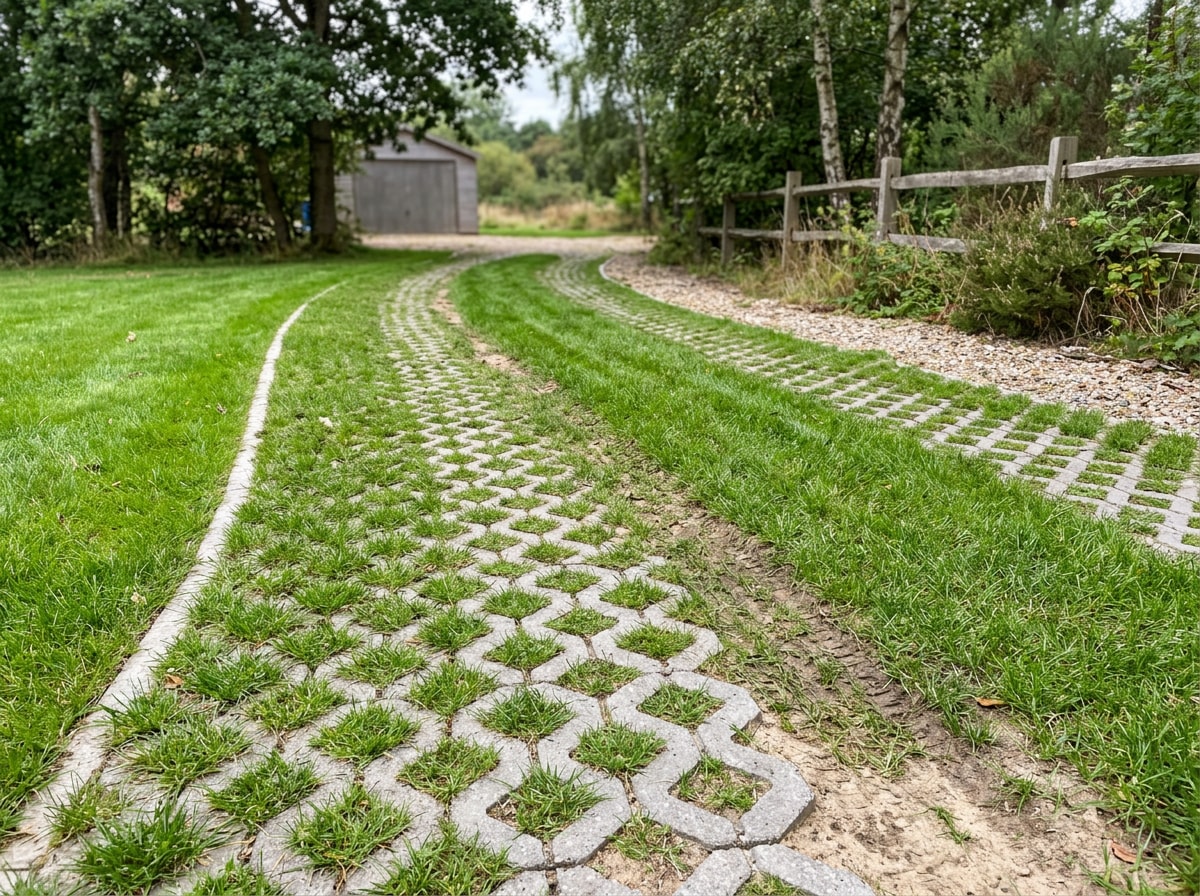
Grass pavers are open-cell grids or concrete blocks set over a compacted stone base, with every cell filled with soil and turf.
The grass gives the look. The grid does the work, spreading wheel load across the base so tires never squeeze the root zone into ruts.
That structure is the entire difference between a grass driveway and a lawn you happen to park on. Bare turf compacts, holds water, and turns to mud by the third storm. A slab solves the mud and sends every drop of rain somewhere else. Permeable pavements instead store or infiltrate rainwater where it falls, with water held in the soil and gravel layers below .
Grass Driveway Cost in Woodville, FL
Published cost figures for this product category disagree more than almost any other driveway material, so treat national numbers as a ballpark and nothing more.
| Scope | Typical published range | Notes |
|---|---|---|
| Plastic grid pavers, material | $5 to $10 per sq ft |
Lowest-cost permeable option before labor
| Concrete grid pavers, material | $4 to $12 per sq ft |
Plus labor, and heavier to place
| Grass driveway, installed | $10 to $15 per sq ft |
National 2026 average for grass-filled paver driveways
| Grass pavers, installed project | $4 to $12 per sq ft, $2,400 to $7,200 typical |
Varies by plastic vs concrete grid
|
The spread is real, not sloppy reporting. The same 600 square foot driveway can land at either end depending on base depth, how much soil has to be excavated and hauled off, whether a machine can reach the work, how much the approach needs regrading, and sod versus seed.
Two local cost drivers show up on almost every Woodville quote:
- Haul-off distance. Long rural approaches mean more excavated spoil to move.
- Grade correction. Low spots that pond after a summer storm need fixing first, not grid laid over them.
For a number that means anything, you need square footage and a soil check on site. Request a free estimate and get it in writing.
Will It Work on Woodville Soil?
Mostly yes, with conditions.
The sand that covers much of south Leon County drains fast, which is exactly what a permeable system wants. The catch is that clean sand holds almost no moisture, so the cell fill has to be a sandy loam with organic matter in it or the turf burns out in the tire tracks by July.
On jobs around the 32362 area, the variable that changes the build is what sits under that sand. Shallow hardpan or a seasonal high water table means the stone reservoir cannot drain downward the way the spec assumes, and the drive needs an outlet rather than just depth. That is a drainage) question answered with a test hole, not a guess.
Two other site rules are hard limits:
- Deep shade under mature live oaks and pines. If turf will not establish there now, it will not establish inside a paver cell.
- Anywhere that needs a firm, continuous surface, including wheelchair or walker routes, patio furniture, and heels.
Low spots and any real grade change should be handled during site preparation and excavation and grading, before a single panel goes down.
Plastic Grids vs Concrete Blocks
Two system families dominate and they behave differently.
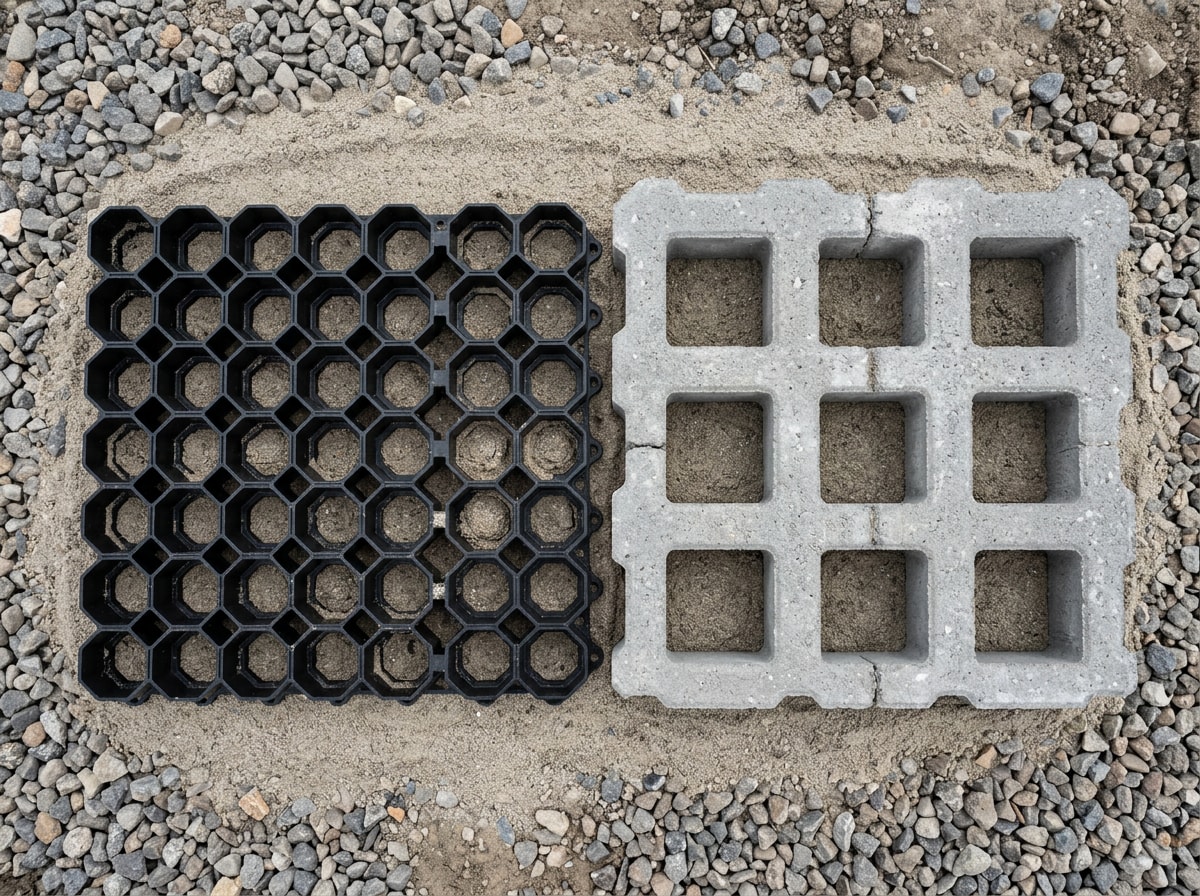
Plastic grids are usually HDPE, often recycled, supplied as interlocking panels or rolls. One person can carry them. They snap together fast, cut cleanly around curves and tree roots, and cost less per square foot. Most carry published load ratings far above residential vehicle weight when they sit on a correct base.
Concrete grid blocks, including the familiar turf block unit, are stiffer and hold their shape under sustained load. They generally last longer. They are also slower, heavier, and awkward to fit to irregular shapes.
The decision rule is simple: match the grid to vehicle weight, traffic frequency, and how much of the surface stays parked on.
- Occasional car and guest traffic over a good base: plastic is comfortable territory.
- A pad holding a loaded trailer, RV, or work truck most of the week: concrete.
Which Grass Holds Up in the Cells
Turf inside a paver cell needs traffic tolerance, heat and drought tolerance, aggressive lateral spread, and fast recovery. Only warm-season species qualify in North Florida.
- Bahiagrass. Full sun, very drought tolerant, low input, strong choice on rural lots. Coarse texture and tall seedheads mean frequent mowing.
- Bermudagrass. Best traffic tolerance and fastest recovery of the group. Demands full sun and the most mowing.
- Zoysia. Dense, handles moderate traffic, takes light shade, slow to recover from damage.
- Centipede. Low maintenance and low fertility needs, weak traffic tolerance. Better at the edges than in tire tracks.
- St. Augustine. The most shade tolerant option, but it bruises under repeated vehicle traffic.
Extension research puts zoysiagrass and bermudagrass at the top for wear tolerance , which is the trait that matters most once cars are on it. The UF/IFAS lawn and garden turfgrass guidance is worth reading on shade and wear before you commit.
Whichever species you pick, you can seed or install sod into the cells, then keep vehicles off entirely while roots take hold. Temporary irrigation during establishment is the cheapest insurance on the whole job.
How Deep Should the Base Be?
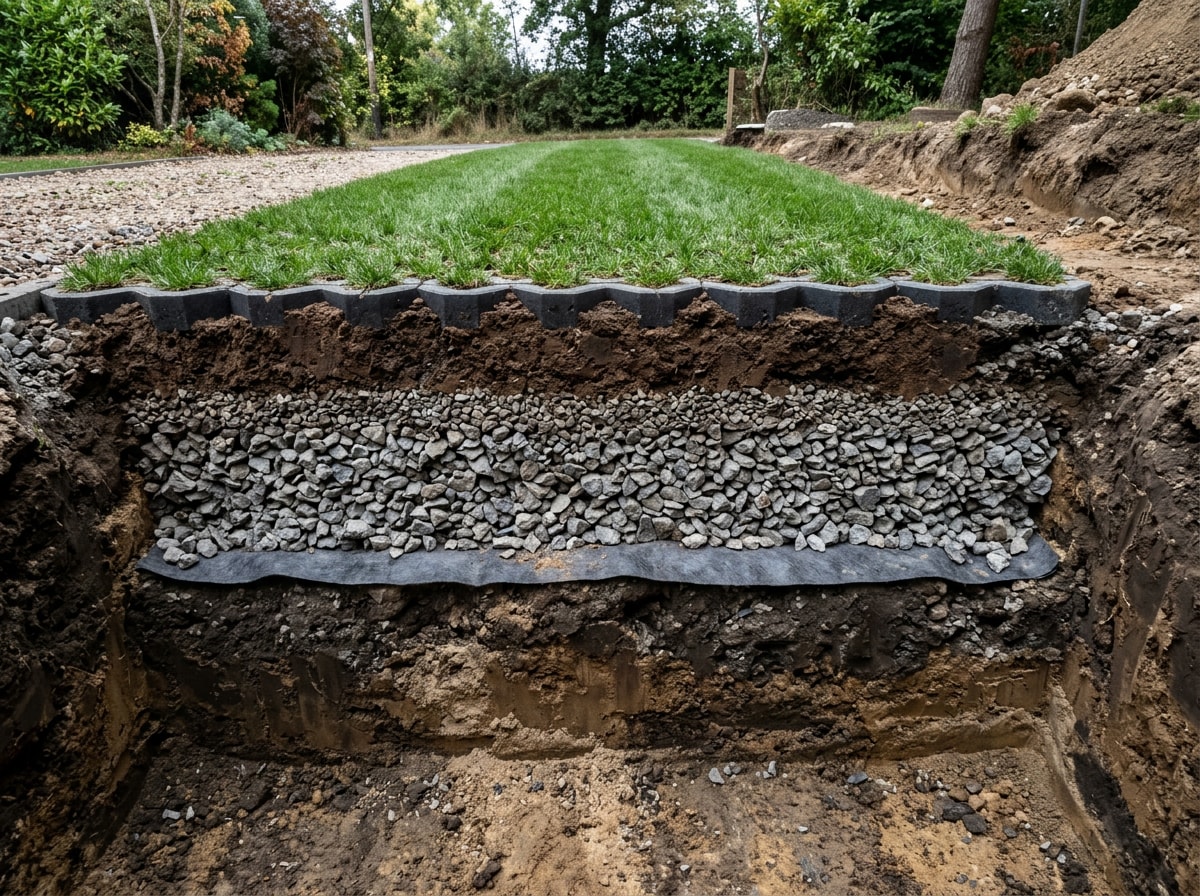
Base depth for a grass driveway typically runs 4 to 10 inches of compacted open-graded stone, driven by vehicle weight and subgrade strength.
The full cross-section, top to bottom:
- Turf and sandy loam cell fill
- Paver grid or block
- Crushed stone base, commonly a #57 open-graded stone
- Geotextile separation fabric
- Compacted subgrade
Weak, organic, or poorly draining subgrade needs more stone and almost always needs fabric to stop fines from migrating up into the base. Under-building the base is the single most common cause of rutting and early failure, so build to the load rating published for the specific product being installed.
Grade matters as much as depth. Even a permeable drive should fall away from the house and garage, never toward a foundation.
How the Install Goes
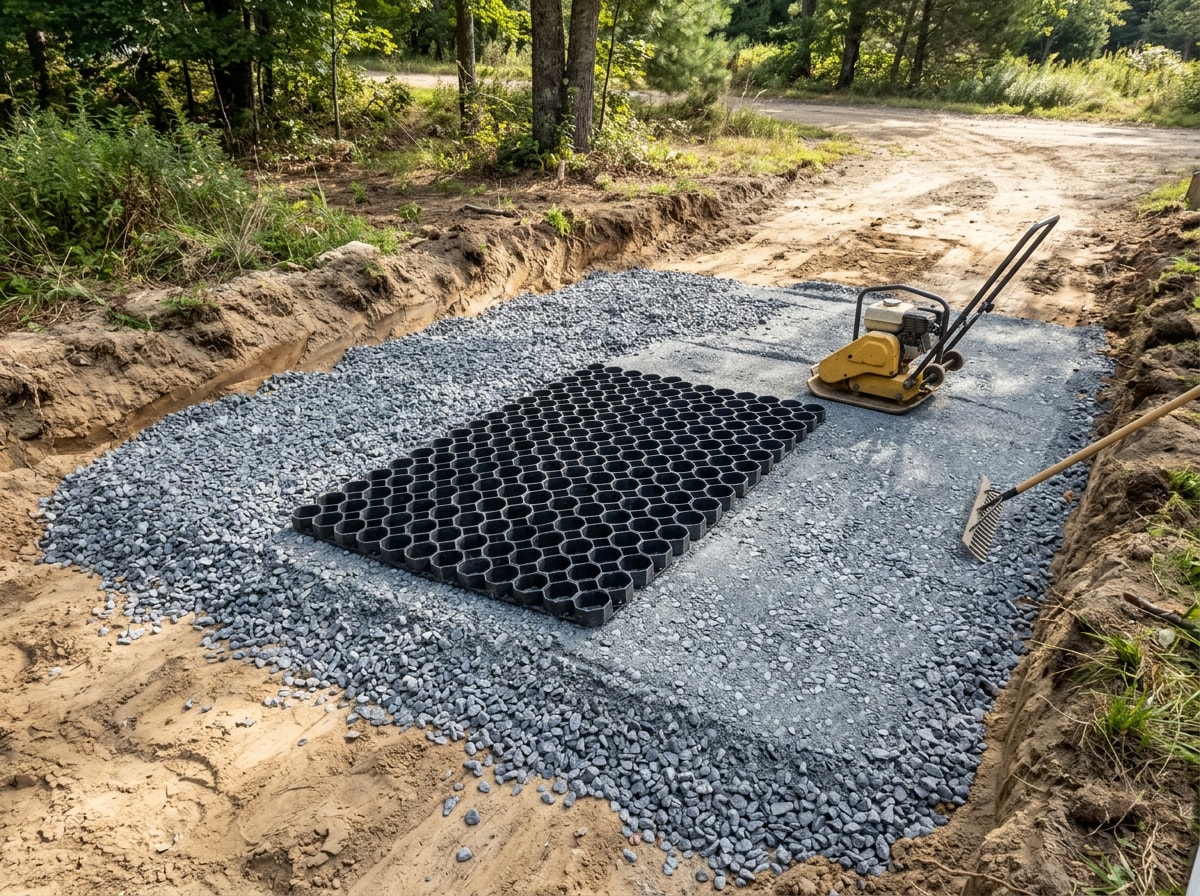
- Mark the drive and excavate to planned depth, shaping grade as you go.
- Compact the subgrade until it stops moving under the plate compactor.
- Roll geotextile fabric across the subgrade.
- Spread and compact the stone base in lifts of 2 to 4 inches, never all at once.
- Screed the top of the base, then set or unroll the grid slightly below finished grade.
- Lock panels or blocks together and anchor as the manufacturer directs.
- Sweep sandy loam fill into the cells until they are nearly full.
- Seed or sod, then water in thoroughly.
- Keep vehicles off for roughly 4 to 8 weeks, longer for seed.
Details separate a good install from a bad one. Leave expansion clearance where the grid meets a concrete apron or garage slab. Cut panels around curves instead of forcing them. Set the grid low enough that finished turf sits flush with the lawn so the mower glides over it.
If you want a gravel surface over the same kind of base instead, the trade-offs are covered in our guide to landscaping gravel in Woodville.
Permits and Stormwater in Leon County
This is where local reality diverges from national how-to articles.
Leon County lists environmental permitting as applying when impervious surfaces are constructed , and the county's environmental services applications include a Class I residential driveway permit for connections that touch the county right of way. Check both before you dig, especially on a new approach rather than a replacement.
One expectation to reset: a permeable driveway will not shrink your residential stormwater bill. Leon County charges single-family residential properties on a flat tiered schedule and only bills commercial property by measured impervious area . The runoff benefit here is real, but it is hydrological, not a line-item discount.
The runoff case still holds up on its own terms. Permeable systems infiltrate rainwater where it falls instead of routing it off site , which matters on lots sitting over the Floridan aquifer and upstream of the springs. The EPA's green infrastructure overview covers how the layers function.
Maintenance and Service Life, Honestly
You are, in plain terms, mowing your driveway. Same mowing, watering, weeding, and fertilizing schedule as the rest of the lawn, with extra attention in the tire tracks.
Service life is the real caveat. Residential grass paver installations are commonly cited at roughly 10 to 15 years against 25 to 50 for solid paving, and estimates vary enough between systems that you should ask about the specific product. Constant parking in one spot will thin the turf no matter what you plant, so budget for overseeding.
If daily traffic and zero maintenance are the priorities, a concrete driveway is the more honest answer, and a hybrid works well: concrete where the cars live, grass pavers for the overflow pad and the long approach. See how that pairing looks in finished work on our projects page.
Talquin Landscaping handles driveway landscaping and drainage work across Woodville and Leon County. If your site has grade change, a wet spot, or a long rural approach, get a free estimate before you buy material.
FAQ
Are grass pavers suitable for heavy vehicle traffic?
Yes for normal residential loads such as cars, pickups, and occasional trailers, provided the base is built to the manufacturer's spec. Traffic tolerance is still lower than concrete or asphalt, and wear will show in constant tire tracks and under permanently parked vehicles.
How long does a grass driveway last in Florida?
Plan on roughly 10 to 15 years for a residential installation, with concrete grid blocks outlasting plastic grids. Base depth and compaction matter more than the grid brand.
Do grass pavers work in sandy soil?
Sand drains well, which helps, but it holds almost no water or nutrients. Mix organic matter into the cell fill and irrigate through establishment or the turf thins out fast.
Do I need a permit for a new driveway in Leon County?
Possibly. The county's environmental permitting applies when impervious surfaces are constructed , and a Class I residential driveway permit exists for residential connections . Confirm with Development Support and Environmental Management before work starts.
What is the thick Florida grass called?
Most people mean St. Augustine, the broad-bladed carpet-like turf common on Florida lawns. Bahiagrass is the other widespread choice on rural lots. Both grow here, but bahia and bermuda handle driveway traffic better inside paver cells.
Grass pavers or gravel for a rural driveway?
Gravel is cheaper and needs no mowing or watering, but it migrates and needs topping up. Grass pavers cost more and need lawn care, and they read as lawn instead of hardscape.
How long will artificial grass last in Florida?
Quality synthetic turf typically runs around 15 to 20 years, and intense UV exposure can shorten that. It never infiltrates water the way a living grass paver system does, so it solves appearance without solving runoff.
What are the best lawn care habits for driveway turf?
Mow at the correct height for your species instead of scalping it. Water deeply and infrequently. Base fertilization on a soil test, not a calendar. Watch for fungal disease in humid stretches, and overseed the tire tracks each season.