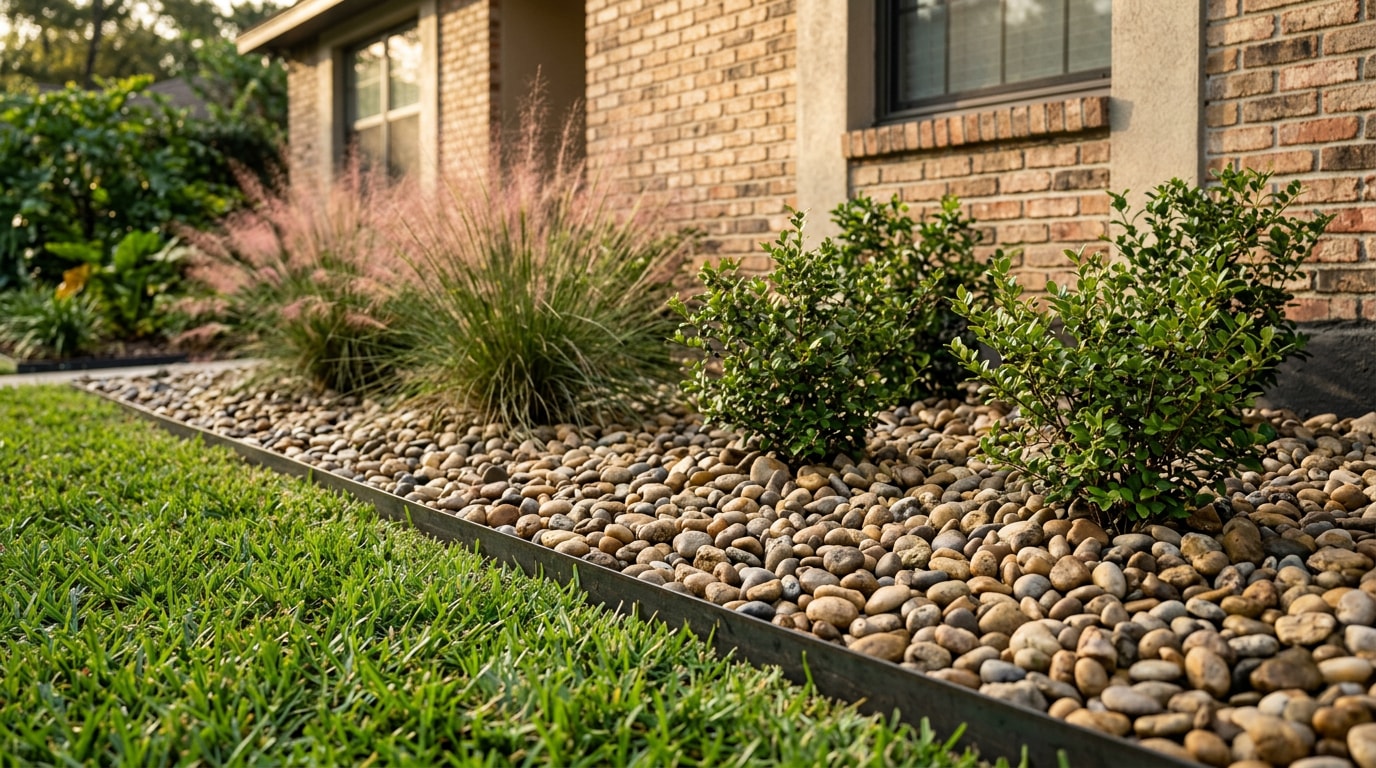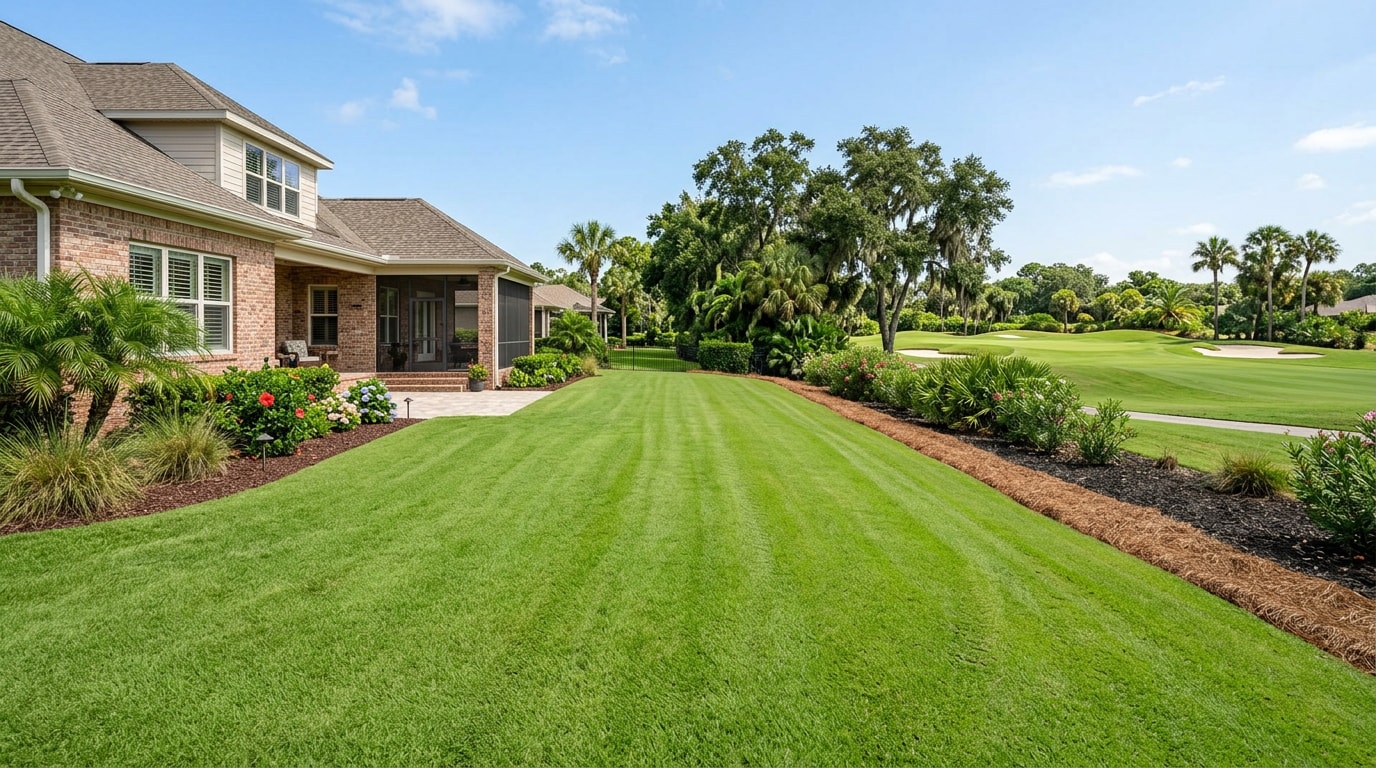
White stone for landscaping in Centerville, FL has moved well past plain pea gravel. Homeowners here now choose between polished marble chips, washed river pebbles, crushed limestone, and native Florida fieldstone, each with a different look, price, and maintenance load. This guide breaks down where each type actually performs, what it costs to size an order correctly, and what upkeep looks like once it's down.
We install white stone on Centerville properties on a regular basis, and the two questions we hear most are "which white rock won't stain" and "will this be too bright by the pool." Both get answered below.
Where White Stone Works Best in Centerville Yards
White stone earns its keep in a handful of spots on a typical Florida property. Two uses stand out above the rest.
Beds, Borders & Ground Cover
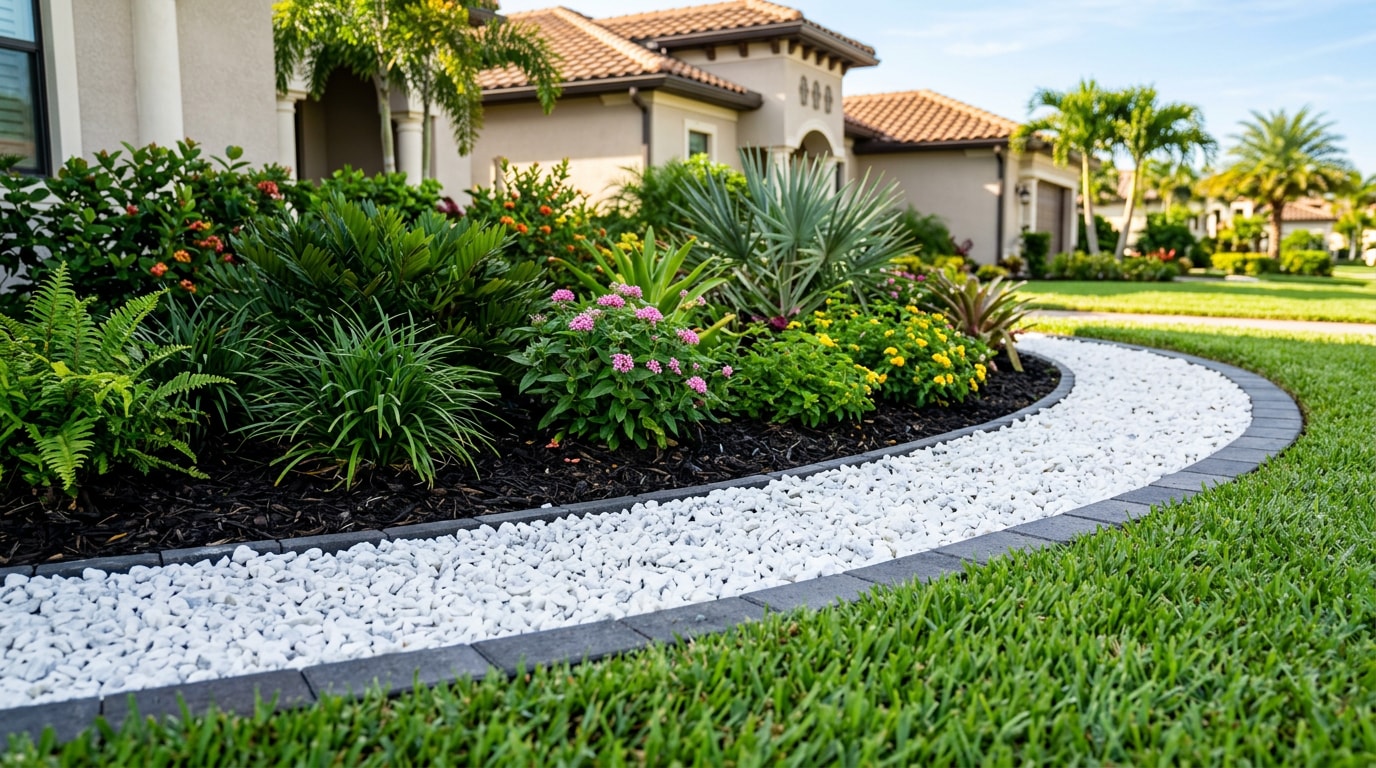
A two-inch layer of white rock lifts a planting bed instantly. It holds a clean line against dark mulch, and angular grades like crushed marble read noticeably brighter in full sun. This makes white stone a strong pick for garden borders, especially along plant beds, driveways, or patios where a cleaner, more minimalist finish beats bark.
Used as full ground cover rather than just an edge, white rock also suppresses weeds without the yearly refresh mulch demands. The tradeoff is upfront cost: marble chips run higher per load than mulch. But the material doesn't break down, so there's no repeat purchase every season. If you're planning a full bed renovation, our garden installation team can help size the project before you order material.
Pool Surrounds & Courtyards
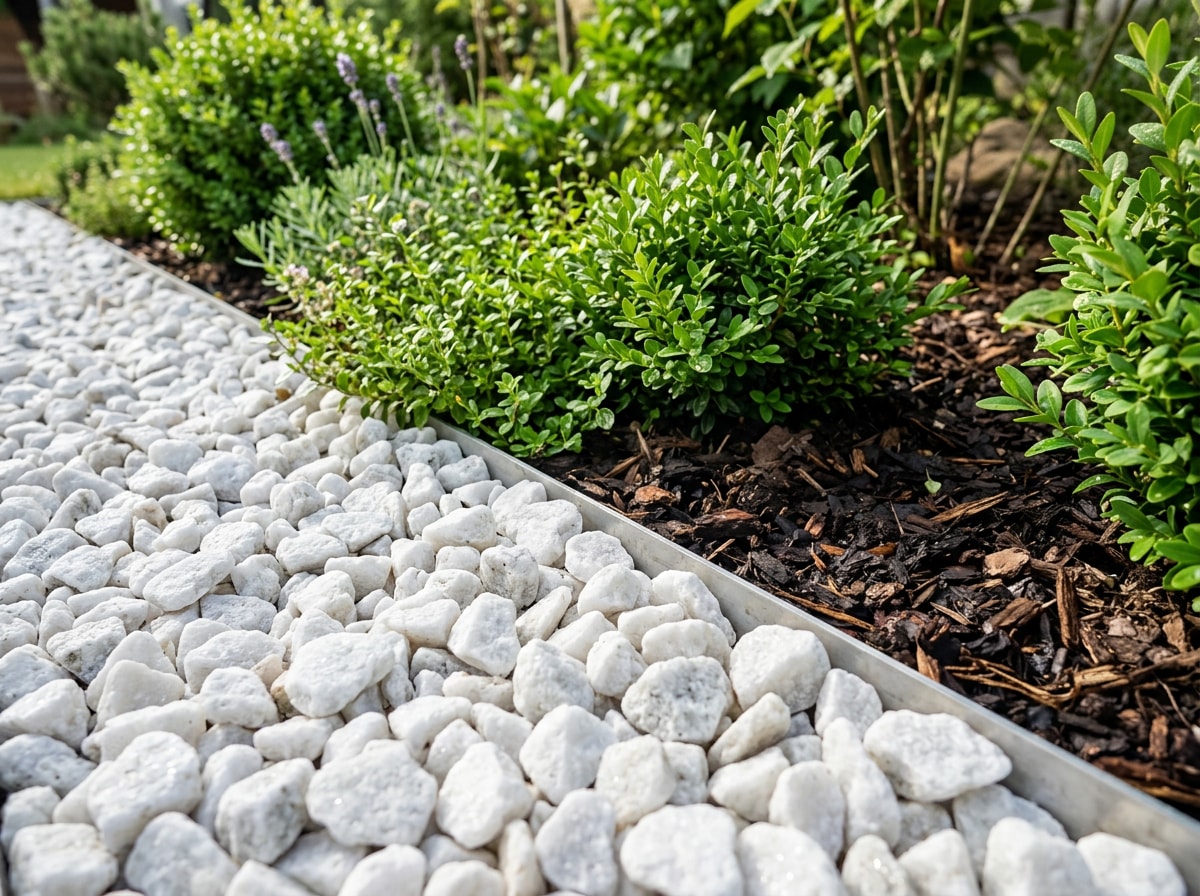
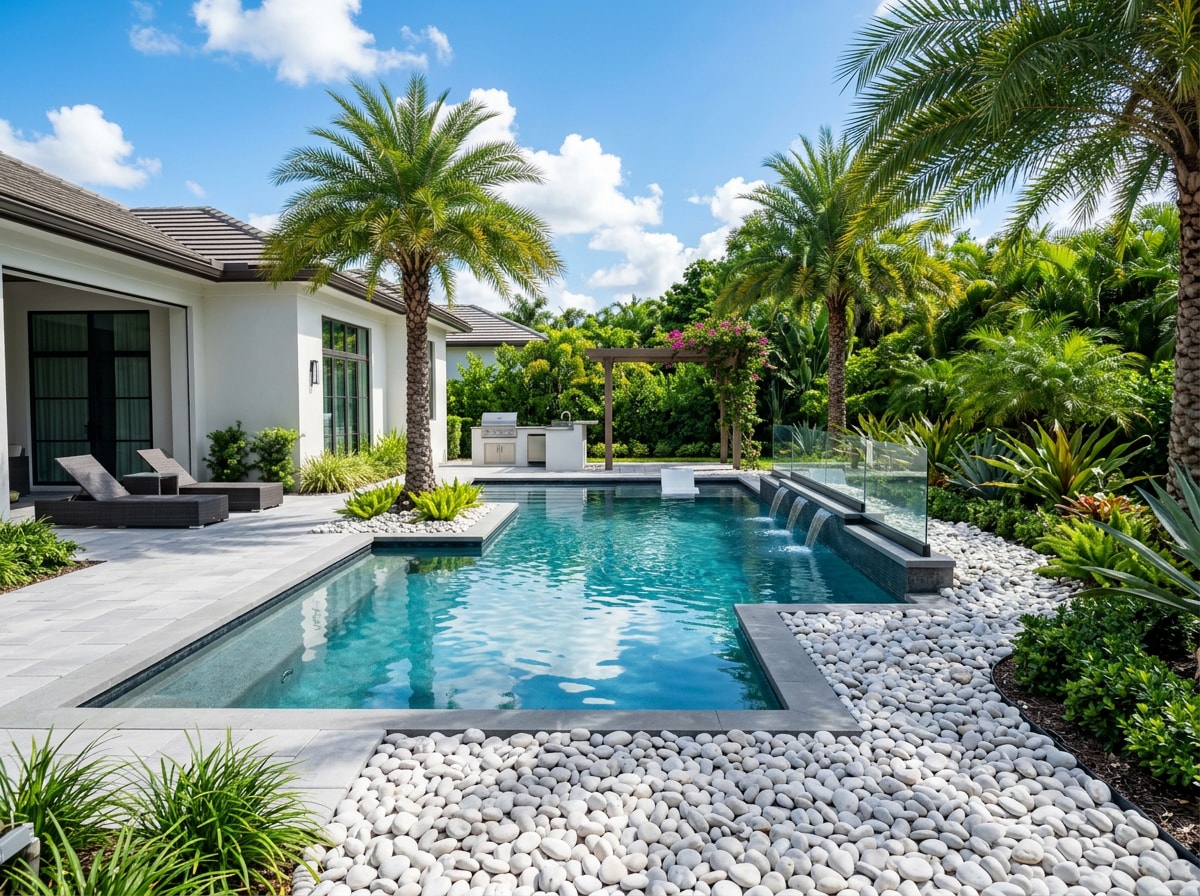
Tumbled and polished white stone, including Himalaya white pebbles and snow-white river rock, suits barefoot areas since the rounded surface won't bite into skin the way crushed, angular stone can. That makes rounded white stone a natural choice around a pool deck or courtyard patio.
One caveat worth flagging for Florida: afternoon sun bouncing off a wide bed of white stone near a pool deck throws real glare, and some homeowners regret covering too much open area in bright white. Breaking up large expanses with planting beds, darker accent stone, or shade structures softens that effect without losing the bright, clean look near the water.
Comparing White Landscaping Stone Types
Not all white stone behaves the same once it's down. Texture and material matter as much as color.
| Stone Type | Texture | Best Use | Relative Cost | Notes |
|---|---|---|---|---|
| White marble chips | Angular, bright white | Beds, borders, accent areas | Highest | Brightest contrast against mulch and turf |
| White river rock/pebbles | Rounded, tumbled | Pool decks, walkways, barefoot zones | Mid-high | Comfortable underfoot, softer look |
| Crushed limestone | Angular, chalky white | Driveways, walkways, budget beds | Lowest | Compacts well, drains fast |
| Florida fieldstone boulders | Rugged, irregular | Retaining edges, dry creek beds | Varies by size | Natural, native look, no two pieces match |
Florida Fieldstone Boulders for a Natural Look
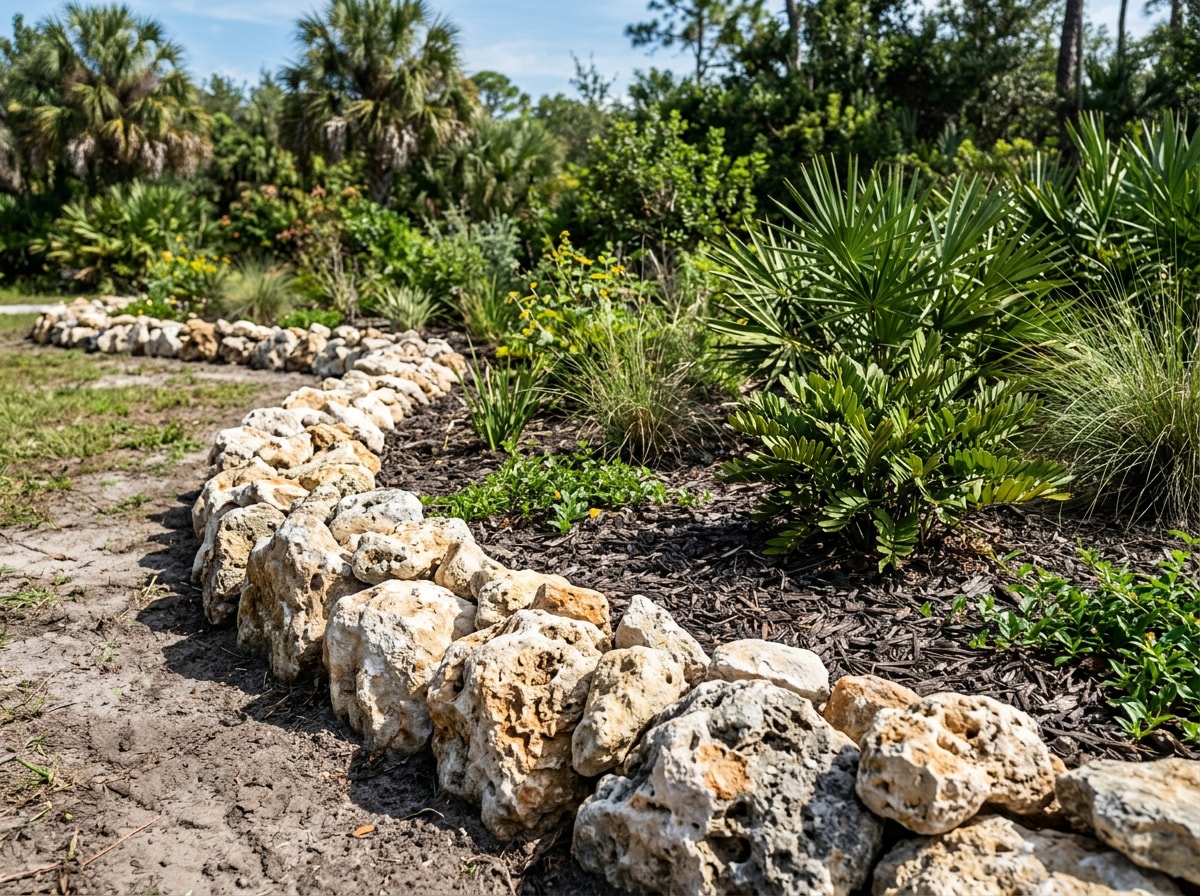
Florida fieldstone is naturally occurring rock, often marine limestone, quarried from below ground. It typically runs white to off-white with streaks of tan, brown, and gray running through it. Because each boulder comes straight from the earth rather than a mold or cut pattern, no two pieces match exactly.
Every boulder carries its own irregular size, shape, and weathered texture, which is part of the appeal for anyone wanting a natural look rather than a manicured one. Landscapers commonly use Florida fieldstone for bed edging, dry creek bed construction, and small retaining wall installations where a rustic, native-plant aesthetic already dominates the yard.
Limestone: Florida's Most Budget-Friendly White Stone
Limestone is the dominant stone quarried in Florida, and crushed limestone is usually the most affordable white-toned option available locally since it doesn't have to travel far to reach a Centerville yard. Crushed stone, most of it limestone, remains Florida's largest-volume mined commodity by a wide margin, according to nonfuel mineral commodity production data for Florida tracked by the U.S. Geological Survey.
Compared with white marble chips, crushed limestone typically costs less and drains well in Florida's heavy rain, though it reads a slightly softer, chalkier white rather than marble's crisp brightness. Limestone also tends to compact more over time, which some homeowners prefer for walkways since it firms up into a stable surface. White river pebbles sit in between on price and need a rounded, tumbled look that neither limestone nor marble quite matches.
When weighing limestone against marble chips for a Centerville yard, factor in both upfront cost and how much contrast you want against dark mulch or green turf. Marble wins on brightness; limestone wins on budget and drainage.
Is White Stone Good as a Mulch Substitute?
Yes, with caveats. Native stone works as a mulch substitute in sunny Florida beds, though it behaves differently than organic mulch in a few important ways.
Rock drains fast after Florida's heavy summer downpours, which matters in low beds that tend to hold standing water, and it won't break down or need yearly replacement the way bark mulch does. On the downside, it holds more surface heat and doesn't feed the soil as organic mulch does as it breaks down.
UF/IFAS Extension's Florida-Friendly Landscaping guidance puts it plainly: there are a few places where rocks are appropriate, for example under a gutter, around a pool, or in landscapes as accents and on footpaths , but the program still recommends an organic-based mulch for herbs, vegetables, shrubs, and fruit trees . In practice, that means white stone works best in sunny, open beds, driveway edges, and pool surrounds, and less well tucked right up against heat-sensitive shrubs or vegetable beds.
Sourcing White Stone in Centerville
Local buyers typically choose between bagged and bulk material depending on project size. Small touch-ups, like topping off a border bed or patching a thin spot, usually make more sense in bagged form picked up the same day. Larger jobs, like converting a full backyard bed from mulch to rock, call for bulk delivery by the ton, which cuts the per-square-foot cost once the order clears a reasonable minimum.
Delivery is typically priced by distance from the supply yard, so confirm your Centerville, FL service area coverage and ask about lead times before locking in an install date, especially if you're coordinating with site preparation or a bed clean up first. For a broader look at how local suppliers price bulk soil, mulch, and stone together, see our guide on landscape supplies and delivery.
If you'd rather not source and spread the material yourself, get a free estimate and we'll handle delivery, grading, and placement as part of a full landscaping project.
Sizing Your Order: Coverage and Depth
As a rough sizing rule, figure roughly 100 to 120 square feet of coverage per ton at a two-inch depth. This is the standard figure most stone yards and calculators use. It's a useful starting point for working out how much material a bed actually needs before placing an order. Measuring the bed first and rounding up slightly avoids a second, smaller delivery later.
A few install notes worth remembering:
- White stone shows debris more visibly than dark stone, so it holds up better in open, sunny areas than under messy, dropping trees.
- Iron in irrigation water can leave a rust-colored stain that doesn't rinse out once it sets in, so check your water source before installing near sprinkler heads or drip lines.
- A layer of landscape fabric underneath slows weed growth but doesn't stop it completely; expect occasional spot-pulling either way.
If drainage is a concern under the new stone bed, our drainage team can grade the area first so water moves away from the foundation instead of pooling under the rock.
Keeping White Stone Looking White
Dust settles into white stone over time, leaf litter stains it, and in damp, shaded spots it can even green up with algae if it never dries out fully. A rinse or leaf-blower pass two or three times a year covers most maintenance and keeps the stone looking bright. The one exception is iron staining from irrigation water, which doesn't come out no matter how often you clean the stone.
Homeowners who'd rather not manage that upkeep themselves can add white stone beds to a standing landscape maintenance visit instead of handling it as a separate task.
FAQ
Are white rocks good for landscaping?
Yes, in the right setting. White rock brightens a bed, contrasts well against green planting and dark mulch, reflects heat instead of absorbing it, and never needs topping up the way bark mulch does season after season. It's a poor fit for heavy shade, areas under messy trees, or high-traffic paths where every scuff shows against the bright surface.
Does white landscaping rock stay white?
Not without a little upkeep. Dust, leaf litter, and shaded, damp spots can dull or green up the stone over time. A rinse or leaf-blower pass two or three times a year keeps most beds looking bright. Iron in irrigation water is the one stain that doesn't come out with cleaning, so test your water source before installing near sprinklers.
Is white landscape rock hot underfoot?
Yes, though generally less than dark stone, asphalt, or concrete. Light-colored surfaces reflect more sunlight and absorb less heat, a property known as albedo. Federal research on pavement reflectance confirms that increasing the solar reflectance of a paved surface keeps it cooler in the sun, reducing convection of heat from pavement to air . Even so, white stone still builds up noticeable heat on a bare August afternoon, so keep bare feet to grass paths or shaded walkways rather than crossing a full white rock bed at midday.
What is the best white rock for Florida landscaping?
It depends on the job. Marble chips give the brightest contrast for beds and borders. Rounded river pebbles work best for barefoot pool areas. Crushed limestone is the most budget-friendly option for driveways and walkways. Florida fieldstone boulders suit a natural, native-plant look better than any imported stone.
Is rock or mulch better for a Florida yard?
Both have a place. Rock lasts longer and drains faster, which helps in low beds prone to standing water. Mulch costs less upfront, moderates soil temperature better, and is generally the better call around herbs, vegetables, and heat-sensitive shrubs. Most Centerville yards end up using a mix of both.
How much white stone do I need for a flower bed?
Plan on roughly 100 to 120 square feet of coverage per ton at a standard two-inch depth. Measure the bed's length and width first, then round the order up slightly to avoid ordering a second, smaller delivery later.
Ready to move forward? Browse recent projects for examples of finished stone beds and pool surrounds, or visit the homepage to see the full range of services we offer around Centerville.