A lawn leveling service in Golden Eagle, FL fixes the low spots, soggy patches, and sloped turf that North Florida's clay-and-sand soil creates year after year. Left alone, those dips collect water against your foundation and turn mowing into a chore. Here's what actually goes into a leveling job, what it costs in 2026, and how to tell a quick topdressing fix from a full regrade.
Why Golden Eagle Lawns Settle and Pool Unevenly
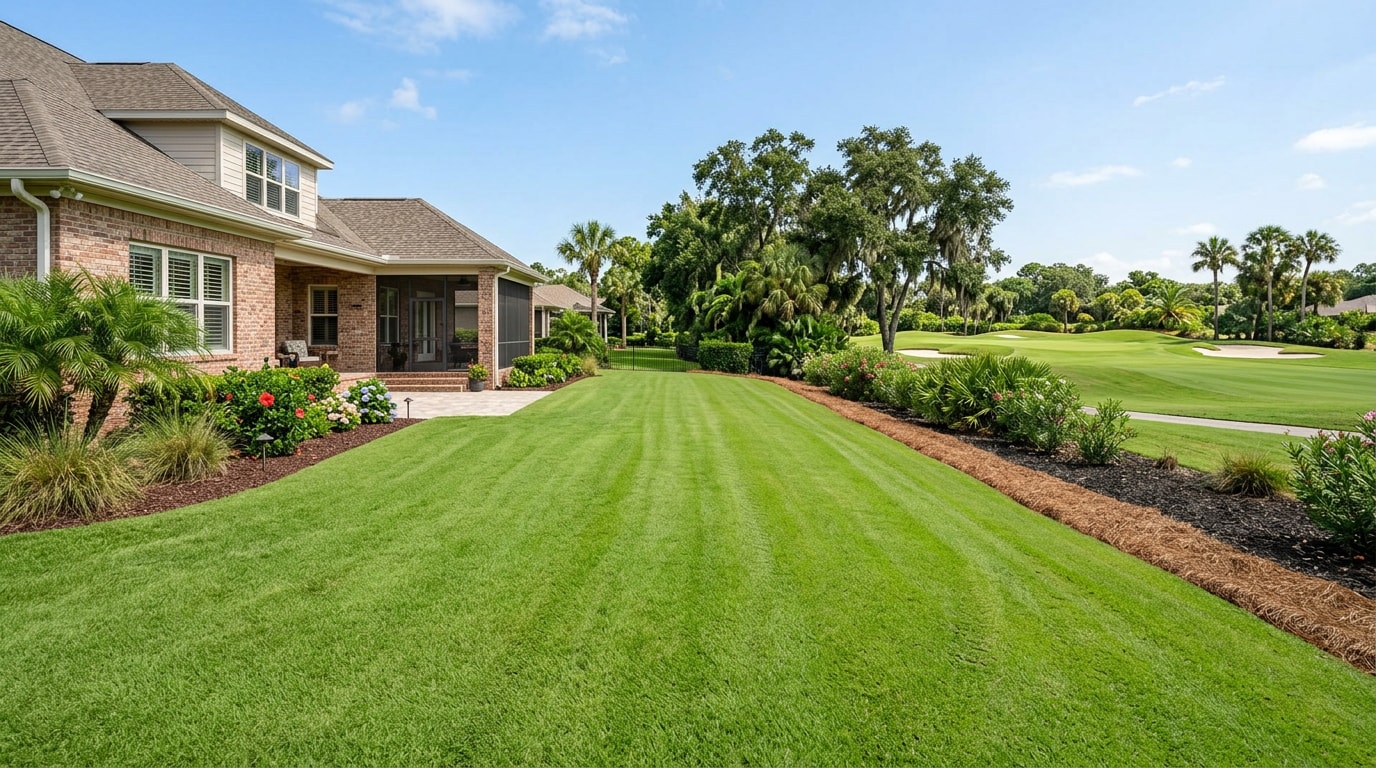
Golden Eagle sits on half-acre, tree-lined lots built around a golf course, and that combination of mature trees, clay-heavy fill, and sandy pockets creates uneven settling that shows up differently from one yard to the next.
Tree roots decompose and leave voids. Builder fill dirt compacts at different rates. Heavy summer storms wash sandy topsoil toward low corners while clay-heavy patches hold water for days. The result is a lawn that looks fine in April and holds puddles by July.
UF/IFAS Extension recommends sloping a lawn site 1% to 2% (a half-foot to one-foot fall per 50 feet) away from structures, and avoiding slopes steeper than 3:1 because they're difficult to mow safely and hard to establish grass on. That's the standard our crew works to on every Golden Eagle property, whether we're smoothing a few shallow dips or regrading an entire backyard.
How Much Does Lawn Leveling Cost in Golden Eagle, FL?
Pricing depends on how much soil has to move, not just the square footage. A shallow dip near a patio costs far less to fix than a backyard that slopes the wrong way toward the house.
Yard leveling costs $1,022 to $3,332 on average nationally, and larger yards or steeper slopes raise the total price significantly, since contractors price work by elevation change and material requirements.
| Project Type | Typical Cost Range |
|---|---|
| Spot leveling (shallow dips, 1 cubic yard increments) | $300 – $800 |
| Standard full-yard leveling (average residential lot) | $1,022 – $3,332 |
| Regrading plus drainage correction (French drains, swales) | $1,500 – $5,000+ |
| Fine/finish grading (top 1"-3" of soil) | $0.40 – $1 per sq ft |
Fine or finish grading runs $0.40 to $1 per square foot for smoothing the top one to three inches of soil, while rough grading to remove a slope or contour a yard for drainage runs $1 to $2 per square foot. Golden Eagle's larger lots often fall on the higher end of these ranges simply because there's more ground to cover.
For an exact number, get a free estimate and we'll walk the property with you before quoting anything.
Our Lawn Leveling Process
Every job follows the same sequence, whether it's a single low spot or a full regrade:
- Walk the yard and mark problem areas. We check for pooling, settling near the foundation, and spots where mowers bottom out.
- Test the slope. Using a line level and stakes, we confirm which direction water is actually moving, not just where it looks uneven.
- Remove debris and old fill. Tree roots, construction scraps, and compacted fill dirt get pulled before new material goes down.
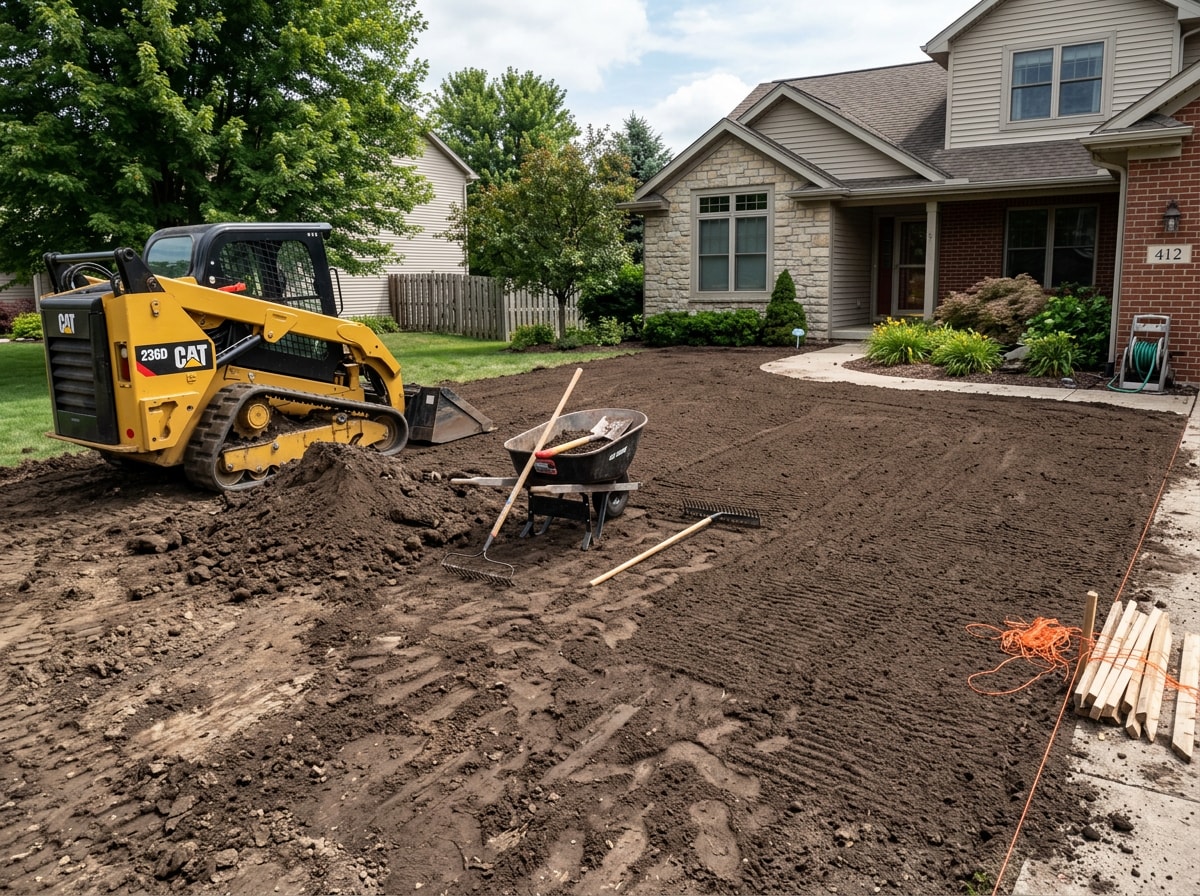
- Add and compact fill in layers. Soil goes down in lifts so it settles evenly instead of sinking again after the next storm.
- Final grade and smooth. The surface gets raked, rolled, and checked against the target slope one more time.
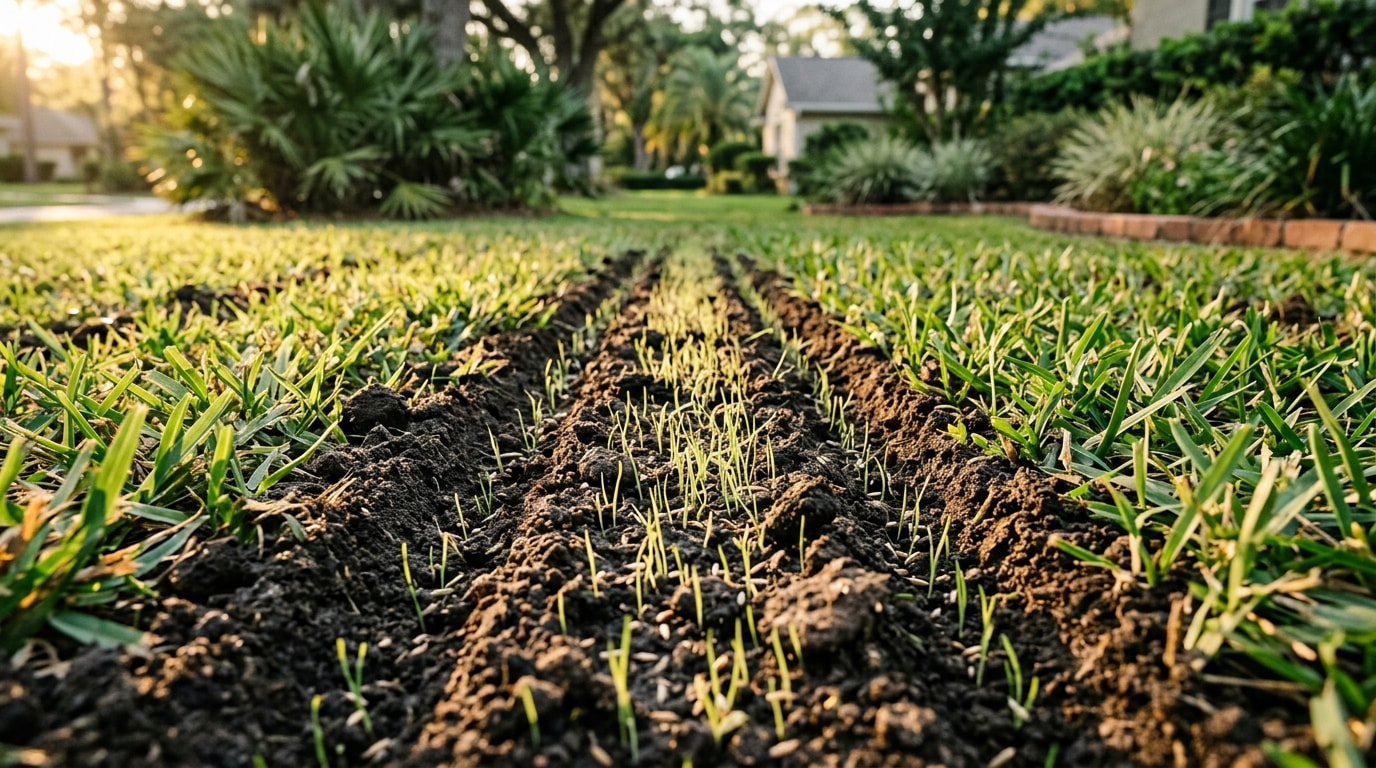
- Reseed or lay sod. Bare patches get seed or sod so the repaired area blends into the rest of the lawn.
On a recent Golden Eagle job, we found that a soggy corner near a lanai wasn't caused by a low spot at all. It was builder fill that had compacted unevenly over the years, pushing water sideways instead of away from the house. Regrading the top few inches solved it without adding a single drain.
Benefits of Professional Lawn Leveling
Better Drainage and Erosion Control
A properly graded lawn stops water from pooling in low spots and keeps it moving away from the foundation instead of toward it. The 2009, 2012, and 2015 International Residential Code recommends a slope of 2% for all impervious structures within 10 feet of the building foundation , and that same 2% minimum is the benchmark our crews use when regrading turf around a home. When the slope alone isn't enough, we pair leveling with French drains or a swale to carry water the rest of the way.
Easier Mowing and Maintenance
A level lawn is faster to mow and easier on equipment. Smooth terrain also improves irrigation coverage, so sprinkler heads hit the ground evenly instead of spraying over a high spot and missing a low one.
A Stable Base for Other Projects
Leveling is often the first step before other work, not the last. It's hard to install a patio, build a retaining wall, or lay new sod on ground that still has hidden low spots.
Related Services Golden Eagle Homeowners Often Add
Leveling rarely happens on its own. These are the services we most often bundle with a grading job:
- Sod installation. Once the soil is graded and compacted, fresh sod gives you a finished lawn immediately instead of waiting weeks for seed to fill in. See our sod installation page for details.
- Retaining walls. On sloped sections where a full regrade isn't practical, a retaining wall holds soil in place and creates usable flat space.
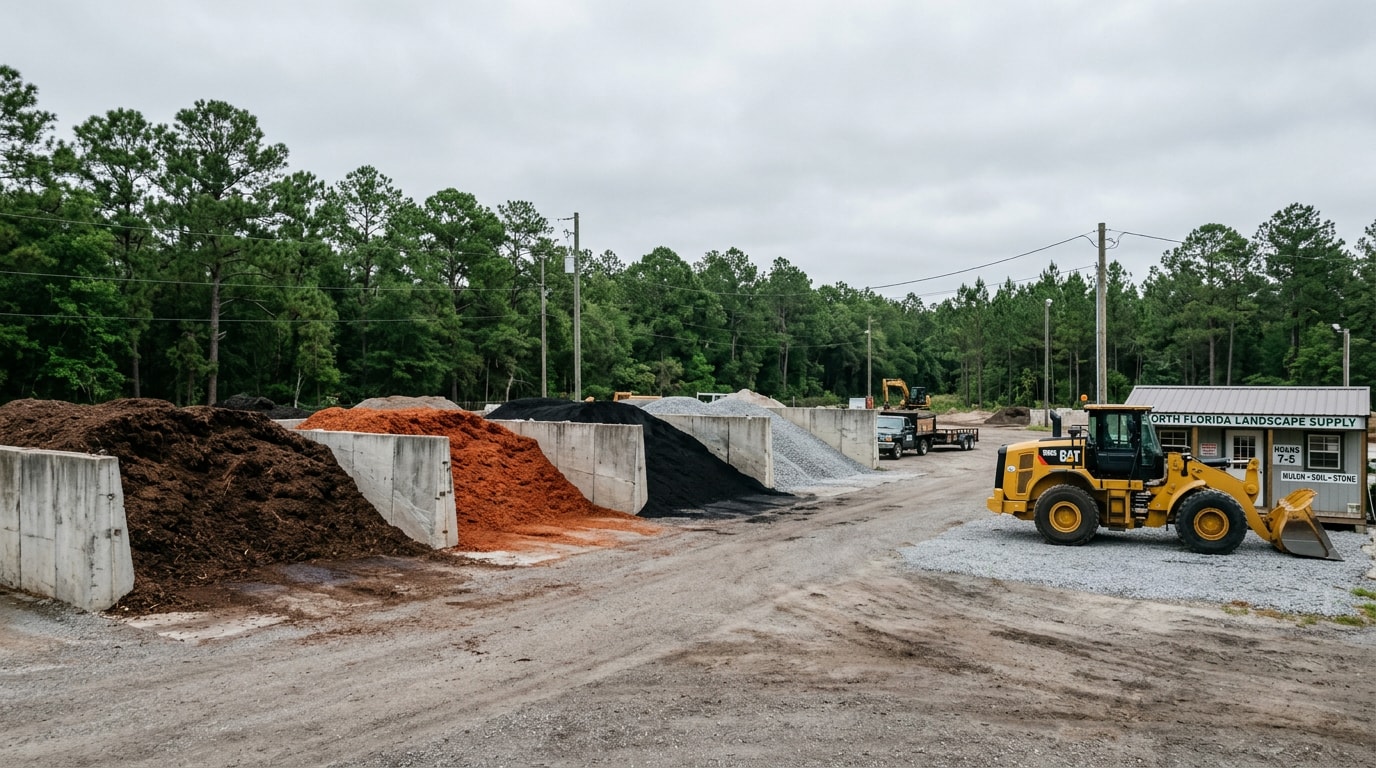
- Topsoil and fill delivery. Most leveling jobs need soil brought in and spread in layers so it compacts properly instead of washing out. Our Golden Eagle landscape supplies guide breaks down bulk soil, mulch, and stone delivery options for local lots.
- Site preparation and excavation. Larger regrades sometimes need debris and old fill removed before new material goes in. Our site preparation and excavation and grading crews handle that step.
- Drainage solutions. If a graded slope still can't keep up with heavy rain, we add drainage systems like dry wells or catch basins.
FAQ
How much does lawn leveling cost?
Most yards cost $1,022 to $3,332 to level, with small spot repairs running less and larger or steeper yards costing more. Full-yard regrades with added drainage work can run higher.
How often should lawn leveling be done?
Most lawns need leveling every few years, usually once settling, new low spots, or drainage problems start showing up after storms. Yards with mature trees or recent construction fill tend to need it sooner.
Does lawn leveling damage grass?
Done correctly, it improves grass health by fixing drainage and soil contact. Patchy areas sometimes need light reseeding or a sod patch afterward, but healthy turf typically bounces back within a growing season.
What materials are used to level a lawn?
Crews typically blend topsoil, compost, and sand to fill low spots and smooth the surface. The right mix depends on whether the problem area has clay-heavy or sandy soil underneath.
Can I level my own lawn?
Minor dips can be filled with a topsoil mix and a rake. A professional process starts by assessing the lawn's orientation and identifying causes such as tree roots or thatch buildup, grading the yard to establish target elevations, applying a topsoil and sand mix for mild unevenness, adding or removing soil with a grading rake for moderate unevenness, and excavating or regrading fully for severe cases. That last step usually needs equipment most homeowners don't have.
What's the difference between grading and leveling?
Grading reshapes the slope of an entire yard so water flows in a specific direction. Leveling smooths out individual bumps and dips. Most jobs involve some of both.
When is the best time to level a lawn in North Florida?
Late winter to early spring works well, ahead of summer rains and before warm-season grasses start actively growing. That timing gives sod or seed a full growing season to establish before the next wet summer tests the new grade.
Ready to fix the low spots for good? Request a free estimate and we'll assess your Golden Eagle lawn in person. You can also visit our homepage to see the full range of landscaping services we offer across the Tallahassee area.